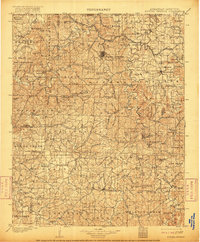
1901 Map of Eureka Springs
USGS Topo · Published 1916About this map
The White River and Kings River carve deep valleys through the Ozark Plateau in this survey based on fieldwork from the first year of the twentieth century. Eureka Springs serves as a prominent focal point in the north, while smaller rural hubs like Berryville, Huntsville, and Kingston anchor their respective townships. The landscape is defined by its early transportation network, where movement relied on numerous river crossings such as Knox Ferry, Jennings Ford, and Ellis Ford.
Find a feature on this map
139 named features on this map. Tap any name to fly to it.
Don’t see what you’re looking for? This feature index may not catch every label — zoom into the map to look around manually.
Map Details
Editions of this 1901 Eureka Springs Map
3 editions found
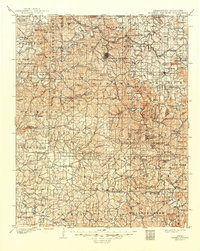
Other maps of this area
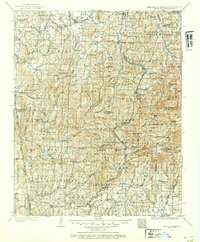
1898 · Winslow
USGS Topo · 1:125,000
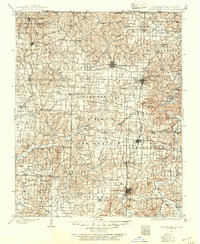
1899 · Fayetteville
USGS Topo · 1:125,000
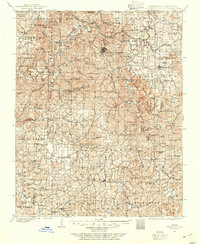
1900 · Eureka Springs
USGS Topo · 1:125,000
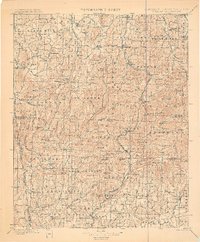
1901 · Winslow
USGS Topo · 1:125,000
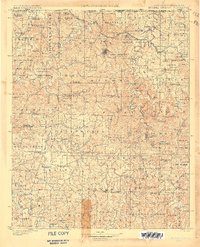
1901 · Eureka Springs
USGS Topo · 1:125,000
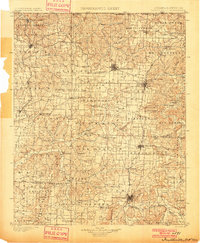
1901 · Fayetteville
USGS Topo · 1:125,000
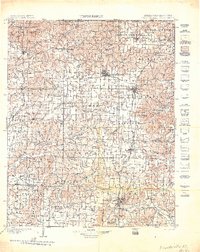
1904 · Fayetteville
USGS Topo · 1:125,000
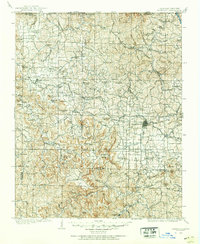
1904 · Harrison
USGS Topo · 1:125,000
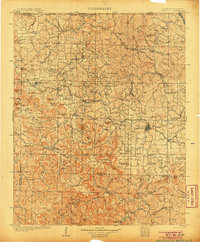
1905 · Harrison
USGS Topo · 1:125,000
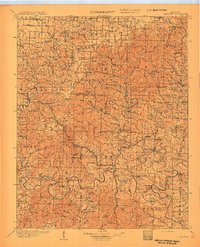
1907 · Forsyth
USGS Topo · 1:125,000