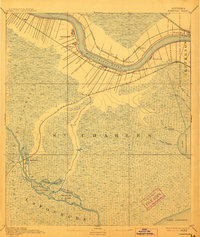
1891 Map of Hahnville
USGS Topo · Published 1912About this map
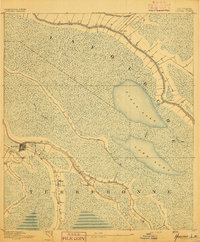
The Mississippi River creates a dramatic winding corridor through this late nineteenth-century landscape, flanked by a dense concentration of riverfront settlements and early rail infrastructure. Surveyed in 1890, the map illustrates the critical nexus between river transport and emerging rail lines, including the Louisville New Orleans and Texas Railroad and the Texas and Pacific Railroad. Small riverside communities like Hahnville, Luling, and Pecan Grove are positioned along the natural levees, while the vast southern reaches transition into the marshy expanse of the Grand Prairie Des Allemands. This transition is marked by a complex network of waterways, including Bayou Des Allemands and Bayou Black Prince, which feed into Lake Salvador and Lake Cataouatche, revealing a region defined by its fluid boundaries between land and water.
Find a feature on this map
34 named features on this map. Tap any name to fly to it.
Don’t see what you’re looking for? This feature index may not catch every label — zoom into the map to look around manually.
Map Details
Editions of this 1891 Hahnville Map
5 editions found
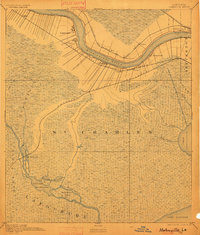
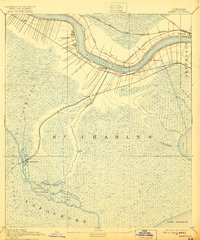
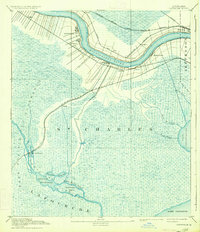
Other maps of this area
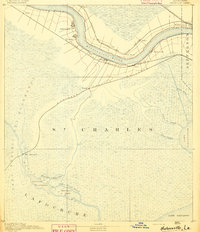
1891 · Hahnville
USGS Topo · 1:62,500
1891 · Spanish Fort
USGS Topo · 1:62,500
1891 · New Orleans
USGS Topo · 1:62,500
1892 · Barataria
USGS Topo · 1:62,500
1892 · Lac Des Allemands
USGS Topo · 1:62,500
1892 · Mount Airy
USGS Topo · 1:62,500
1892 · Bonnet Carre
USGS Topo · 1:62,500
1892 · Cut-Off
USGS Topo · 1:62,500
1892 · Houma
USGS Topo · 1:62,500
1932 · New Orleans NW
USGS Topo · 1:31,680