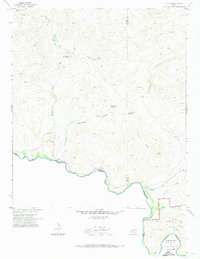
1971 Map of Lajitas
USGS Topo · Published 1974About this map
Lajitas sits at a critical bend in the Rio Grande, serving as a focal point for this 1970s borderland survey. The landscape is defined by its industrial and ranching history, with the Wax Factory Laccolith standing as a prominent geologic feature near several extractive sites like the Whitroy Mine and Fresno Mine. Further north, Madrid Ranch and the deep cuts of Fresno Canyon illustrate the isolation and scale of West Texas landholdings during this era. The map captures the international boundary as it follows the river's limitrophe channel, passing landmarks such as the Contrabando Waterhole and Contrabando Canyon. To the southeast, the boundary between Presidio and Brewster counties meets the river, where a portion of Big Bend National Park is visible, including a network of pack trails and unidentified ruins that hint at older habitations along the water.
Find a feature on this map
31 named features on this map. Tap any name to fly to it.
Don’t see what you’re looking for? This feature index may not catch every label — zoom into the map to look around manually.
Map Details
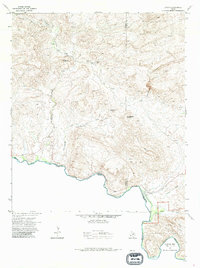
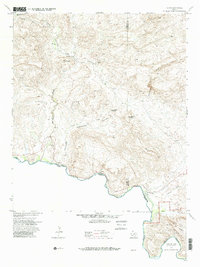
Editions of this 1971 Lajitas Map
3 editions found
Other maps of this area
1903 · Terlingua
USGS Topo · 1:125,000
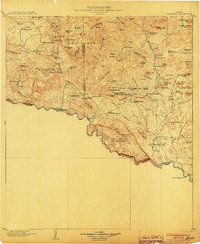
1904 · Terlingua
USGS Topo · 1:125,000
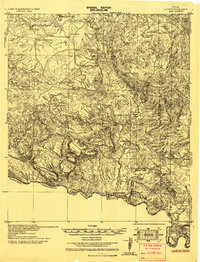
1931 · Lajitas
USGS Topo · 1:62,500
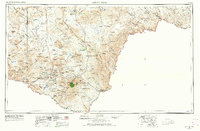
1959 · Emory Peak
USGS Topo · 1:250,000
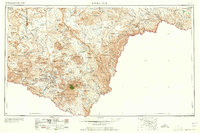
1965 · Emory Peak
USGS Topo · 1:250,000
1971 · Yellow Hill
USGS Topo · 1:24,000
1971 · Amarilla Mountain
USGS Topo · 1:24,000
1971 · The Solitario
USGS Topo · 1:24,000
1971 · Sauceda Ranch
USGS Topo · 1:24,000
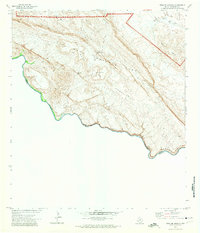
1971 · Mesa De Anguila
USGS Topo · 1:24,000