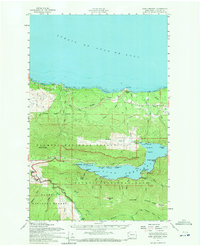
1950 Map of Lake Crescent
USGS Topo · Published 1971About this map
Lake Crescent serves as the central focal point of this mid-century landscape, surrounded by the protected wilderness of Olympic National Park and Olympic National Forest. The map documents a transition in transportation, showing the Old Railroad Grade winding along the northern shore through Ovington and Piedmont. Small settlements and seasonal destinations like Fairholm and Gettysburg Ranch dot the coastline of the Strait of Juan de Fuca, which defines the northern boundary of the sheet. To the south, the terrain rises sharply into high peaks such as Pyramid Mtn, Sourdough Mtn, and Aurora Peak. The drainage patterns are clearly defined by the Soleduck River and its forks, as well as numerous creeks like Murdock Creek and Whisky Creek, illustrating the complex hydrology of the Olympic Peninsula before modern development altered these remote corridors.
Find a feature on this map
57 named features on this map. Tap any name to fly to it.
Don’t see what you’re looking for? This feature index may not catch every label — zoom into the map to look around manually.
Map Details
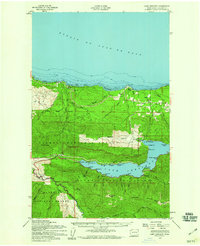
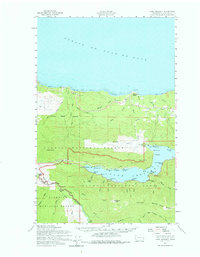
Editions of this 1950 Lake Crescent Map
Other maps of this area
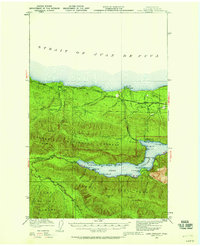
1918 · Lake Crescent
USGS Topo · 1:62,500
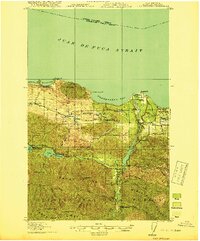
1919 · Port Crescent
USGS Topo · 1:62,500
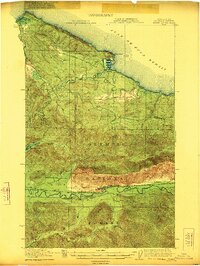
1922 · Pysht
USGS Topo · 1:62,500
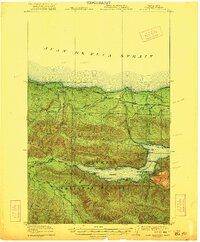
1922 · Lake Crescent
USGS Topo · 1:62,500
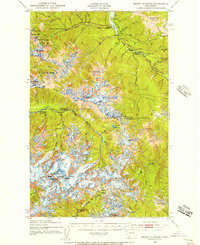
1935 · Mount Olympus
USGS Topo · 1:62,500
1939 · Mount Tom
USGS Topo · 1:62,500
1942 · Pysht
USGS Topo · 1:62,500
1942 · Mount Olympus
USGS Topo · 1:62,500
1943 · Spruce Mountain
USGS Topo · 1:62,500
1943 · Copalis Beach
USGS Topo · 1:250,000