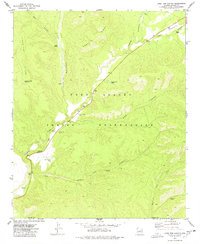
1977 Map of Long Tom Canyon
USGS Topo · Published 1978About this map
Fort Apache Indian Reservation land dominates this high-altitude landscape, where deep drainages like Long Tom Canyon and Cottonwood Canyon cut through a series of prominent rises. In the late 1970s, the terrain was defined by water management for livestock and remote travel, evidenced by numerous named stock tanks such as Bull Pasture Tank, Horse Tank, and Cedar Canyon Tank. The Bureau of Indian Affairs revised these boundaries and features in 1976, noting the essential role of water sources like Little Spring and Dripping Spring in an otherwise arid environment.
Find a feature on this map
27 named features on this map. Tap any name to fly to it.
Don’t see what you’re looking for? This feature index may not catch every label — zoom into the map to look around manually.
Map Details
Editions of this 1977 Long Tom Canyon Map
This is the sole edition of this map. No revisions or reprints were ever made.
Other maps of this area
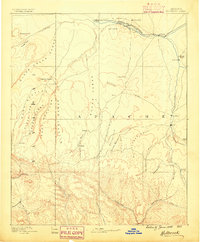
1886 · Holbrook
USGS Topo · 1:250,000
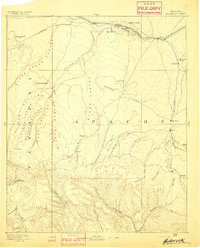
1893 · Holbrook
USGS Topo · 1:250,000
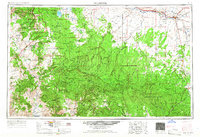
1954 · Holbrook
USGS Topo · 1:250,000
1954 · Mesa
USGS Topo · 1:250,000
1957 · Mesa
USGS Topo · 1:250,000
1957 · Holbrook
USGS Topo · 1:250,000
1958 · Mesa
USGS Topo · 1:250,000
1958 · Holbrook
USGS Topo · 1:250,000
1960 · Holbrook
USGS Topo · 1:250,000
1960 · Mesa
USGS Topo · 1:250,000