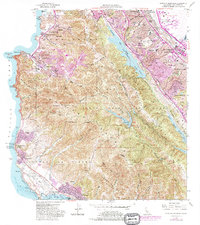
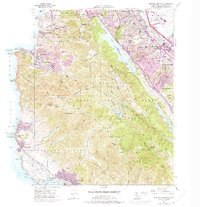
1956 Map of Montara Mountain
USGS Topo · Published 1981About this map
The San Andreas Rift Zone forms a striking geographic divide across this peninsula landscape, separating the developing coastal communities of the west from the bayside cities of the east. On the Pacific coast, the topography is defined by the steep rises of San Pedro Mountain and the prominent North Peak, overlooking the growing neighborhoods of Pacifica, Linda Mar, and Montara. History is rooted in landmarks like the Sanchez Adobe and the Portola Expedition Historical Marker, while the Point Montara Light Station monitors the shoreline near Seal Cove. To the east, the terrain descends toward the San Andreas Lake and Lower Crystal Springs Reservoir, where suburban expansion is evident in San Bruno, Millbrae, and Burlingame. This mid-century view shows a coastal economy in transition, where infrastructure like the Southern Pacific railroad and Hale Moon Bay Airport supports both industrial growth and local recreation at the Sharp Park Golf Course.
Find a feature on this map
84 named features on this map. Tap any name to fly to it.
Don’t see what you’re looking for? This feature index may not catch every label — zoom into the map to look around manually.
Map Details
Editions of this 1956 Montara Mountain Map
5 editions found
Other maps of this area
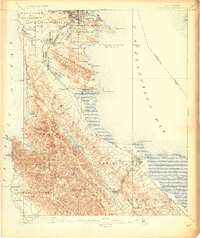
1892 · San Mateo
USGS Topo · 1:62,500
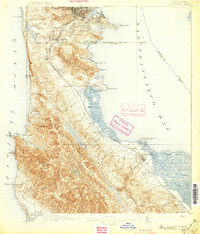
1896 · San Mateo
USGS Topo · 1:62,500
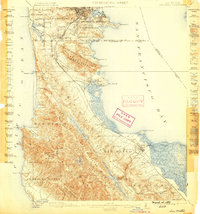
1899 · San Mateo
USGS Topo · 1:62,500
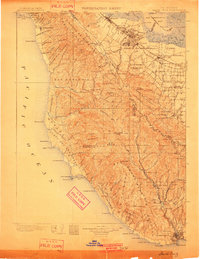
1902 · Santa Cruz
USGS Topo · 1:125,000
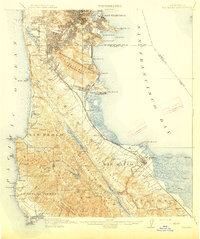
1915 · San Mateo
USGS Topo · 1:62,500
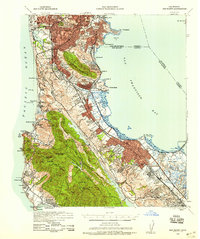
1939 · San Mateo
USGS Topo · 1:62,500
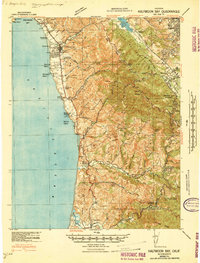
1940 · Halfmoon Bay
USGS Topo · 1:62,500
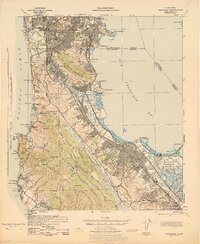
1943 · San Mateo
USGS Topo · 1:62,500
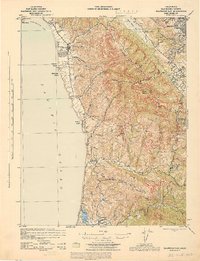
1943 · Halfmoon Bay
USGS Topo · 1:62,500
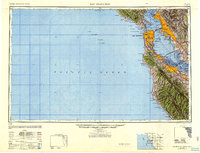
1947 · San Francisco
USGS Topo · 1:250,000