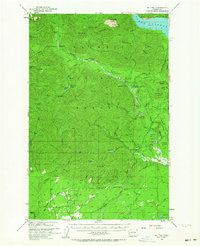
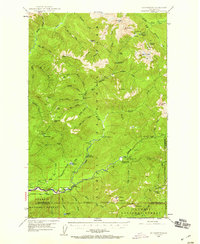
1953 Map of Mt Tebo
USGS Topo · Published 1964About this map
Olympic National Forest dominates this mid-century topographic study, revealing a landscape defined by timber operations and wilderness management. The map details the complex industrial geography of the area, including the Bingham Cr Reload and Fir Creek Reload sites, which emphasize the era's reliance on rail and truck log transport. The presence of Camp 3 (Site) and various back-country shelters like Camp Harps Shelter and Spider Lake Shelter reflect the dual identity of the region as both a working forest and a recreational frontier. To the northeast, the reservoir waters of Lake Cushman are bounded by high peaks such as Lightning Peak and Timber Mtn. The survey also marks the administrative infrastructure of the day, including the Le Bar Guard Sta and Intermount Guard Sta, which served as hubs for forest monitoring and fire prevention.
Find a feature on this map
69 named features on this map. Tap any name to fly to it.
Don’t see what you’re looking for? This feature index may not catch every label — zoom into the map to look around manually.
Map Details
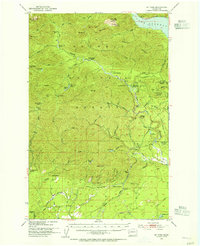
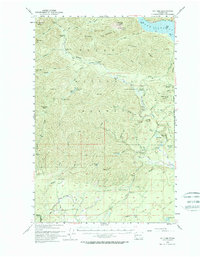
Editions of this 1953 Mt Tebo Map
Other maps of this area
1921 · Satsop
USGS Topo · 1:62,500
1938 · Mt Constance
USGS Topo · 1:125,000
1939 · Shelton
USGS Topo · 1:62,500
1941 · Mobray
USGS Topo · 1:62,500
1943 · Potlatch
USGS Topo · 1:62,500
1943 · Nahwatzel Lake
USGS Topo · 1:62,500
1943 · Mobray
USGS Topo · 1:62,500
1947 · The Brothers
USGS Topo · 1:62,500
1947 · Mt. Steel
USGS Topo · 1:62,500
1947 · Mt Christie
USGS Topo · 1:62,500