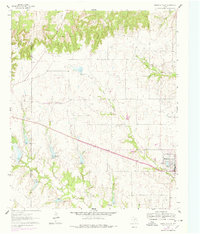
1961 Map of Muenster West
USGS Topo · Published 1978About this map
Muenster serves as the eastern focal point of this North Texas survey, situated just north of the Elm Fork Trinity River. The landscape is defined by the significant elevation changes of Tyler Bluff and the prominent Devils Backbone ridge, which separate the northern drainage of South Fish Creek from the southern tributaries. Industrial activity is visible through the Voth Oil Field and a Gravel Pit, while transportation history is preserved in the trace of an Old Railroad Grade that cuts across the central terrain. The county boundary between Montague and Cooke County is clearly delineated, crossing through rural ranch land and numerous seasonal watercourses like Copeland Creek and Gibbons Branch. Numerous small oil wells and spillways suggest a region deeply involved in local energy production and water management during the early 1960s.
Find a feature on this map
18 named features on this map. Tap any name to fly to it.
Don’t see what you’re looking for? This feature index may not catch every label — zoom into the map to look around manually.
Map Details
Editions of this 1961 Muenster West Map
2 editions found
Other maps of this area
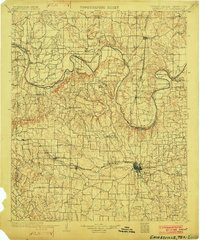
1902 · Gainesville
USGS Topo · 1:125,000
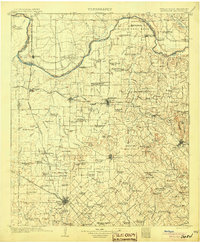
1905 · Montague
USGS Topo · 1:125,000
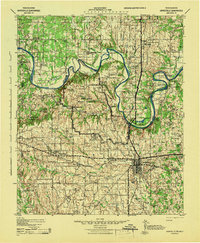
1943 · Gainesville
USGS Topo · 1:125,000
1954 · Sherman
USGS Topo · 1:250,000
1958 · Sherman
USGS Topo · 1:250,000
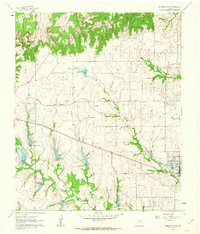
1961 · Muenster West
USGS Topo · 1:24,000
1961 · Saint Jo
USGS Topo · 1:24,000
1961 · Freemound
USGS Topo · 1:24,000
1961 · Hood
USGS Topo · 1:24,000
1961 · Forestburg
USGS Topo · 1:24,000