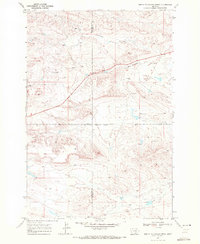
1969 Map of North Telegraph Creek
USGS Topo · Published 1972About this map
The Crow Indian Reservation Boundary bisects this late 1960s landscape, marking a clear division across the undulating terrain of Big Horn and Yellowstone counties. The land is defined by the drainage systems of North Telegraph Creek and the main branch of Telegraph Creek, which carve winding paths through the hills. While primarily open range, the presence of isolated Storage Bins and a prominent Pipeline in the south near Fly Creek suggests a landscape managed for both agriculture and resource transit. The arrival of modern infrastructure is evident along the corridor of 87 212, which cuts diagonally through the northern sections. This survey provides a precise look at the jurisdictional lines and water-driven topography before further late-century developments altered the character of this border region between the two counties.
Find a feature on this map
10 named features on this map. Tap any name to fly to it.
Don’t see what you’re looking for? This feature index may not catch every label — zoom into the map to look around manually.
Map Details
Editions of this 1969 North Telegraph Creek Map
This is the sole edition of this map. No revisions or reprints were ever made.
Other maps of this area
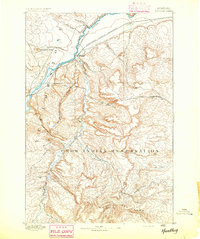
1893 · Huntley
USGS Topo · 1:125,000
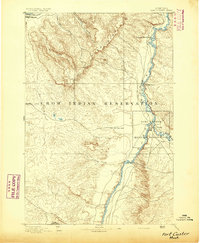
1894 · Fort Custer
USGS Topo · 1:125,000
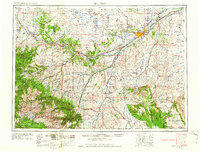
1954 · Billings
USGS Topo · 1:250,000
1954 · Hardin
USGS Topo · 1:250,000
1957 · Hardin
USGS Topo · 1:250,000
1957 · Billings
USGS Topo · 1:250,000
1958 · Billings
USGS Topo · 1:250,000
1958 · Hardin
USGS Topo · 1:250,000
1969 · Rowley NW
USGS Topo · 1:24,000
1969 · Woody Mountain NW
USGS Topo · 1:24,000