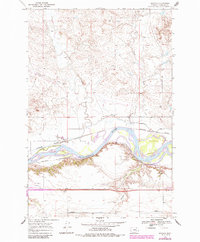
1968 Map of Orinoco
USGS Topo · Published 1985About this map
The Yellowstone River serves as the central artery of this Montana landscape, where the braided river channel dictates the layout of the region's transportation and irrigation infrastructure. The settlement of Orinoco sits along the northern bank, closely tied to the path of the Burlington Northern railroad and the Burlington Northern Canal. This era of the late 1960s shows a landscape defined by water management and transit, with numerous creeks and coulees such as Little Porcupine Creek and Wildcat Coulee draining into the main valley. Further south, the presence of Tillit Field and a highway Weigh Station highlights the intersection of local aviation and regional commerce. The northern plains above the river valley are dissected by drainage systems like Horse Creek and Dry Creek, illustrating the transition from the fertile river bottoms to the higher, arid ranching lands of Rosebud County.
Find a feature on this map
14 named features on this map. Tap any name to fly to it.
Don’t see what you’re looking for? This feature index may not catch every label — zoom into the map to look around manually.
Map Details
Editions of this 1968 Orinoco Map
2 editions found
Other maps of this area
1954 · Forsyth
USGS Topo · 1:250,000
1957 · Forsyth
USGS Topo · 1:250,000
1958 · Forsyth
USGS Topo · 1:250,000
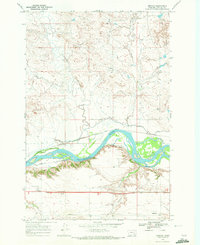
1968 · Orinoco
USGS Topo · 1:24,000
1968 · Rosebud
USGS Topo · 1:24,000
1968 · Box Canyon Coulee
USGS Topo · 1:24,000
1968 · Forsyth
USGS Topo · 1:24,000
1968 · Schultz Coulee
USGS Topo · 1:24,000
1968 · Black Coulee
USGS Topo · 1:24,000
1971 · Smith Creek NE
USGS Topo · 1:24,000