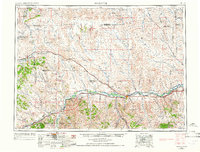
1954 Map of Forsyth
USGS Topo · Published 1966About this map
The Yellowstone River and its parallel rail lines dictate the settlement pattern of this mid-century Montana landscape. The Northern Pacific and the Chicago Milwaukee St Paul and Pacific railroads follow the river corridor, supporting towns like Forsyth and Hysham and smaller sidings such as Bascom Siding and Ahles Siding. To the north, the terrain transitions into the high plains where the economy shifts from river-valley agriculture to energy extraction, anchored by the North West Sumatra Oil Field and the Ragged Point Oil Field near Sumatra. The map also captures the confluence of the Bighorn River with the Yellowstone, a vital junction for regional travel. Distinctive local toponyms, including Starved to Death Creek and Froze to Death Creek, reflect the stark realities of the early frontier experience in this part of Rosebud and Treasure Counties.
Find a feature on this map
66 named features on this map. Tap any name to fly to it.
Don’t see what you’re looking for? This feature index may not catch every label — zoom into the map to look around manually.
Map Details
Editions of this 1954 Forsyth Map
3 editions found
Other maps of this area
1893 · Huntley
USGS Topo · 1:125,000
1894 · Fort Custer
USGS Topo · 1:125,000
1953 · Miles City
USGS Topo · 1:250,000
1954 · Billings
USGS Topo · 1:250,000
1954 · Hardin
USGS Topo · 1:250,000
1954 · Jordan
USGS Topo · 1:250,000
1954 · Ekalaka
USGS Topo · 1:250,000
1954 · Roundup
USGS Topo · 1:250,000
1954 · Glendive
USGS Topo · 1:250,000
1954 · Lewistown
USGS Topo · 1:250,000