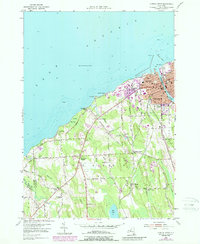
1954 Map of Oswego West
USGS Topo · Published 1988About this map
Fort Ontario guards the mouth of the Oswego River where it meets Lake Ontario, anchoring a landscape that balances maritime history with academic growth and rural heritage. This 1950s survey captures the city of Oswego as its modern footprint began to expand, notably through the development of the SUNY College at Oswego campus along the shoreline. Beyond the urban center, the map documents a series of small agricultural and residential nodes such as Fruit Valley, Southwest Oswego, and Oswego Center, each defined by local landmarks like School No 9 and Saint Mary's Chapel. For genealogists, the map is particularly valuable for locating historical burial grounds, including the Union Village Rural Cem and the Irish Settlement Cem, which mark the paths of early immigrant families. The terrain transitions from the rocky lakefront at Burt Point to the inland rises of Bunker Hill and Tug Hill, drained by many small waterways like Eightmile Creek.
Find a feature on this map
59 named features on this map. Tap any name to fly to it.
Don’t see what you’re looking for? This feature index may not catch every label — zoom into the map to look around manually.
Map Details
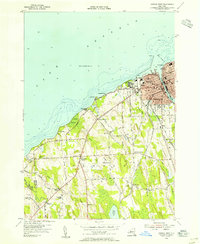
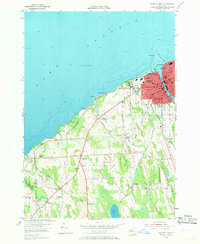
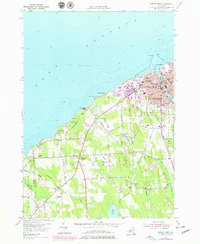
Editions of this 1954 Oswego West Map
4 editions found
Other maps of this area
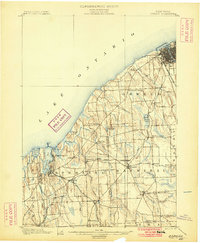
1900 · Oswego
USGS Topo · 1:62,500
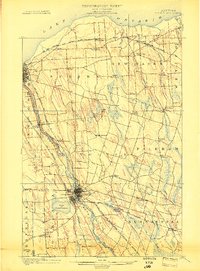
1900 · Fulton
USGS Topo · 1:62,500
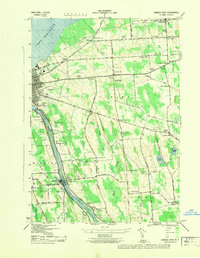
1943 · Oswego East
USGS Topo · 1:31,680
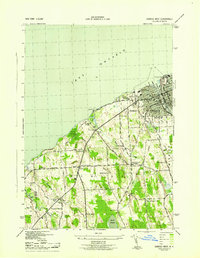
1943 · Oswego West
USGS Topo · 1:31,680
1943 · Hannibal
USGS Topo · 1:31,680
1943 · West Of Texas
USGS Topo · 1:31,680
1943 · Fair Haven
USGS Topo · 1:31,680
1943 · West Ninemile Point
USGS Topo · 1:31,680
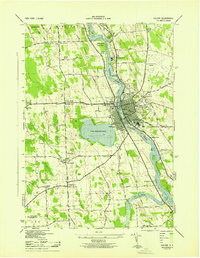
1943 · Fulton
USGS Topo · 1:31,680
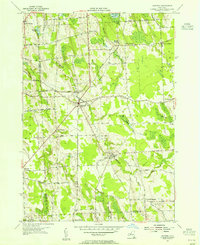
1954 · Hannibal
USGS Topo · 1:24,000