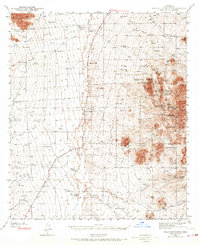
1940 Map of Palo Alto Ranch
USGS Topo · Published 1968About this map
The Sierrita Mountains and Coyote Mountains dominate this 1940 topographic landscape, revealing a high-desert environment defined by mining prospects and isolated ranching outposts. Numerous mining operations appear in an inactive state at the time of the survey, including the Copper Glantz Mine, Aguinaldo Mine, and Johnny Mine, signaling a shift in the local economy away from the extraction of earlier decades.
Find a feature on this map
64 named features on this map. Tap any name to fly to it.
Don’t see what you’re looking for? This feature index may not catch every label — zoom into the map to look around manually.
Map Details
Editions of this 1940 Palo Alto Ranch Map
3 editions found
Other maps of this area
1920 · Arivaca
USGS Topo · 1:125,000
1925 · Samaniego Peak
USGS Topo · 1:62,500
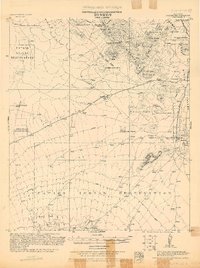
1925 · San Xavier
USGS Topo · 1:62,500
1934 · Tucson Mountains
USGS Topo · 1:125,000
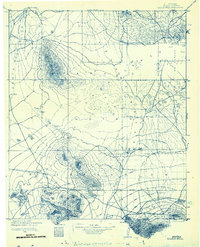
1934 · Silver Bell
USGS Topo · 1:125,000
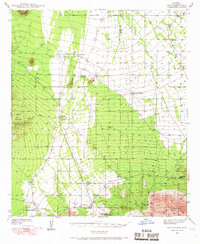
1938 · San Vicente
USGS Topo · 1:62,500
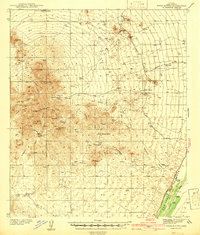
1939 · Twin Buttes
USGS Topo · 1:62,500
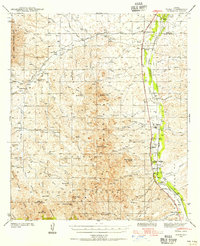
1939 · Tubac
USGS Topo · 1:62,500
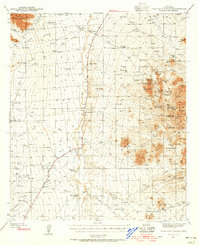
1940 · Palo Alto Ranch
USGS Topo · 1:62,500
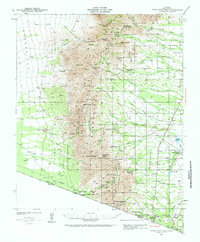
1941 · Presumido Peak
USGS Topo · 1:62,500