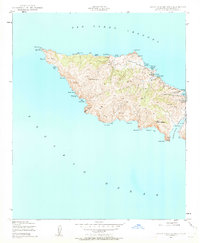
1943 Map of Santa Catalina West
USGS Topo · Published 1963About this map
Silver Peak and Mt Torquemada dominate the high interior of the western end of Santa Catalina Island, rising above a coastline defined by steep ridges and sheltered coves. The 1943 survey, conducted during a period of heightened coastal awareness, reveals a landscape primarily dedicated to maritime navigation and early recreational use. At the far northwestern tip, the Catalina Island West End Light stands near Lands End, marking the entrance to the San Pedro Channel. Along the northern shore, isolated landings such as Parsons Landing and Johnsons Landing provided access to the interior, while Emerald Bay hosted the Girl Scouts Camp. On the southern coast, the deep indentation of Catalina Harbor is protected by Catalina Head, with Ballast Point marking the inner anchorage. This topography illustrates the island's isolation before modern development, where transport was largely dictated by sea-accessible points like Cherry Cove and Fourth of July Cove.
Find a feature on this map
36 named features on this map. Tap any name to fly to it.
Don’t see what you’re looking for? This feature index may not catch every label — zoom into the map to look around manually.
Map Details
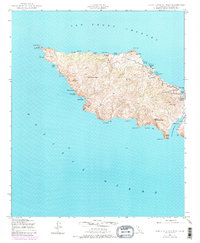
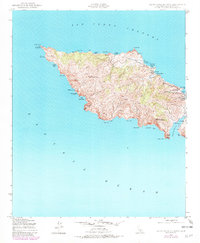
Editions of this 1943 Santa Catalina West Map
4 editions found
Other maps of this area
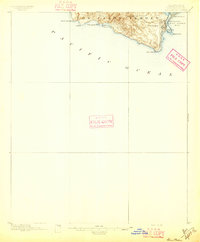
1896 · San Pedro
USGS Topo · 1:62,500
1901 · Southern California Sheet No. 1
USGS Topo · 1:250,000

1904 · Southern California Sheet No. 1
USGS Topo · 1:250,000
1943 · San Pedro
USGS Topo · 1:125,000
1943 · Santa Catalina North
USGS Topo · 1:24,000
1943 · Santa Catalina South
USGS Topo · 1:24,000
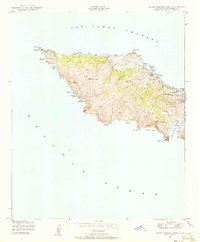
1943 · Santa Catalina West
USGS Topo · 1:24,000
1944 · San Pedro
USGS Topo · 1:62,500
1949 · Long Beach
USGS Topo · 1:250,000
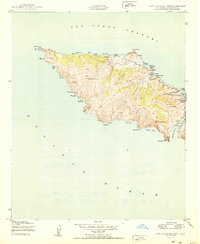
1950 · Santa Catalina West
USGS Topo · 1:24,000