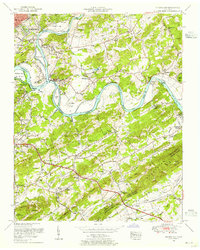
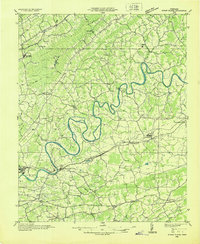
1953 Map of Shooks Gap
USGS Topo · Published 1955About this map
The French Broad River and Holston River converge on this 1950s sheet to form the headwaters of the Tennessee River, framing the eastern expansion of Knoxville. The landscape is a mix of river-bottom agriculture and industrial extraction, most notably at Meades Quarry and Neubert Quarry. Before the full dominance of modern bridges, the Riverdale Ferry still served as a vital crossing point near the settlement of Riverdale.
Find a feature on this map
119 named features on this map. Tap any name to fly to it.
Don’t see what you’re looking for? This feature index may not catch every label — zoom into the map to look around manually.
Map Details
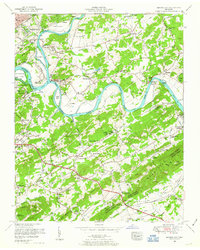
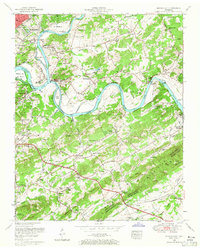
Editions of this 1953 Shooks Gap Map
3 editions found
Other maps of this area
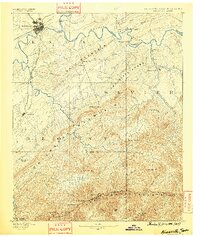
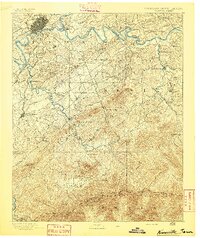
1886 · Knoxville
USGS Topo · 1:125,000
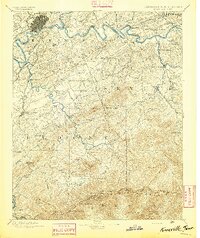
1892 · Knoxville
USGS Topo · 1:125,000
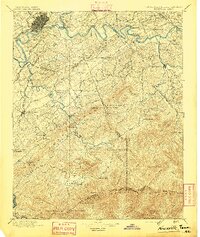
1894 · Knoxville
USGS Topo · 1:125,000
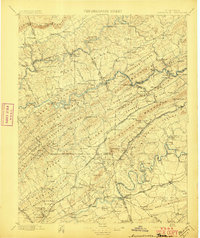
1895 · Knoxville
USGS Topo · 1:125,000
1897 · Maynardville
USGS Topo · 1:125,000
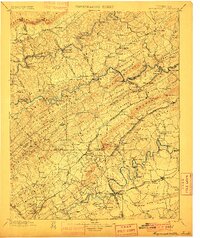
1900 · Maynardville
USGS Topo · 1:125,000
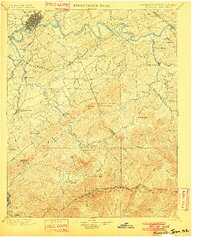
1901 · Knoxville
USGS Topo · 1:125,000
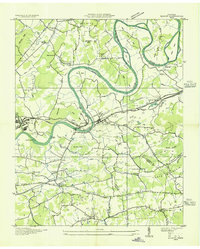
1935 · Mascot
USGS Topo · 1:24,000
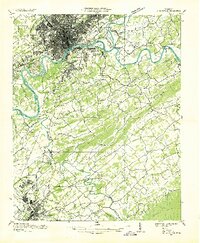
1935 · Knoxville
USGS Topo · 1:48,000
1935 · Straw Plains
USGS Topo · 1:48,000