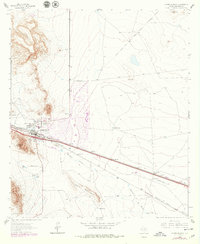
1964 Map of Sierra Blanca
USGS Topo · Published 1979About this map
Sierra Blanca serves as the focal point of this arid West Texas landscape, positioned at a critical junction of transportation and topography. In the 1960s, the town was a vital hub where the Southern Pacific and Missouri Pacific railroads converged, facilitating movement through the mountain passes. The terrain is dominated by the prominent peaks of Texan Mountain and the elongated ridge of Sand Mountain, which rise sharply from the basin floor. Below these heights, the landscape is defined by drainage patterns like Blanca Draw and a network of livestock water sources such as Stray Tank and Blount Tank. Mapping revisions in the 1970s reveal the expansion of local infrastructure, including a prominent Golf Course and residential features like a Trailer Park, reflecting the town's role as the county seat of Hudspeth County during a period of modern development.
Find a feature on this map
20 named features on this map. Tap any name to fly to it.
Don’t see what you’re looking for? This feature index may not catch every label — zoom into the map to look around manually.
Map Details
Editions of this 1964 Sierra Blanca Map
3 editions found
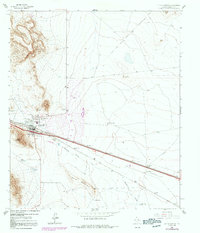
Other maps of this area
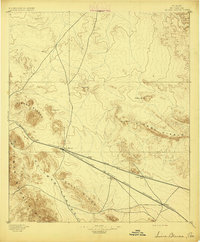
1895 · Sierra Blanca
USGS Topo · 1:125,000
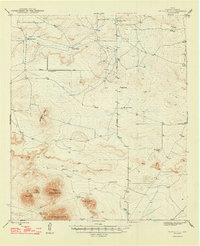
1948 · Triple Hill
USGS Topo · 1:62,500
1954 · Van Horn
USGS Topo · 1:250,000
1958 · Van Horn
USGS Topo · 1:250,000
1963 · Grayton Lake
USGS Topo · 1:24,000
1964 · Devil Ridge
USGS Topo · 1:24,000
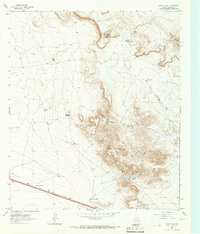
1964 · Dome Peak
USGS Topo · 1:24,000
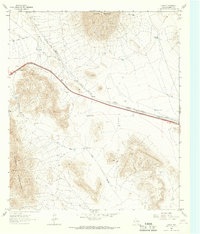
1964 · Lasca
USGS Topo · 1:24,000
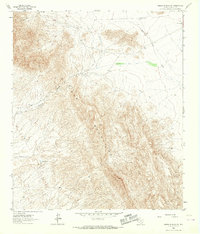
1964 · Sierra Blanca SW
USGS Topo · 1:24,000
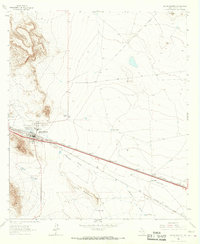
1964 · Sierra Blanca
USGS Topo · 1:24,000