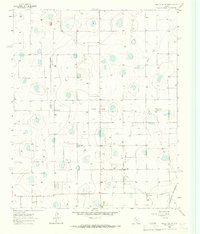
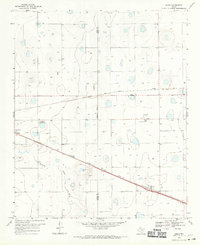
1965 Map of Silverton SW
USGS Topo · Published 1967About this map
Lone Star sits at a geographic crossroads on the High Plains where the borders of Briscoe, Floyd, and Swisher counties meet. This mid-1960s landscape is characterized by a dense network of water wells and numerous depressions typical of the Llano Estacado. The southeastern corner of the map reveals the transition toward the canyonlands, marked by the winding course of Quitaque Creek. Infrastructure of the era is represented by the Fort Worth and Denver railroad line and a nearby Landing Strip, while an Old Railroad Grade hints at earlier transportation routes that once traversed these agricultural lands. Small family-named landmarks like Gill provide specific points of interest for local historians studying the rural development of the Texas Panhandle during this period.
Find a feature on this map
12 named features on this map. Tap any name to fly to it.
Don’t see what you’re looking for? This feature index may not catch every label — zoom into the map to look around manually.
Map Details
Editions of this 1965 Silverton SW Map
This is the sole edition of this map. No revisions or reprints were ever made.
Other maps of this area
1954 · Plainview
USGS Topo · 1:250,000
1958 · Plainview
USGS Topo · 1:250,000

1965 · Whiteley
USGS Topo · 1:24,000

1965 · Silverton
USGS Topo · 1:24,000

1965 · Rock Creek
USGS Topo · 1:24,000
1966 · Sterley
USGS Topo · 1:24,000

1966 · South Plains
USGS Topo · 1:24,000
1968 · Aiken
USGS Topo · 1:24,000

1969 · Claytonville
USGS Topo · 1:24,000

1969 · Providence
USGS Topo · 1:24,000