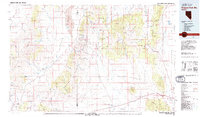
1979 Map of Simpson Park Mts
USGS Topo · Published 1979About this map
Simpson Park Mountains and the Roberts Mountains dominate this central Nevada landscape, separated by the expansive Grass Valley. This late 1970s survey captures a transition in land use, where traditional ranching and mining pursuits exist alongside modern infrastructure. The Lone Mountain Mine sits at the southern edge of its namesake peak, while the Eureka Airport and various landing fields indicate the region's reliance on aviation for connectivity across the high desert. Numerous water sources, such as Rye Patch Spring, Valley Spring, and Underwood Spring, are carefully mapped, highlighting their critical importance in this arid environment. The boundary between Lander and Eureka counties bisects the terrain, which ranges from the depths of Ackerman Canyon to the heights of Mount Callaghan within the Toiyabe National Forest.
Find a feature on this map
73 named features on this map. Tap any name to fly to it.
Don’t see what you’re looking for? This feature index may not catch every label — zoom into the map to look around manually.
Map Details
Editions of this 1979 Simpson Park Mts Map
2 editions found
Other maps of this area
1926 · Roberts Mountains
USGS Topo · 1:250,000
1929 · Roberts Mountains
USGS Topo · 1:250,000
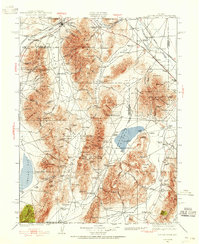
1932 · Sonoma Range
USGS Topo · 1:250,000
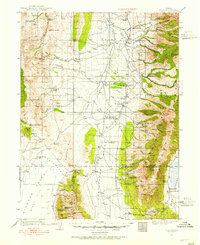
1934 · Jiggs
USGS Topo · 1:125,000
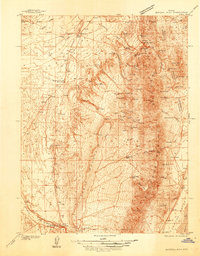
1937 · Mineral Hill
USGS Topo · 1:48,000
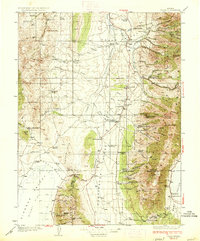
1937 · Jiggs
USGS Topo · 1:125,000
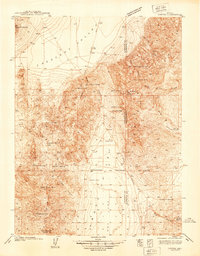
1938 · Cortez
USGS Topo · 1:48,000
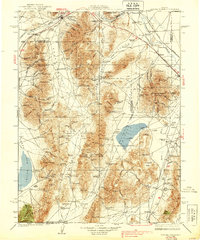
1939 · Sonoma Range
USGS Topo · 1:250,000
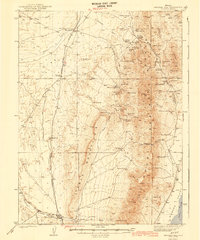
1943 · Mineral Hill
USGS Topo · 1:62,500
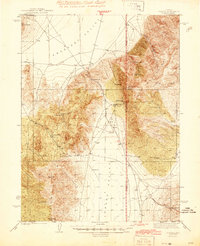
1944 · Cortez
USGS Topo · 1:62,500