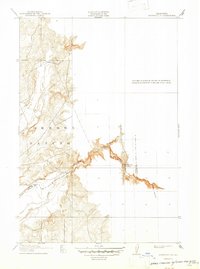
1915 Map of Spenceville
USGS Topo · Published 1947About this map
Johnson Rancho dominates the western half of this landscape, a significant historical land grant area documented during a period of topographic refinement. The Bear River winds through the central portion of the map, serving as a defining natural corridor and a point of intersection for regional boundaries. At McCourtney Crossing, the river becomes a focal point for movement between the adjacent counties. The terrain is intricately etched by waterways such as Dry Creek and Rock Cr, along with the steep descent of Fenton Ravine. This survey, updated in the years before the mid-century, captures the rural character of the region where Yuba, Nevada, and Placer counties meet, illustrating the early road networks and hydraulic patterns that shaped the foothills.
Find a feature on this map
10 named features on this map. Tap any name to fly to it.
Don’t see what you’re looking for? This feature index may not catch every label — zoom into the map to look around manually.
Map Details
Editions of this 1915 Spenceville Map
This is the sole edition of this map. No revisions or reprints were ever made.
Other maps of this area
1893 · Huntley
USGS Topo · 1:125,000
1894 · St. Xavier
USGS Topo · 1:125,000
1894 · Fort Custer
USGS Topo · 1:125,000
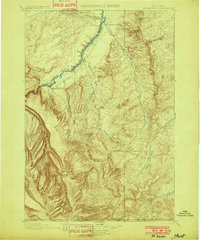
1901 · St. Xavier
USGS Topo · 1:125,000
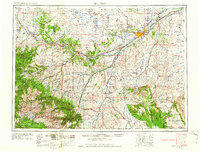
1954 · Billings
USGS Topo · 1:250,000
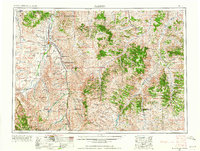
1954 · Hardin
USGS Topo · 1:250,000
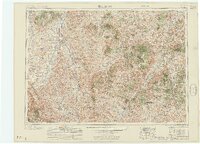
1957 · Hardin
USGS Topo · 1:250,000
1957 · Billings
USGS Topo · 1:250,000
1958 · Billings
USGS Topo · 1:250,000
1958 · Hardin
USGS Topo · 1:250,000