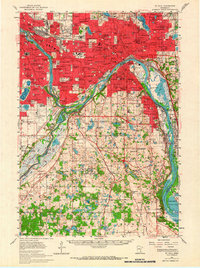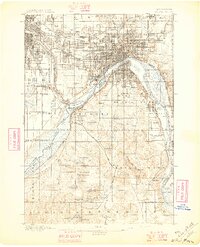
1896 Map of St. Paul
USGS Topo · Published 1896About this map
The Mississippi River serves as the central artery of this late 19th-century landscape, carving a deep valley that separates the growing urban centers of St. Paul and Minneapolis. At the strategic confluence where the Minnesota River meets the Mississippi, Fort Snelling and its surrounding Military Reservation dominate the high ground near Pike Island. The map captures a moment of intense rail expansion, showing a complex network including the Great Northern and the Minnesota Belt Line Ry stitching together neighborhoods like Merriam Park and Dayton Bluff. South of the city, the land breaks into a mosaic of small lakes and townships such as Mendota and Egan. Notable landmarks like Minnehaha Falls and the bluffs at Highland highlight the elevation changes that defined early development patterns in the Twin Cities region.
Find a feature on this map
103 named features on this map. Tap any name to fly to it.
Don’t see what you’re looking for? This feature index may not catch every label — zoom into the map to look around manually.
Map Details
Editions of this 1896 St. Paul Map
11 editions found
1896 edition
16.72 x 20.65 inches
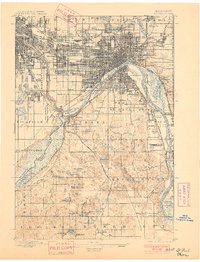
1901 edition
15.7 x 20.57 inches
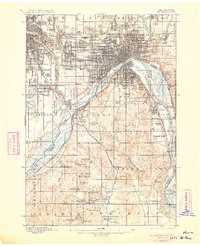
1906 edition
16.59 x 20.43 inches
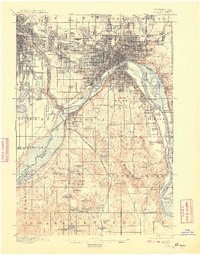
1908 edition
15.92 x 20.34 inches
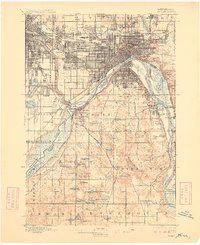
1909 edition
16.57 x 20.33 inches
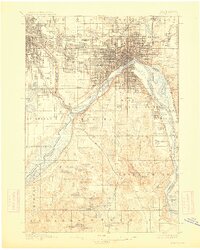
1913 edition
16.23 x 20.26 inches
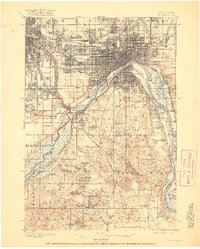
1917 edition
16.44 x 20.52 inches
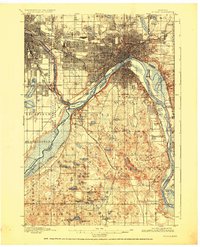
1926 edition
16.61 x 20.49 inches
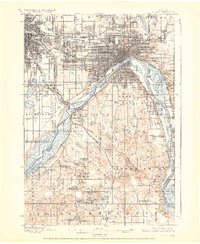
1928 edition
16.55 x 20.24 inches
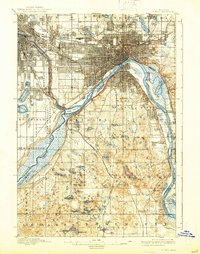
1938 edition
15.74 x 19.97 inches
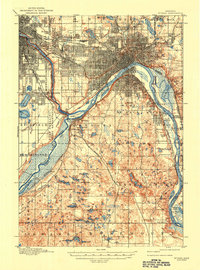
1947 edition
15.2 x 20.5 inches