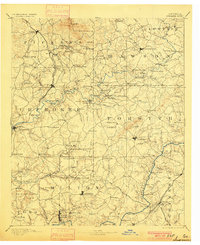
1894 Map of Suwanee
USGS Topo · Published 1900About this map
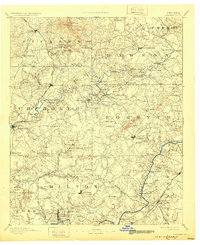
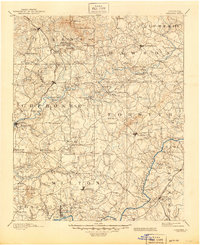
The Etowah River carves through the heart of this landscape, its banks dotted with vital river-crossings like Gilmer Ferry and Chamlee Ferry that connected North Georgia's rural communities before modern bridges. This late nineteenth-century environment was defined by industrial extraction, notably the marble Quarries around Tate and Marble Hill, and the search for gold at the Franklin Gold Mine and Kin Mori Gold Mine. The North Georgia Railroad and Atlanta and Danville Railroad provided the necessary lifelines for these mineral-rich regions, moving goods from settlements such as Ball Ground and Nelson. Local commerce was rooted in small hubs like Northeut Store and the mills at Lebanon Mills, reflecting a time when the region was a network of family farms, mines, and isolated rural outposts such as Ophir and Free Homes.
Find a feature on this map
170 named features on this map. Tap any name to fly to it.
Don’t see what you’re looking for? This feature index may not catch every label — zoom into the map to look around manually.
Map Details
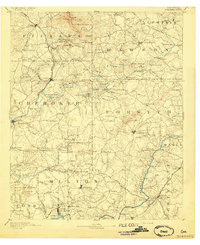
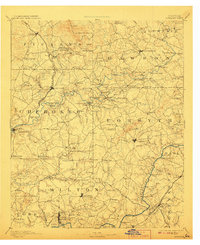
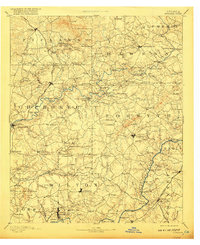
Editions of this 1894 Suwanee Map
6 editions found
Other maps of this area
1886 · Dalton
USGS Topo · 1:125,000
1886 · Dahlonega
USGS Topo · 1:125,000
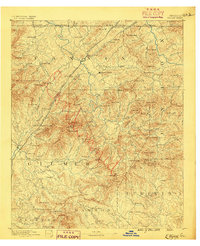
1888 · Ellijay
USGS Topo · 1:125,000
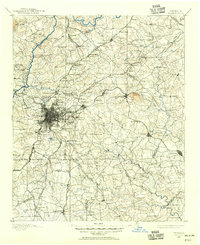
1888 · Atlanta
USGS Topo · 1:125,000
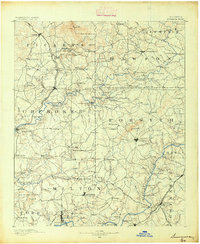
1890 · Suwanee
USGS Topo · 1:125,000
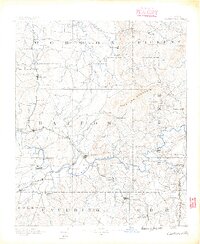
1890 · Cartersville
USGS Topo · 1:125,000
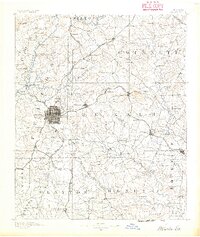
1890 · Atlanta
USGS Topo · 1:125,000
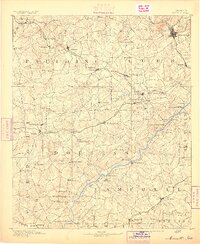
1891 · Marietta
USGS Topo · 1:125,000
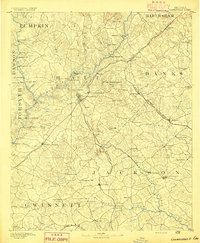
1891 · Gainesville
USGS Topo · 1:125,000
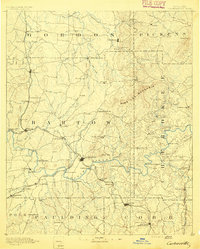
1891 · Cartersville
USGS Topo · 1:125,000