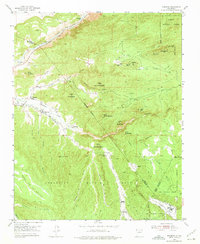
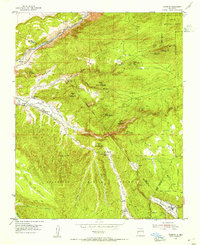
1953 Map of Trampas
USGS Topo · Published 1975About this map
Trampas and the surrounding high-altitude high desert of Rio Arriba and Taos counties appear here just as they were documented in the early 1950s. The landscape is defined by traditional Spanish land grants, including the Sebastian Martin Grant and the Las Trampas Grant, which preserved a distinct settlement pattern of small villages along narrow watercourses. Small agricultural communities like Apodaca, Dixon, and El Llano are clustered near Embudo Creek, where man-made flumes and ditches divert water to the valley floor. To the east, the terrain rises into the Carson National Forest, where the economy shifted from farming to mineral extraction. Notable sites like the Harding Mine and several inactive tungsten and copper workings near Copper Hill illustrate the region's diverse mining history. Cultural landmarks, including the Iglesia de Santo Tomas and Escuela de Abajo, anchor the remote mountain settlements.
Find a feature on this map
63 named features on this map. Tap any name to fly to it.
Don’t see what you’re looking for? This feature index may not catch every label — zoom into the map to look around manually.
Map Details
Editions of this 1953 Trampas Map
3 editions found
Other maps of this area
1953 · Truchas
USGS Topo · 1:24,000
1953 · Velarde
USGS Topo · 1:24,000
1953 · Trampas
USGS Topo · 1:24,000
1953 · Chimayo
USGS Topo · 1:24,000
1954 · Raton
USGS Topo · 1:250,000
1958 · Raton
USGS Topo · 1:250,000
1960 · Taos Junction
USGS Topo · 1:24,000
1961 · Carson
USGS Topo · 1:24,000
1964 · Penasco
USGS Topo · 1:24,000
1964 · Taos SW
USGS Topo · 1:24,000