Old Maps of Santa Clara County, California for Hiking & Exploration
Hike through history with 265 historic maps of Santa Clara County. Explore old trails, ghost towns, and forgotten backroads — perfect for outdoor adventurers and local explorers.
- Rediscover forgotten places: Map out old mining camps, roads, and footpaths that no longer exist on modern maps.
- Layer with modern tools: Combine with LiDAR or satellite views to plan hikes through historical terrain.
- Made for exploration: Popular among hikers, overlanders, and local history lovers.
Use these maps to find adventure and explore the hidden past of Santa Clara County.
Santa Clara County, CA maps
(265)- 1889 Map of San Jose, 1939 Print
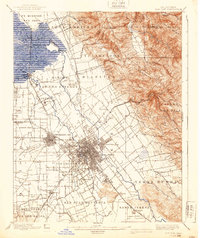 1889 San Jose1939 Print · USGSSanta Clara County during the late nineteenth century was a mosaic of historic ranchos and developing rail lines. Genealogists can trace family footprints through early settlements like Milpitas, Berryessa, and the grounds of the Santa Clara Co. Alms House.2 unique versions available
 - 1897 Map of San Jose
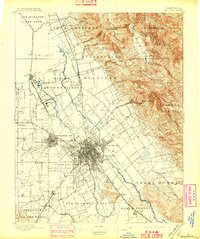 1897 San Jose1897 Print · USGSThe Santa Clara Valley at the close of the nineteenth century is captured here as a landscape of vast ranchos and emerging rail towns. Genealogists can trace family lands across the Enright Tract or locate ancestors at the County Infirmary, Agnew, and Willow Glen.
 - 1897 Map of Mt. Hamilton
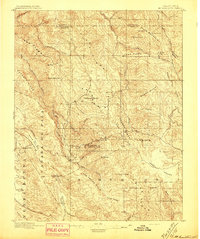 1897 Mt. Hamilton1897 Print · USGSThe peaks and ridges of the Diablo Range are documented here in the mid-1890s, centered on the newly established Lick Observatory. Local historians can trace the early road up Mt Hamilton past the lone Hotel and remote outposts like Mowry Camp.6 unique versions available
 - 1897 Map of Palo Alto
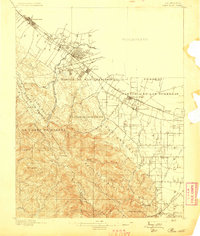 1897 Palo Alto1897 Print · USGSThe San Francisco Peninsula and Santa Clara Valley emerge in the late nineteenth century as academic and rail hubs. Trace the early footprints of Stanford University, the primary line of the Southern Pacific RR, and the transition of old ranchos like La Purisima Concepcion.
 - 1899 Map of San Jose
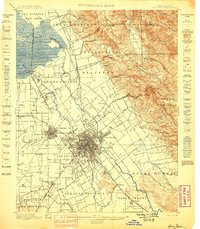 1899 San Jose1899 Print · USGSThe Santa Clara Valley at the end of the century reveals a landscape of ranchos and growing rail hubs. Genealogists can trace family names and institutions from San Jose to the Santa Clara Co. Alms House and Agnew asylum.6 unique versions available
 - 1899 Map of Palo Alto
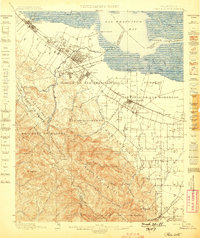 1899 Palo Alto1899 Print · USGSThe San Francisco Peninsula was entering a period of rapid development in the 1890s as railroad towns began to flourish around the new Stanford University campus. You can trace early property lines across Pastoria de las Borregas or locate nineteenth-century landings like Cooley Landing and Jagel Landing.11 unique versions available
 - 1902 Map of Santa Cruz
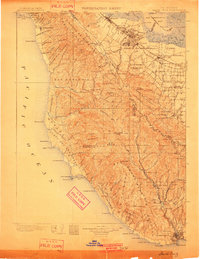 1902 Santa Cruz1902 Print · USGSCoastal California at the end of the Victorian era reveals a landscape of redwood forests, early university towns, and remote Pacific outposts. Genealogists and historians can trace the early rail corridors through Boulder Creek and Felton or locate coastal landmarks like Pigeon Point and Halfmoon Bay.9 unique versions available
 - 1915 Map of San Juan Bautista
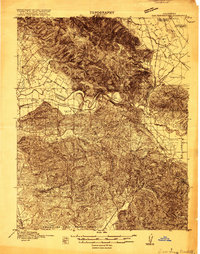 1915 San Juan Bautista1915 Print · USGSCentral Coast agriculture and railroad expansion converge in this 1910s study of the Pajaro Valley. Local historians can trace the Southern Pacific line past Watsonville Junction to the Mission San Juan Bautista.
 - 1916 Map of New Almaden
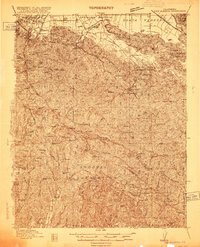 1916 New Almaden1916 Print · USGSThe Santa Cruz Mountains and the Guadalupe River watershed are captured here during the mid-1910s. Researchers can trace the rail-to-mine connections of New Almaden or locate early schools like Vinehill School and the (Abandoned Town) near Almaden Canyon.
 - 1917 Map of Morgan Hill
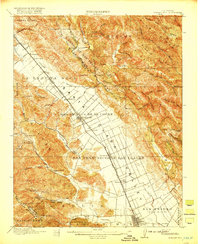 1917 Morgan Hill1917 Print · USGSSanta Clara County during the early twentieth century is captured here as a valley of orchards and growing rail towns. Genealogists can locate specific family sites like Bradleys Store or trace rural attendance at Machado School and Uvas School.5 unique versions available
 - 1917 Map of San Juan Bautista
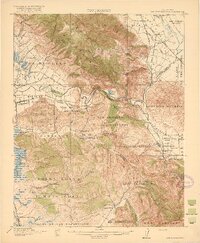 1917 San Juan Bautista1917 Print · USGSThe fertile valleys of the Central Coast meet at the foot of the Santa Cruz Mountains during this era of agricultural expansion. Genealogists can trace family names across huge land grants and locate historic sites like Mission San Juan Bautista and the St Francis Orphan Asylum.6 unique versions available
 - 1919 Map of Hollister
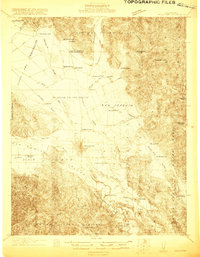 1919 Hollister1919 Print · USGSThe Santa Clara and San Benito county line area in the late nineteen-teens shows a landscape of expansive ranches and rural school districts. Genealogists can trace early homesteads and family names at Pacheco Ranch, San Justo School, and Dunneville.
 - 1919 Map of New Almaden, 1928 Print
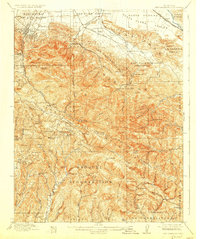 1919 New Almaden1928 Print · USGSThe Santa Cruz Mountains and the mercury mining district at New Almaden are shown here as they appeared just after the first world war. Researchers can trace the Southern Pacific rail line and locate numerous rural schoolhouses like Summit School and Eureka School.4 unique versions available
 - 1920 Map of Pacheco Pass
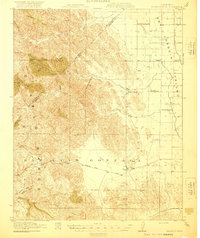 1920 Pacheco Pass1920 Print · USGSThe Pacheco Pass gateway and the eastern Diablo Range are captured here during the early twentieth century. Researchers can trace historic local life through sites like the Bald Eagle Mine, San Luis Ranch, and Cottonwood School.4 unique versions available
 - 1921 Map of Gilroy Hot Springs
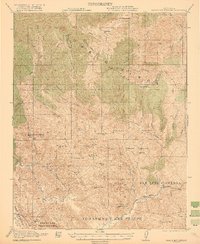 1921 Gilroy Hot Springs1921 Print · USGSThe Diablo Range east of Gilroy reveals a landscape of massive land grants and remote ranching outposts in the early twentieth century. Genealogists and historians can trace family holdings like the Robeson Ranch or locate the historic Bells Station near Pacheco Pass.4 unique versions available
 - 1921 Map of Hollister
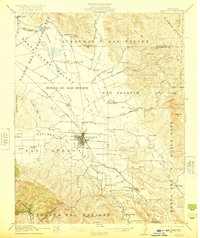 1921 Hollister1921 Print · USGSThe San Benito and San Justo valleys come alive in this post-World War I era survey of the Hollister region. Researchers can trace family estates and early landmarks like the County Hospital, Barco Ranch, and the Southern Pacific rail line.4 unique versions available
 - 1922 Map of Quien Sabe
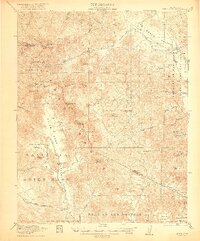 1922 Quien Sabe1922 Print · USGSThe Diablo Range transitions from rugged peaks to vast historic land grants in the early twentieth century. Researchers can trace remote ranching sites like Buena Vista Ranch, the high-altitude Stayton Mine, and the local Quien Sabe School.4 unique versions available
 - 1923 Map of Hollister, 1955 Print
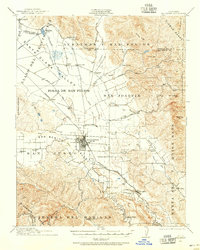 1923 Hollister1955 Print · USGSHollister and the surrounding San Benito valley are captured here in the early 1920s as the rail and agricultural networks were fully established. Genealogists can locate family holdings like Indart Ranch and numerous rural landmarks such as Enterprise School and the COUNTY HOSPITAL.
 - 1938 Map of Mt. Boardman, 1957 Print
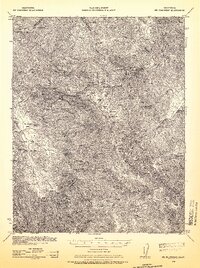 1938 Mt. Boardman1957 Print · USGSThe Diablo Range backcountry in the late 1930s is revealed here as a landscape of isolated ranching and mining. Researchers can locate family landmarks like Gerber Ranch or trace the early development of the Western Mine and Shanti Ashrama.3 unique versions available
 - 1939 Map of Morgan Hill, 1957 Print
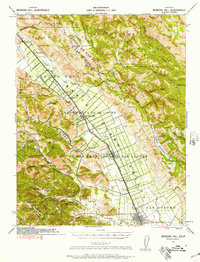 1939 Morgan Hill1957 Print · USGSSanta Clara County at the end of the 1930s shows a valley of orchards and ranchlands along the Southern Pacific line. Researchers can trace early school districts at Burnett School and Llagas School, or find vanished community hubs like Bradley Store and the original Old Gilroy.2 unique versions available
 - 1939 Map of Gilroy Hot Springs, 1958 Print
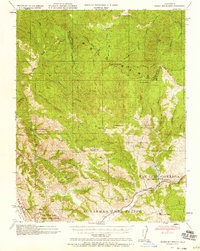 1939 Gilroy Hot Springs1958 Print · USGSThe Diablo Range in the late thirties was a rugged landscape of high peaks and isolated ranching outposts. Local historians can trace early thoroughfares like Pacheco Pass Road and find family-named landmarks including Robeson Ranch and Gilroy Hot Springs.
 - 1939 Map of San Juan Bautista, 1958 Print
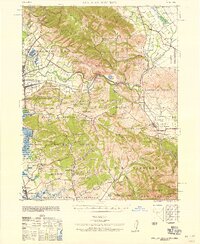 1939 San Juan Bautista1958 Print · USGSThe Central Coast landscape at the dawn of World War II is documented here, showing the intersection of Spanish-era ranchos and the Southern Pacific rail line. Researchers can trace the grounds of Mission San Juan Bautista, identify the Sargent Oil Field, and locate numerous rural schoolhouses like Carlton School.
 - 1940 Map of San Juan Bautista
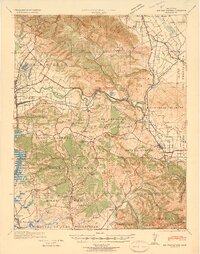 1940 San Juan Bautista1940 Print · USGSCentral California coastal and valley life at the start of the 1940s is captured here, where four counties meet. Genealogy researchers can trace family-named sites like Patrick Breen, old rural institutions like the St Francis Orphan Asylum, and the early Sargent Oil Fields.
 - 1940 Map of Gilroy Hot Springs
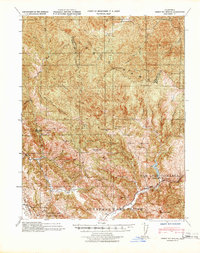 1940 Gilroy Hot Springs1940 Print · USGSThe Diablo Range rises above the Santa Clara Valley in the early 1940s, showing a landscape of remote cattle ranches and high peaks. Genealogists and hikers can trace historic properties like Robeson Ranch or navigate the routes through Pacheco Pass and Gilroy Hot Springs.
 - 1940 Map of Hollister
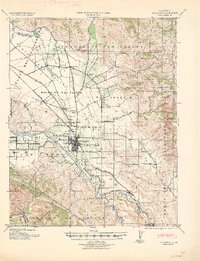 1940 Hollister1940 Print · USGSSan Benito County is shown just before the war as a landscape of productive ranches and emerging civic infrastructure. Genealogists and local historians can trace rural school districts like Anasymas School and the Southern Pacific rail line through Tres Pinos.2 unique versions available
Showing maps 1-25 of 265
Top cities of Santa Clara County
- San Jose historical maps
- Sunnyvale historical maps
- Santa Clara historical maps
- Milpitas historical maps
- Mountain View historical maps
- Palo Alto historical maps
See more
Frequently asked questions
- What are the different types of historical maps available for Santa Clara County?
- What is the oldest map of Santa Clara County?
- Where can I purchase historical maps of Santa Clara County for my home or office?
- Where can I download high-res historical maps of Santa Clara County?
- Are there historical topographic maps available for Santa Clara County?
- Is there historical aerial imagery available for Santa Clara County?
- Where are historical maps of Santa Clara County sourced from?