1950s Maps of Dolores County, Colorado
Explore 21 historic maps of Dolores County from the 1950s. These maps offer a rare glimpse into what life looked like during the 1950s — showing old roads, neighborhoods, homes, and landmarks that have changed or disappeared over time.
Whether you're researching your family's past, planning a metal detecting trip, or studying how Dolores County's landscape evolved across the 1950s, these high-resolution maps are a powerful tool for exploring the history of this region.
- Focus on a specific era: All maps on this page are from the 1950s, giving you a focused view of this time period.
- See what’s changed: Compare century-old streets, trails, and buildings to today's modern landscape using overlays and satellite layers.
- Research with precision: Use these maps for genealogy, historical research, land use analysis, or educational projects.
- View, download, or print: Maps are fully viewable online in high resolution, and can be downloaded or printed for your own records.
Start exploring Dolores County's history through authentic maps from the 1950s. This is your window into the past.
Dolores County, CO maps
(21)- 1950 Map of Joe Davis Hill
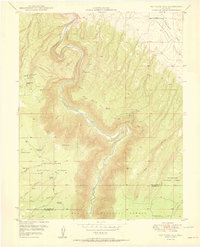 1950 Joe Davis Hill1950 Print · USGSThe Colorado mining frontier of the late 1940s comes alive in this survey of the high plateaus along the Dolores River. Local historians and researchers can trace uranium-era claims like the Sarah Ellen Mine and remote outposts such as Spud Patch Camp.2 unique versions available
 - 1950 Map of Egnar
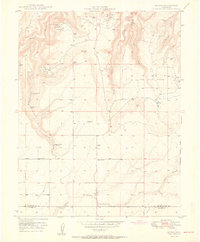 1950 Egnar1950 Print · USGSSouthwest Colorado mining and ranching take center stage at the turn of the fifties on the San Miguel County line. Genealogists and industrial historians can locate specific operations like the Golden Rod Mines, Effie B Mine, and the Egnar School.2 unique versions available
 - 1953 Map of Mount Wilson, 1954 Print
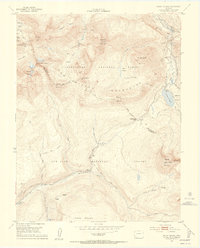 1953 Mount Wilson1954 Print · USGSThe San Miguel Mountains in the early fifties were a hive of industrial mining activity centered around Lizard Head. Researchers can trace the Old Railroad Grade past the Butterfly Mine (Active), Matterhorn Drifts, and the settlement of Ames.8 unique versions available
 - 1953 Map of Dolores Peak, 1954 Print
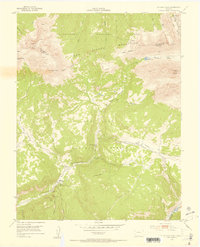 1953 Dolores Peak1954 Print · USGSThe high San Miguel and Dolores county line was a center for mining and ranching at the dawn of the atomic age. Genealogists and historians can trace the West Dolores River to find Dunton, the Emma Mine, and the Rio Grande Southern Railroad.7 unique versions available
 - 1953 Map of Durango, 1963 Print
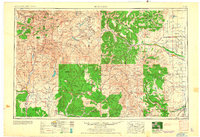 1953 Durango1963 Print · USGSThe high peaks of the San Juan Mountains and the Colorado mining country are shown here as they appeared in the early fifties. Genealogists and local historians can trace the rail lines of the D & R G W RR and locate historic mining camps like Silverton, Ouray, and Old Ophir.
 - 1954 Map of Durango
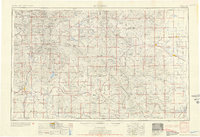 1954 Durango1954 Print · USGSSouthern Colorado in the mid-1950s was defined by high-altitude mining towns and the expansion of water storage in the San Luis Valley. Trace the narrow-gauge Denver & Rio Grande Western RR as it connects Durango to mountain outposts like Silverton and Creede.2 unique versions available
 - 1955 Map of Ophir, 1957 Print
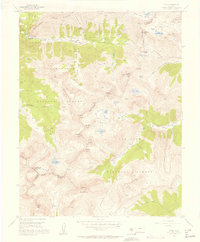 1955 Ophir1957 Print · USGSThe high-altitude mining community of Ophir is captured here in the mid-1950s, surrounded by a complex network of industrial history and alpine basins. Researchers can trace the Old RR Grade and locate historic workings such as the Gold King Mine and the Ophir Loop Sch.7 unique versions available
 - 1955 Map of Telluride, 1959 Print
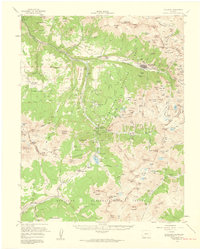 1955 Telluride1959 Print · USGSHigh in the San Miguel Mountains during the 1950s, this area shows the peak of Colorado's mining infrastructure. Genealogists and historians can trace the Rio Grande Southern Railroad past Tomboy and the Ophir Loop Sch.5 unique versions available
 - 1956 Map of Cortez, 1972 Print
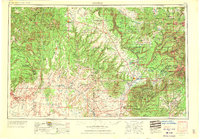 1956 Cortez1972 Print · USGSThe Four Corners region comes alive in this mid-century study of the high plateaus and deep canyons surrounding Cortez. Trace the development of desert outposts like Towaoc or follow the historic Laramie Trail across a landscape dotted with ancient sites at Mesa Verde National Park.2 unique versions available
 - 1957 Map of Cedar 3 NW, 1958 Print
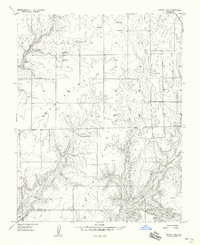 1957 Cedar 3 NW1958 Print · USGSThe Colorado canyon lands at the mid-century mark reveal a landscape of high plateaus and deep drainages. Researchers can locate the School (Aban'd) near Squaw Canyon or trace early water sources like Champagne Spring and Lower Monument Reservoir.
 - 1957 Map of Aneth 1 NE, 1958 Print
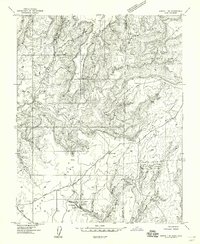 1957 Aneth 1 NE1958 Print · USGSThe high desert borderlands of Utah and Colorado appear here in the mid-1950s, centered on the ancient structures of Hovenweep National Monument. Researchers can locate specific sites like Hovenweep House and Round Tower or trace historic travel routes including Old Bluff Road and various Jeep Trails.
 - 1957 Map of Cedar 3 SW, 1958 Print
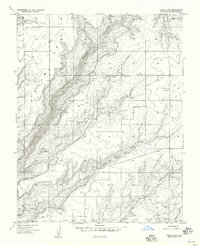 1957 Cedar 3 SW1958 Print · USGSMontezuma County in the late fifties shows a landscape of deep canyons and isolated mesa-top settlements. Genealogists and historians can locate the Grange Hall Cemetery, the community of Heaton, and early energy landmarks like the local Oil Wells.
 - 1957 Map of Monument Canyon, 1960 Print
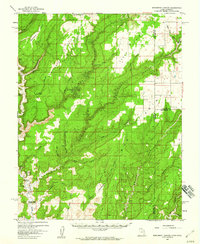 1957 Monument Canyon1960 Print · USGSThe Utah-Colorado borderlands in the late fifties show a landscape of ancient ruins and ranching outposts. Researchers can trace historic family landmarks like Daltons Ranch, find remote Cliff Dwellings, and locate the Maz Dalton Artesian Well.6 unique versions available
 - 1957 Map of Eastland, 1960 Print
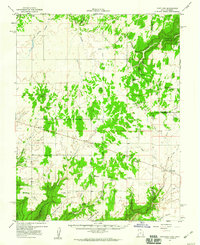 1957 Eastland1960 Print · USGSThe high plateau of San Juan County comes into focus during the late fifties, showing a remote landscape of canyons and early energy infrastructure. Genealogists and historians can trace local ties at Valley View Cemetery and rural sites like Burn School and Lockerby.4 unique versions available
 - 1958 Map of Verdure 4 NE
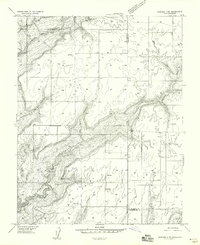 1958 Verdure 4 NE1958 Print · USGSThe high plateau of the Utah-Colorado border in the late fifties is defined by deep incisions and high mesas. Genealogists and local researchers can locate a rural Cemetery and trace historical land use through landmarks like Bug Point, Cedar Point, and several Reservoirs.
 - 1958 Map of Cortez
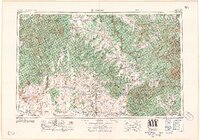 1958 Cortez1958 Print · USGSThe Four Corners region comes alive in the late fifties, showing the interplay between expanding mountain settlements and ancient archeological sites. Trace the layout of Cortez, Monticello, and Blanding alongside landmarks like Mesa Verde National Park and Fort Lewis A&M College.
 - 1958 Map of Verdure 4 SE
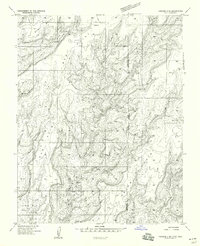 1958 Verdure 4 SE1958 Print · USGSThe high canyons of San Juan County are captured here in the mid-1950s along the Colorado state line. Researchers can locate ancient Ruins, trace a remote Jeep Trail, and identify family-named landmarks like Nancy Bug and Tin Cup Mesa.
 - 1958 Map of Cajon Mesa, 1960 Print
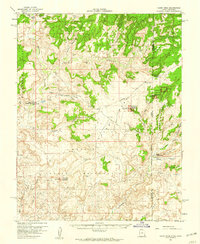 1958 Cajon Mesa1960 Print · USGSThe high mesas of the Utah-Colorado border are captured here in the late fifties, showcasing a landscape of ancient ruins and modern resource extraction. Researchers can locate Ancestral Puebloan sites like the Cajon Group Ruins alongside mid-century landmarks such as the Hatch Trading Post and Ismay Trading Post.3 unique versions available
 - 1959 Map of Cortez
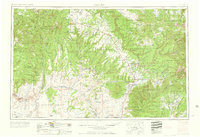 1959 Cortez1959 Print · USGSThe Four Corners region in the late fifties was a landscape of ancestral sites and isolated ranching outposts. Genealogists and historians can trace the early footprints of Cortez, Towaoc, and Mexican Hat alongside the canyons of the San Juan River.2 unique versions available
 - 1959 Map of Verdure 1 NE
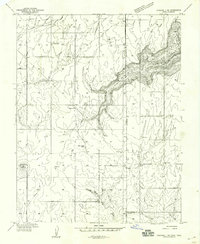 1959 Verdure 1 NE1959 Print · USGSThe high plateau of the Utah-Colorado border is captured here in the late fifties, during a period of rural agricultural development and resource extraction. Genealogists and local historians can locate the East Summit School, Burr School, and family-named landmarks like Bishop Point.
 - 1959 Map of Verdure 1 SE
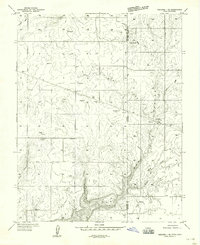 1959 Verdure 1 SE1959 Print · USGSThe high plateau of the San Juan and Dolores county border comes into focus in the mid-fifties, showing the rural communities and canyon edges. Genealogists and local historians can locate Lockerby, Northdale, and the Valley View Cemetery amidst the drainages of Cisco Creek.
End of results
Showing maps 1-21 of 21
Top cities of Dolores County
Frequently asked questions
- What are the different types of historical maps available for Dolores County?
- What is the oldest map of Dolores County?
- Where can I purchase historical maps of Dolores County for my home or office?
- Where can I download high-res historical maps of Dolores County?
- Are there historical topographic maps available for Dolores County?
- Is there historical aerial imagery available for Dolores County?
- Where are historical maps of Dolores County sourced from?