1950s Maps of Weld County, Colorado
Explore 53 historic maps of Weld County from the 1950s. These maps offer a rare glimpse into what life looked like during the 1950s — showing old roads, neighborhoods, homes, and landmarks that have changed or disappeared over time.
Whether you're researching your family's past, planning a metal detecting trip, or studying how Weld County's landscape evolved across the 1950s, these high-resolution maps are a powerful tool for exploring the history of this region.
- Focus on a specific era: All maps on this page are from the 1950s, giving you a focused view of this time period.
- See what’s changed: Compare century-old streets, trails, and buildings to today's modern landscape using overlays and satellite layers.
- Research with precision: Use these maps for genealogy, historical research, land use analysis, or educational projects.
- View, download, or print: Maps are fully viewable online in high resolution, and can be downloaded or printed for your own records.
Start exploring Weld County's history through authentic maps from the 1950s. This is your window into the past.
Weld County, CO maps
(53)- 1950 Map of Frederick
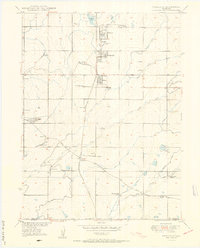 1950 Frederick1950 Print · USGSThe coal-rich corridor of Weld County is caught in a moment of industrial transition during the early 1950s. Genealogists and historians can trace the mining family hubs of Frederick, Firestone, and Dacono, alongside local schools like Mount View School and the Shamrock Mine.7 unique versions available
 - 1950 Map of Greeley
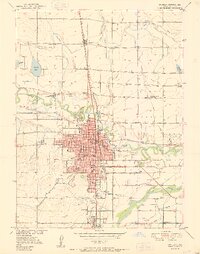 1950 Greeley1950 Print · USGSGreeley and Evans thrive at the mid-century confluence of the Cache La Poudre and South Platte Rivers. Researchers can trace historic neighborhoods and landmarks like the Spanish Colony, Linn Grove Cemetery, and the Union Pacific rail network.8 unique versions available
 - 1950 Map of Gowanda
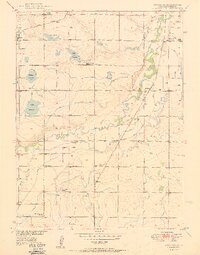 1950 Gowanda1950 Print · USGSWeld County farming and rail communities thrive along the river bottom in the years following the war. Researchers can locate the Pearl Howlett School, trace the Great Western tracks, and identify family landmarks like the Rinn Valley Grange.2 unique versions available
 - 1950 Map of Platteville
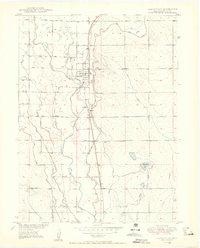 1950 Platteville1950 Print · USGSThe South Platte River valley in the mid-twentieth century shows an intensive irrigation landscape supporting the agricultural community of Platteville. Genealogists and local historians can trace the Union Pacific rail line and locate the Site of Old Fort Vasquez or the St Francis Cemetery.2 unique versions available
 - 1950 Map of Fort Lupton
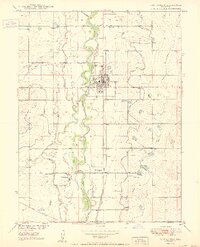 1950 Fort Lupton1950 Print · USGSFort Lupton and the South Platte River valley are captured in detail during the post-war era, showing a landscape shaped by rail and irrigation. Genealogists can locate family landmarks like Hillside Cemetery, Porter Sch, and the small settlement of Wattenberg.2 unique versions available
 - 1950 Map of Windsor
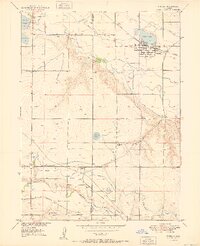 1950 Windsor1950 Print · USGSWindsor and the surrounding plains of Weld and Larimer Counties appear here in the mid-twentieth century as a thriving agricultural and rail corridor. Researchers can trace the layout of small rail stops like Kelim and Officer or locate rural landmarks like Oklahoma School and Jeffers Sch.8 unique versions available
 - 1950 Map of Kersey
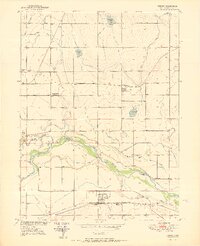 1950 Kersey1950 Print · USGSWeld County irrigation and rail networks are in full swing at the midpoint of the century. Genealogists and researchers can trace local landmarks like Spanish Village, Lone Tree Sch, and the confluence of the river systems at The Delta.5 unique versions available
 - 1950 Map of Cheyenne
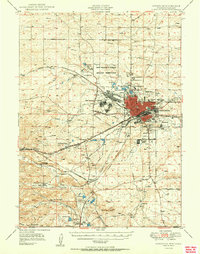 1950 Cheyenne1950 Print · USGSCheyenne and its surrounding high plains are captured here during a period of post-war expansion and military prominence. Researchers can trace the layout of the Fort Francis E Warren Military Reservation or locate family ranch sites like Rees Brothers Ranch and Diamond Camp.
 - 1950 Map of South Roggen, 1952 Print
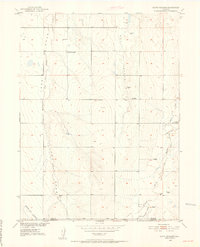 1950 South Roggen1952 Print · USGSThis mid-century survey of the Colorado plains near the Weld-Adams county line documents a rural landscape transitioning into the modern era. Researchers can trace the path of the Henrylyn Canal and locate the Television Relay Station or the settlement at South Roggen.3 unique versions available
 - 1950 Map of Greasewood Lake, 1952 Print
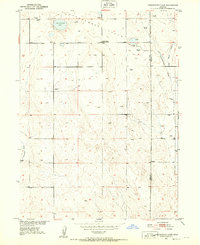 1950 Greasewood Lake1952 Print · USGSThe Colorado high plains during the post-war energy boom show a ranching landscape beginning to share space with oil exploration. Trace old homesteading remnants like the Prairie Queen School (Aban'd) and reliable water sources like Greasewood Lake and Sandborn Draw.
 - 1950 Map of Wiggins SW, 1952 Print
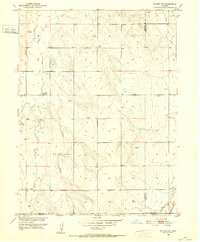 1950 Wiggins SW1952 Print · USGSThe Colorado high plains of Weld and Morgan counties are captured here in the mid-century, defined by vital water infrastructure and rural school districts. Genealogists and historians can trace the locations of the Kiowa School and the path of the Gaynor Nile Ditch.2 unique versions available
 - 1950 Map of Tampa, 1952 Print
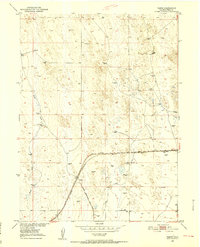 1950 Tampa1952 Print · USGSThe eastern Colorado plains come into focus in the mid-twentieth century as a landscape of isolated ranches and vital rail links. Genealogists and historians can trace the rural infrastructure around Tampa and Lutz Ranch or follow the path of the CHICAGO BURLINGTON AND QUINCY railroad.4 unique versions available
 - 1950 Map of Barnesville, 1952 Print
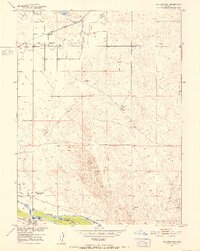 1950 Barnesville1952 Print · USGSWeld County ranching and irrigation systems are captured here during the mid-century, following the development of the Missouri River Basin. Genealogists can locate the Cem (First Permanent Settlers in Weld Co 1840) and trace old rail stops like Barnesville Station.5 unique versions available
 - 1950 Map of Erie, 1956 Print
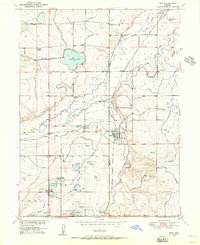 1950 Erie1956 Print · USGSIn the mid-century landscape of the Colorado plains, coal mining and irrigation dictate the growth of towns and transport. Genealogists can trace family roots through markers like the Columbine Mine, Gooding School, and Erie Cem.
 - 1950 Map of Keenesburg, 1958 Print
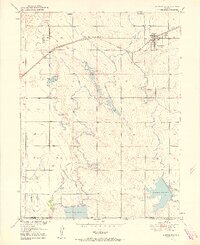 1950 Keenesburg1958 Print · USGSThe high plains of Weld County come alive in this mid-century survey of the irrigation networks and rail lines that sustained the local economy. Researchers can trace family-named landmarks like Lott Reservoir, Banner Lakes, and the railroad siding at Keenesburg.5 unique versions available
 - 1950 Map of Longmont, 1960 Print
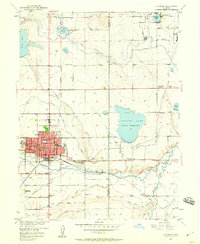 1950 Longmont1960 Print · USGSLongmont and the surrounding plains of Boulder and Weld Counties appear here at the mid-century, defined by a massive network of irrigation ditches and vital rail lines. Genealogists can trace family roots through several local burial grounds like Mountain View Cemetery or locate rural landmarks such as Dixons Mills and Liberty Hall Grange.2 unique versions available
 - 1950 Map of Johnstown, 1960 Print
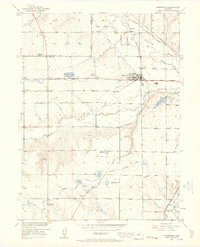 1950 Johnstown1960 Print · USGSMid-century Larimer and Weld Counties are defined by the vital waters of the Big Thompson River and an extensive irrigation network. Genealogists and local historians can locate early landmarks like Twin Mounds School, the Elwell Cem, and the Walker Elevator.5 unique versions available
 - 1950 Map of Bracewell, 1960 Print
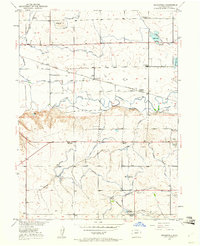 1950 Bracewell1960 Print · USGSWeld County’s agricultural heartland is captured here at mid-century, defined by the irrigation canals of the Cache La Poudre valley. Genealogists can trace family landmarks and school sites like Hazelton School, Bracewell, and the Lucas School (Aban'd).7 unique versions available
 - 1950 Map of Milliken, 1964 Print
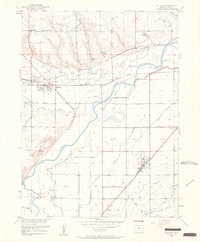 1950 Milliken1964 Print · USGSWeld County’s agricultural and rail heartland is captured here at mid-century, defined by the irrigation network surrounding the South Platte River. Researchers can trace the Union Pacific lines, locate the Fort St Vrain Ruins, and find vanished school sites like Fairview School.6 unique versions available
 - 1950 Map of Prospect Valley, 1965 Print
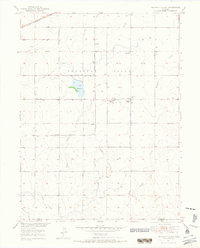 1950 Prospect Valley1965 Print · USGSThe Colorado high plains of the early 1950s come into focus through this detailed view of the Prospect Valley irrigation and rail corridor. Genealogists and local historians can trace the early township layout through family landmarks like Krauss and Sloan, or locate the site of the Prospect Valley School.4 unique versions available
 - 1950 Map of Masters, 1966 Print
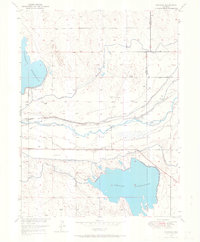 1950 Masters1966 Print · USGSMid-century Weld and Morgan Counties are captured here as a landscape shaped by the South Platte River and its essential irrigation network. Researchers can trace the Union Pacific rail line through Masters and Sublette or locate historic waterworks like the Bijou Canal and Empire Reservoir.2 unique versions available
 - 1950 Map of Klug Ranch, 1967 Print
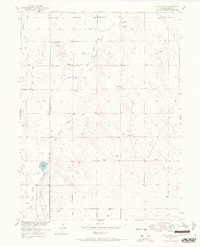 1950 Klug Ranch1967 Print · USGSWeld County ranching life is captured here in the mid-twentieth century, centered on the water-dependent operations of the high plains. Researchers can locate the Sky View School, the namesake Klug Ranch, and numerous historic Windmill sites.3 unique versions available
 - 1950 Map of Valley View School, 1970 Print
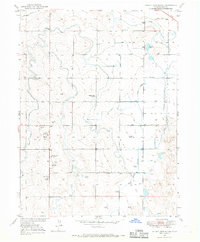 1950 Valley View School1970 Print · USGSWeld County agriculture and coal mining intersect on the Colorado plains at mid-century. Researchers can trace numerous family-named operations like the Sunset Mine and Casselman Mine, or follow water via the Neres Canal.2 unique versions available
 - 1950 Map of Hardin, 1971 Print
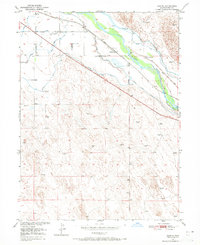 1950 Hardin1971 Print · USGSWeld County agriculture and irrigation are captured here at mid-century as the river valley underwent modernization. Trace the development of Hardin and Kuner along the Union Pacific line or locate local landmarks like the Kuner School and Seventy Ranch.2 unique versions available
 - 1950 Map of Milton Reservoir, 1973 Print
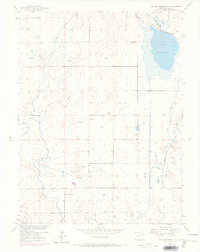 1950 Milton Reservoir1973 Print · USGSThe Weld County plains at mid-century reveal a complex irrigation landscape defined by Milton Reservoir and its many canals. Genealogists and historians can locate rural landmarks like the Four-Way School, several family windmills, and an Coal Mine (Inactive).3 unique versions available
Showing maps 1-25 of 53
Top cities of Weld County
- Greeley historical maps
- Evans historical maps
- Firestone historical maps
- Frederick historical maps
- Severance historical maps
- Fort Lupton historical maps
See more
Frequently asked questions
- What are the different types of historical maps available for Weld County?
- What is the oldest map of Weld County?
- Where can I purchase historical maps of Weld County for my home or office?
- Where can I download high-res historical maps of Weld County?
- Are there historical topographic maps available for Weld County?
- Is there historical aerial imagery available for Weld County?
- Where are historical maps of Weld County sourced from?