1950s Maps of Hawaii
Explore 84 historic maps of Hawaii from the 1950s. These maps offer a rare glimpse into what life looked like during the 1950s — showing old roads, neighborhoods, homes, and landmarks that have changed or disappeared over time.
Whether you're researching your family's past, planning a metal detecting trip, or studying how Hawaii's landscape evolved across the 1950s, these high-resolution maps are a powerful tool for exploring the history of this region.
- Focus on a specific era: All maps on this page are from the 1950s, giving you a focused view of this time period.
- See what’s changed: Compare century-old streets, trails, and buildings to today's modern landscape using overlays and satellite layers.
- Research with precision: Use these maps for genealogy, historical research, land use analysis, or educational projects.
- View, download, or print: Maps are fully viewable online in high resolution, and can be downloaded or printed for your own records.
Start exploring Hawaii's history through authentic maps from the 1950s. This is your window into the past.
Hawaii maps
(84)- 1952 Map of Halawa, 1953 Print
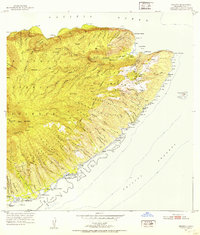 1952 Halawa1953 Print · USGSEastern Molokai in the early fifties maintains its traditional character, from ancient fishponds to highland forest reserves. Trace ancestral land divisions and sacred sites like the Iliiliopae Heiau alongside coastal landmarks such as Halawa and Pukoo Fishpond.
 - 1952 Map of Waimea, 1954 Print
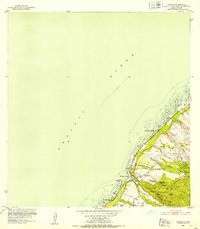 1952 Waimea1954 Print · USGSOahu's North Shore in the early fifties shows the early residential framing of Sunset Beach and the rugged forest reserves of the interior. Trace historic sites like Puu o Mahuka Heiau and follow the route of Kamehameha Highway past Waimea Bay.2 unique versions available
 - 1952 Map of Koko Head, 1954 Print
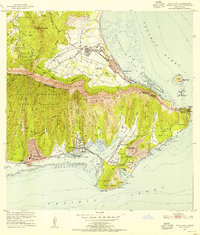 1952 Koko Head1954 Print · USGSSoutheast Oahu's ridgelines and coastal plains are captured here in the early fifties, just as suburban expansion began reaching toward Koko Head. Researchers can trace early residential tracts like Aina Haina and the original footprint of Kuapa Pond or Waimanalo Village.
 - 1952 Map of Molokai Airport, 1954 Print
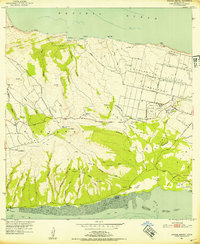 1952 Molokai Airport1954 Print · USGSMolokai’s central plateau and southwestern slopes are captured here in the early fifties, featuring the transition from homesteaded grids to open volcanic terrain. Researchers can trace land divisions at Hoolehua Homesteads and find old landmarks like Kolo Wharf and Puu Nana.
 - 1952 Map of Kamalo, 1954 Print
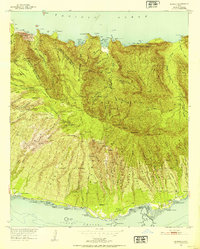 1952 Kamalo1954 Print · USGSThe southern shore of Molokai and its dramatic northern valleys are documented here just after mid-century. Genealogists and historians can locate several ancient temples such as Kukui Heiau, the Hukoo PO at Ualapue, and remote north-coast sites like Wailau (Site).
 - 1952 Map of Ilio Point, 1954 Print
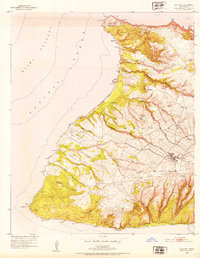 1952 Ilio Point1954 Print · USGSMolokai’s west end is captured in the early fifties, showing a land of deep gulches and significant military reservations. Researchers can locate the Mauna Loa Cem, trace the extensive Papohaku Beach, and identify the Kamakalipo (Site).
 - 1952 Map of Mokapu, 1954 Print
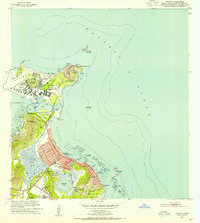 1952 Mokapu1954 Print · USGSWindward Oahu's coastline is captured in the early fifties, showing the development of Kailua and Lanikai alongside major military installations. Genealogists and historians can trace local landmarks like the Heiau, Kailua Sky Ranch, and the Koolau Boys Home.
 - 1952 Map of Kaunakakai, 1954 Print
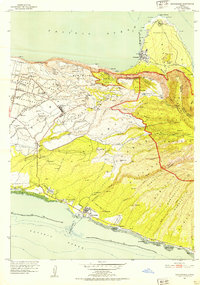 1952 Kaunakakai1954 Print · USGSThe central and northern coasts of Molokai are documented here in the early fifties, featuring the isolated Kalaupapa Settlement and the hub of Kaunakakai. Genealogists can trace family plots and local landmarks like Hoolehua Cem and the Hoolehua Homesteads.
 - 1953 Map of Haleiwa, 1954 Print
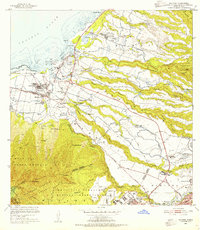 1953 Haleiwa1954 Print · USGSOahu's North Shore thrived as a plantation powerhouse in the early fifties, where sugar production and military presence shaped the land. Genealogists can trace family footprints through Kemoo Camp, Poamoho Camp, and the Kawailoa Soto Mission and School.
 - 1953 Map of Schofield Barracks, 1955 Print
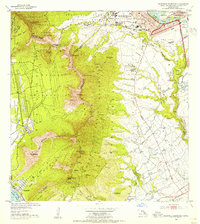 1953 Schofield Barracks1955 Print · USGSMid-century Oahu is depicted here during a period of significant military and agricultural activity. Historians can trace the development of Schofield Barracks and Wheeler Air Force Base or locate the old Kunia Camp.
 - 1953 Map of Honolulu, 1956 Print
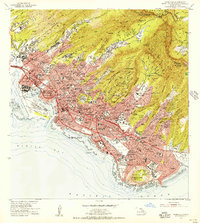 1953 Honolulu1956 Print · USGSMid-century Honolulu is captured here during a time of rapid urban expansion, from the bustling waterfront to the residential ridges. Researchers can trace the footprints of Fort Shafter, the historic Oahu Railway, and the early layout of the University of Hawaii.
 - 1953 Map of Ewa, 1956 Print
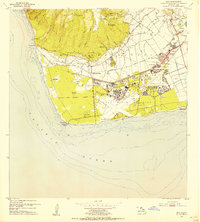 1953 Ewa1956 Print · USGSCoastal Oahu in the early fifties was a landscape of military aviation and plantation life. Genealogists can trace family footprints through numerous worker settlements like Tenney Village and Renton Village or find the Sugar Mill that drove the local economy.
 - 1953 Map of Puuloa, 1956 Print
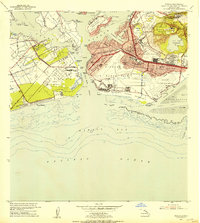 1953 Puuloa1956 Print · USGSHonolulu and Pearl Harbor are documented here during a period of significant military and aviation expansion. Researchers can trace the mid-century footprints of the Damon Tract, locate Nimitz Sch, and explore the layout of Ford Island.
 - 1953 Map of Hauula, 1956 Print
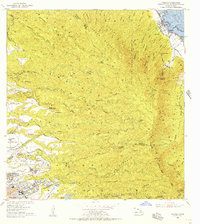 1953 Hauula1956 Print · USGSOahu's rugged interior and windward coast are captured here in the early fifties, showing the evolution of military and plantation lands. Trace the Abandoned RR near Hauula, the grounds of Leilehua High Sch, and landmarks like Sacred Falls (Kaliuwaa).
 - 1954 Map of Oahu
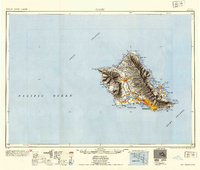 1954 Oahu1954 Print · USGSMid-century Oahu is caught between its plantation roots and its growing role as a Pacific military hub. Trace the OR and L Co rail lines and explore the 1950s footprints of Pearl Harbor, Libbyville, and Waipahu.
 - 1954 Map of Hawaii South
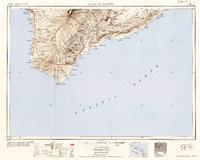 1954 Hawaii South1954 Print · USGSThe southern reaches of the Big Island in the mid-fifties show a landscape of volcanic peaks, coastal villages, and upland timber mills. Researchers can trace the old island infrastructure through sites like Koa Mill, Hoopuloa, and the remote Mountain House.
 - 1954 Map of Maui
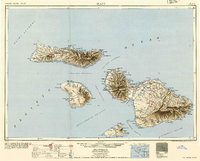 1954 Maui1954 Print · USGSThe central Hawaiian Islands are shown during the mid-fifties, detailing the agricultural and coastal infrastructure of Maui, Lanai, and Molokai. Genealogists and researchers can trace plantation-era history at Haliimaile Camp, locate old harbors like Kaumalapau Harbor, or explore the early bounds of Haleakala National Park.
 - 1954 Map of Kauai
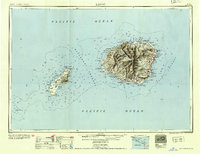 1954 Kauai1954 Print · USGSKauai and Niihau are shown during a period of transition in the early fifties as plantation-era infrastructure began to change. Researchers can trace the Kilauea Sugar Plantation Railroad, the Anahola Settlement, and remote sites on Niihau like Puuwai.
 - 1954 Map of Hawaii North
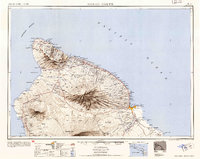 1954 Hawaii North1954 Print · USGSThe Big Island in the mid-fifties shows a landscape of active volcanic history and a peak sugar-mill economy. Trace the route of the Hawaii Consolidated Railway, locate the Olaa Plantation Mill, and see the extent of the Lava flow of 1881 near Hilo.
 - 1954 Map of Waianae, 1955 Print
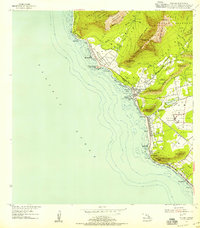 1954 Waianae1955 Print · USGSThe leeward coast of Oahu is captured here in the mid-fifties, showing the development of coastal communities between the sea and the rugged heights. Genealogists and historians can trace Waianae Homesteads and significant cultural sites like Kaneaki Heiau.
 - 1954 Map of Kahuku, 1955 Print
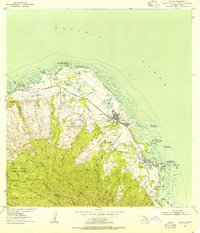 1954 Kahuku1955 Print · USGSThe northern tip of Oahu is captured here in the mid-1950s, showing a landscape defined by sugar production and coastal military infrastructure. Genealogists and historians can trace local landmarks like the Sugar Mill, the Laie Temple, and the Hawaii Infantry Training Camp.
 - 1954 Map of Kaena, 1955 Print
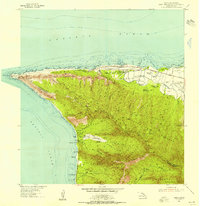 1954 Kaena1955 Print · USGSThe western tip of Oahu is captured here in the mid-1950s, showing a landscape of coastal ranches and military airfields. Researchers can trace the Old Railroad Grade, locate the ancient Heiau at Keaau Homesteads, or find the Makua (Site) in the shadow of the peaks.
 - 1954 Map of Kahana, 1955 Print
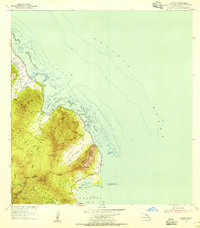 1954 Kahana1955 Print · USGSThe windward coast of Oahu is captured in the mid-fifties, showing a rural landscape before modern expansion. Historians can trace the Sugar Mill (Ruin) near Molii Pond or locate local landmarks like Mokolii Island (Chinamans Hat) and the Kahana settlement.2 unique versions available
 - 1954 Map of Maalaea, 1956 Print
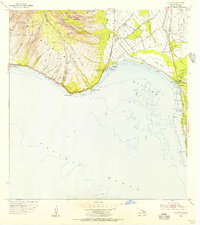 1954 Maalaea1956 Print · USGSMaui's central coastline in the mid-fifties reveals an island landscape defined by traditional homesteads and developing aviation infrastructure. Genealogists and historians can locate early settlements at Kihei and the Waikapu Homesteads, alongside the Old Maui Airport and the Kealia Pond wetlands.2 unique versions available
 - 1954 Map of Kaneohe, 1956 Print
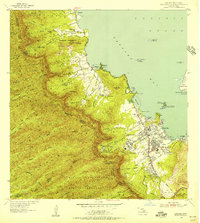 1954 Kaneohe1956 Print · USGSWindward Oahu in the mid-fifties shows a landscape of mountain homesteads and expanding coastal settlements. Trace family land in the Waiahole Homesteads or locate local landmarks like the Territorial Hospital and the Heeia Radio Station.
Showing maps 1-25 of 84
Top cities of Hawaii
- Honolulu historical maps
- Waipahu historical maps
- East Honolulu historical maps
- Mililani historical maps
- Pearl City historical maps
- Hilo historical maps
See more
Top counties of Hawaii
- Honolulu County historical maps
- Hawaiʻi County historical maps
- Maui County historical maps
- Kauai County historical maps
Frequently asked questions
- What are the different types of historical maps available for Hawaii?
- What is the oldest map of Hawaii?
- Where can I purchase historical maps of Hawaii for my home or office?
- Where can I download high-res historical maps of Hawaii?
- Are there historical topographic maps available for Hawaii?
- Is there historical aerial imagery available for Hawaii?
- Where are historical maps of Hawaii sourced from?