Old Maps of Twin Falls County, Idaho for Academic Research
Study the evolution of Twin Falls County with 375 high-resolution historic maps. Whether you're teaching, researching, or modeling changes in land use, these maps provide essential visual documentation of urban, environmental, and geographic change.
- Analyze long-term change: Track patterns in development, transportation, and natural features.
- Ideal for environmental or urban studies: Support academic projects with primary historical map data.
- Use in the classroom or lab: Educators and researchers rely on these maps to bring historical context to life.
These maps are a powerful tool for teaching, research, and visualizing how Twin Falls County has changed over the decades.
Twin Falls County, ID maps
(375)- 1948 Map of Ticeska, 1973 Print
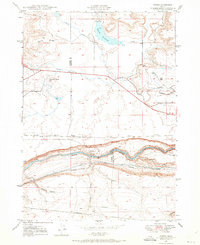 1948 Ticeska1973 Print · USGSThe Snake River canyon and the Union Pacific rail line define this Idaho landscape just after the war. Researchers can trace the steep King Hill Grade, find the Bliss Dam site, and locate the small station of Ticeska along the river tracks.3 unique versions available
 - 1949 Map of Ticeska
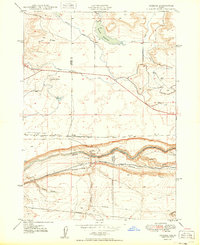 1949 Ticeska1949 Print · USGSThe Snake River canyon serves as a mid-century lifeline for transportation and agriculture where Elmore and Gooding counties meet. Trace the historic Union Pacific tracks past Ticeska or locate the site of Bliss Dam.
 - 1949 Map of Pasadena Valley, 1952 Print
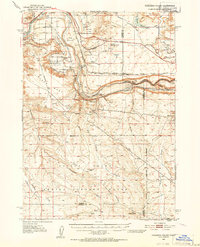 1949 Pasadena Valley1952 Print · USGSThe Snake River canyon and the high desert plateaus of Elmore County meet here during the post-war expansion of local irrigation. Researchers can trace the Oregon Trail corridor, locate the Pasadena Valley School, and find the historic Pilgrim Stage Station.
 - 1949 Map of Bliss, 1958 Print
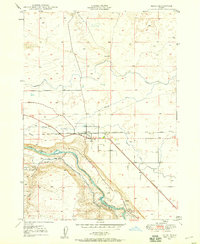 1949 Bliss1958 Print · USGSThe community of Bliss at the edge of the Snake River canyon is shown here in the late 1940s. Genealogists and historians can trace local landmarks like the Pioneer Cem, the Union Pacific rail corridor, and Bliss Point.4 unique versions available
 - 1949 Map of Thousand Springs, 1960 Print
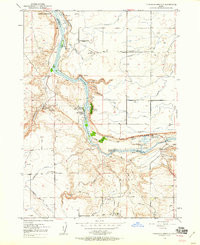 1949 Thousand Springs1960 Print · USGSThe Snake River canyon at the close of the 1940s reveals a unique blend of spring-fed recreation and early irrigation. Researchers can locate several rural schoolhouses, including the Sand Springs School and Lucerne School, alongside landmarks like Devils Washbowl Falls.7 unique versions available
 - 1949 Map of Tuttle, 1968 Print
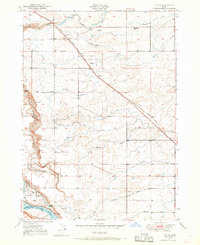 1949 Tuttle1968 Print · USGSGooding County and the northern banks of the Snake River are mapped here in the late 1940s as the region's irrigation and hatchery infrastructure expanded. Trace historical sites like the Shoestring School, the Tuttle settlement, and the State Fish Hatchery.3 unique versions available
 - 1949 Map of Hagerman, 1968 Print
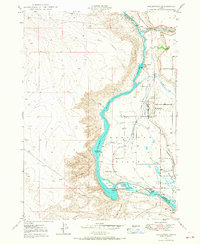 1949 Hagerman1968 Print · USGSThe Snake River canyon in Idaho was being actively transformed for power and irrigation during the late 1940s. Genealogists and historians can trace local landmarks like the Idaho State Fish Hatchery and Game Reserve, the Lower Salmon Falls Power Plant, and the Buckeye Ranch.4 unique versions available
 - 1949 Map of Indian Butte, 1976 Print
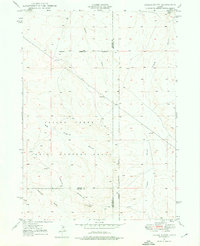 1949 Indian Butte1976 Print · USGSThe high desert at the tri-county junction of Elmore, Owyhee, and Twin Falls counties comes into focus in the late 1940s. Trace the expanses of the Aerial Gunnery Range and landforms like Indian Butte and Tuana Gulch.2 unique versions available
 - 1950 Map of Hagerman
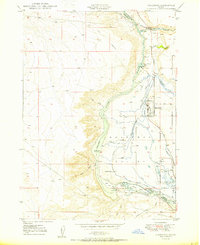 1950 Hagerman1950 Print · USGSThe Hagerman Valley at mid-century is a landscape defined by the Snake River's power and a complex network of irrigation. Researchers can trace early water rights through the Big Bend Ditch, locate the Buckeye Ranch, or study the Idaho State Fish Hatchery.
 - 1950 Map of Bliss
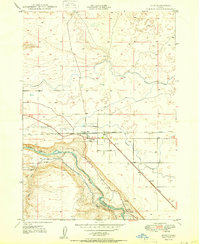 1950 Bliss1950 Print · USGSThe rail-and-river landscape of southern Idaho is captured here at mid-century, centered on the town of Bliss. Genealogists and historians can trace the Union Pacific (Oregon Short Line) and local landmarks like the Cem and Bliss Reservoir.
 - 1950 Map of Indian Butte
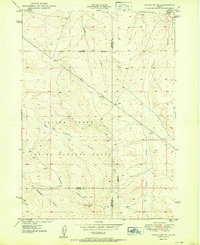 1950 Indian Butte1950 Print · USGSThe high Idaho desert south of the Snake River is captured here in the mid-century, defined by its role as a sprawling Aerial Gunnery Range. Researchers can trace old routes like the Castleford Road and explore landmarks like Indian Butte.
 - 1950 Map of Niagara Springs, 1952 Print
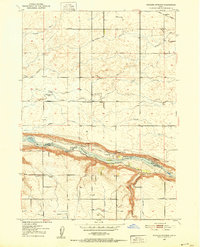 1950 Niagara Springs1952 Print · USGSThe Snake River canyon near the Gooding and Twin Falls county line is shown here in the early 1950s during a period of agricultural expansion. Genealogists and researchers can trace local landmarks like Appleton, the Orchard Valley School, and the Crystal Springs Grade.2 unique versions available
 - 1950 Map of Filer, 1952 Print
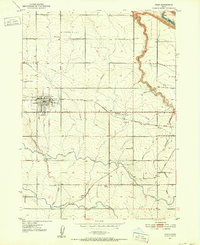 1950 Filer1952 Print · USGSThe irrigated farmlands of the Magic Valley are captured here during a period of steady post-war growth. Genealogists and local historians can locate early rural landmarks like Maroa School, the IOOF Cem, and the Knull Grange along the Union Pacific tracks.2 unique versions available
 - 1950 Map of Jerome, 1959 Print
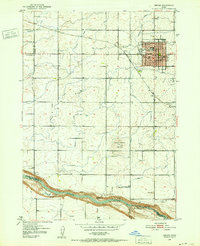 1950 Jerome1959 Print · USGSJerome and the surrounding Magic Valley countryside are shown here at mid-century, defined by a complex network of irrigation ditches and the deep canyon of the Snake River. Genealogists and local historians can locate early landmarks like Appleton School, Sonnickson Butte, and the Jerome town center.2 unique versions available
 - 1950 Map of Jerome, 1959 Print
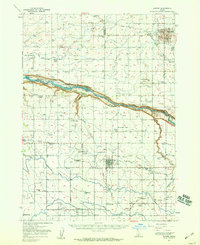 1950 Jerome1959 Print · USGSThe Magic Valley agricultural landscape is captured here in the 1950s, showing the early growth of Jerome and Filer along the Union Pacific rail lines. Genealogists and local historians can trace rural schools like Cedar Draw School and landmarks including the IOOF Cem and Northview Grange.2 unique versions available
 - 1951 Map of Thousand Springs
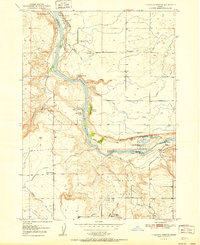 1951 Thousand Springs1951 Print · USGSTwin Falls and Gooding counties at mid-century reveal a landscape defined by the canyon rim and river-fed industry. Genealogists and historians can trace local rural life through the Lucerne School and early river sites like the Thousand Springs Resort and Banbury Natatorium.
 - 1951 Map of Tuttle
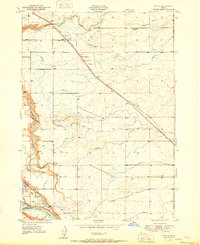 1951 Tuttle1951 Print · USGSNear the midpoint of the twentieth century, this Idaho landscape reveals an intricate web of irrigation and canyon-rim engineering. Researchers can trace the Union Pacific line through Tuttle or locate early facilities like the Shoestring School and the State Fish Hatchery and Game Reserve.
 - 1951 Map of Clover
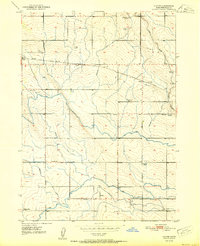 1951 Clover1951 Print · USGSTwin Falls County agriculture is in full swing at mid-century, defined by the vital irrigation canals and rail lines serving the high desert. Genealogists can trace family landmarks and rural education at Poplar Hill School, Syringa Sch, and the Buhl Cemetery.2 unique versions available
 - 1954 Map of Thousand Springs
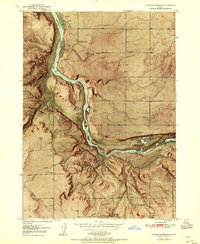 1954 Thousand Springs1954 Print · USGSThe Snake River canyon and its spring-fed plateaus are captured here in the mid-fifties as irrigation transformed the high desert. Researchers can trace the rural school system and early riverside recreation at Banbury Natatorium, Lucerne School, and Devils Washbowl Falls.
 - 1955 Map of Twin Falls, 1963 Print
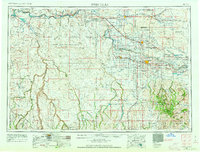 1955 Twin Falls1963 Print · USGSThe Magic Valley flourished in the mid-1950s as a sophisticated network of irrigation and rail lines connected high-desert outposts. Researchers can trace the engineering of the Milner-Gooding Canal, the remote Murphy Hot Springs, and the Union Pacific rail network.3 unique versions available
 - 1955 Map of Wells, 1966 Print
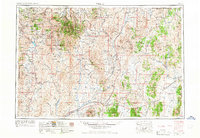 1955 Wells1966 Print · USGSNortheastern Nevada's high basin-and-range country is documented here in the mid-fifties, showing a landscape of remote ranching outposts and massive federal forest lands. Researchers can locate the early mining districts at Delano Mines and trace the paths of the Southern Pacific railroad through settlements like Deeth and Cobre.4 unique versions available
 - 1957 Map of Contact, 1960 Print
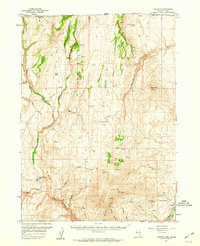 1957 Contact1960 Print · USGSElko County ranching and mining country is captured here during the late fifties, spanning the border into Idaho. Genealogists and historians can locate the Contact School, trace operations at the Marshall Mine, or find remote landmarks like Browns Bench Ranch.3 unique versions available
 - 1957 Map of Delaplain, 1960 Print
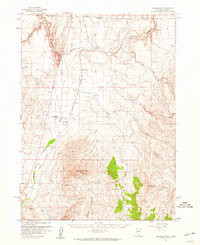 1957 Delaplain1960 Print · USGSThe Nevada-Idaho borderlands come into focus during the late 1950s, showing the early footprints of ranching and transit in Elko County. Genealogists and researchers can trace the historic San Jacinto Ranch, the rail stop at Idavada, and the waters of Shoshone Warm Springs.2 unique versions available
 - 1957 Map of Elk Mountain, 1961 Print
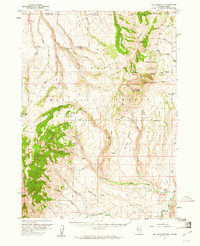 1957 Elk Mountain1961 Print · USGSThe high desert border between Nevada and Idaho is captured here in the late fifties, a landscape of isolated ranches and national forest. Trace early access routes and landmarks like O'Neil Ranch, the Pole Creek Ranger Sta, and Red Elephant Butte.3 unique versions available
 - 1958 Map of Wells
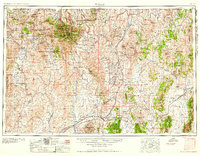 1958 Wells1958 Print · USGSNortheastern Nevada's high desert and mountain ranges are documented here in the late fifties as the regional rail and ranching economy thrived. Genealogists and historians can trace the paths of the Southern Pacific railroad to remote stations at Cobre and Metropolis, or locate the high-altitude Delno Mines.
Showing maps 1-25 of 375
Top cities of Twin Falls County
- Twin Falls historical maps
- Buhl historical maps
- Kimberly historical maps
- Filer historical maps
- Hansen historical maps
- Castleford historical maps
See more
Frequently asked questions
- What are the different types of historical maps available for Twin Falls County?
- What is the oldest map of Twin Falls County?
- Where can I purchase historical maps of Twin Falls County for my home or office?
- Where can I download high-res historical maps of Twin Falls County?
- Are there historical topographic maps available for Twin Falls County?
- Is there historical aerial imagery available for Twin Falls County?
- Where are historical maps of Twin Falls County sourced from?