1960s Maps of Gibson County, Indiana
Explore 9 historic maps of Gibson County from the 1960s. These maps offer a rare glimpse into what life looked like during the 1960s — showing old roads, neighborhoods, homes, and landmarks that have changed or disappeared over time.
Whether you're researching your family's past, planning a metal detecting trip, or studying how Gibson County's landscape evolved across the 1960s, these high-resolution maps are a powerful tool for exploring the history of this region.
- Focus on a specific era: All maps on this page are from the 1960s, giving you a focused view of this time period.
- See what’s changed: Compare century-old streets, trails, and buildings to today's modern landscape using overlays and satellite layers.
- Research with precision: Use these maps for genealogy, historical research, land use analysis, or educational projects.
- View, download, or print: Maps are fully viewable online in high resolution, and can be downloaded or printed for your own records.
Start exploring Gibson County's history through authentic maps from the 1960s. This is your window into the past.
Gibson County, IN maps
(9)- 1960 Map of Lynnville, 1968 Print
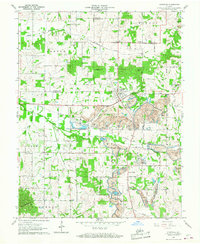 1960 Lynnville1968 Print · USGSSouthwestern Indiana's coal country comes into sharp focus during the 1960s as industrial excavation meets rural tradition. Researchers can trace the massive Strip Mines alongside local landmarks like Barnetta Chapel, St Pauls Cem, and Graham Valley.5 unique versions available
 - 1961 Map of Cynthiana, 1962 Print
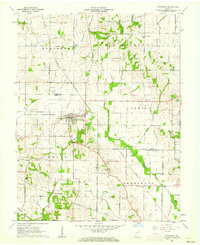 1961 Cynthiana1962 Print · USGSCynthiana and the surrounding Tri-State area are captured here in the early sixties at a peak of rail and rural development. Genealogists and researchers can trace local family landmarks such as Blythe Chapel, Antioch Ch, and the Knowles Cem burial ground.3 unique versions available
 - 1961 Map of Elberfeld, 1963 Print
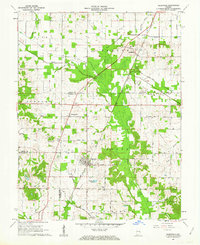 1961 Elberfeld1963 Print · USGSThe rural landscape around Elberfeld and Buckskin in the early sixties was a unique blend of active energy production and historical transit routes. Local historians can trace the path of the Erie and Wabash Canal and locate family sites like Nobles Cem or Zion Cem.4 unique versions available
 - 1961 Map of Petersburg, 1963 Print
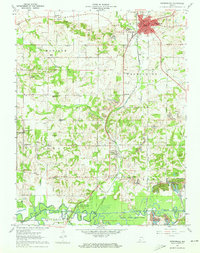 1961 Petersburg1963 Print · USGSPike County at the start of the sixties shows a landscape defined by the White River and a deep network of coal and rail infrastructure. Genealogists can locate numerous rural burial grounds like Old Town Cem and family chapels including Gladish Chapel.3 unique versions available
 - 1961 Map of Decker, 1963 Print
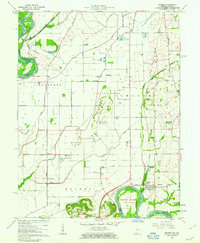 1961 Decker1963 Print · USGSKnox County, Indiana, sits at the confluence of the White and Wabash Rivers during the early sixties. Genealogists can trace family footprints at Chimney Pier Hills Cem and Warth Cem, while local historians can locate small rail stops like Vollmer and Purcell.3 unique versions available
 - 1961 Map of Haubstadt, 1963 Print
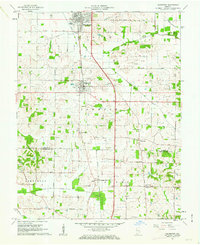 1961 Haubstadt1963 Print · USGSSouthern Indiana at the start of the 1960s was a landscape defined by small-town rail commerce and emerging oil production. Researchers can trace family roots through numerous churches like St Stephen Ch and local landmarks such as Fort Branch or the Coal Mine.3 unique versions available
 - 1961 Map of Francisco, 1963 Print
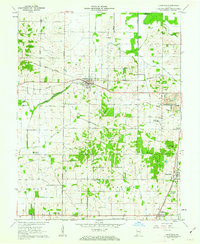 1961 Francisco1963 Print · USGSGibson County at the start of the sixties reveals a landscape of rural townships and evolving industry. Genealogists and local historians can trace family church sites like Providence Ch, explore the small town of Francisco, and locate the Old Indian Treaty Boundary.3 unique versions available
 - 1961 Map of Union, 1963 Print
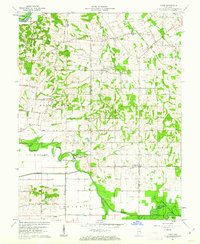 1961 Union1963 Print · USGSPike and Gibson counties in the early sixties reveal a landscape of river bottoms and rural crossroads. Genealogists and historians can trace family locations through sites like Bethlehem Cem, the Miller Sch grounds, and the settlement at Wheeling.3 unique versions available
 - 1961 Map of Oakland City, 1963 Print
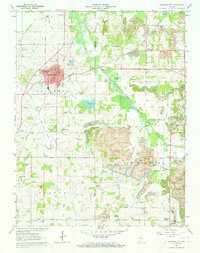 1961 Oakland City1963 Print · USGSOakland City and the surrounding townships of Gibson and Pike counties are captured here in the early sixties as a center of coal mining and rail transit. Genealogists and historians can trace family locations near Williams Cem, Blackfoot Ch, and the historic Wabash and Erie Canal.4 unique versions available
End of results
Showing maps 1-9 of 9
Top cities of Gibson County
- Princeton historical maps
- Johnson historical maps
- Oakland City historical maps
- Fort Branch historical maps
- White River historical maps
- Haubstadt historical maps
See more
Frequently asked questions
- What are the different types of historical maps available for Gibson County?
- What is the oldest map of Gibson County?
- Where can I purchase historical maps of Gibson County for my home or office?
- Where can I download high-res historical maps of Gibson County?
- Are there historical topographic maps available for Gibson County?
- Is there historical aerial imagery available for Gibson County?
- Where are historical maps of Gibson County sourced from?