1900s (20th Century) Maps of Anderson County, Kansas
Explore 26 historic maps of Anderson County from the 1900s (20th Century). These maps offer a rare glimpse into what life looked like during the 1900s — showing old roads, neighborhoods, homes, and landmarks that have changed or disappeared over time.
Whether you're researching your family's past, planning a metal detecting trip, or studying how Anderson County's landscape evolved across the 1900s, these high-resolution maps are a powerful tool for exploring the history of this region.
- Focus on a specific era: All maps on this page are from the 1900s, giving you a focused view of this time period.
- See what’s changed: Compare century-old streets, trails, and buildings to today's modern landscape using overlays and satellite layers.
- Research with precision: Use these maps for genealogy, historical research, land use analysis, or educational projects.
- View, download, or print: Maps are fully viewable online in high resolution, and can be downloaded or printed for your own records.
Start exploring Anderson County's history through authentic maps from the 1900s. This is your window into the past.
Anderson County, KS maps
(26)- 1947 Map of Lawrence, 1954 Print
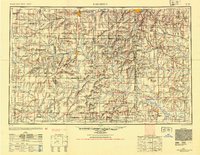 1947 Lawrence1954 Print · USGSEastern Kansas and western Missouri thrive in the late 1940s, showing a landscape defined by major river valleys and a dense railway network. Genealogists can trace family settlements from Lawrence to Greenwood and locate landmarks like Olathe Navy and Lake Lotawana.
 - 1950 Map of Lawrence
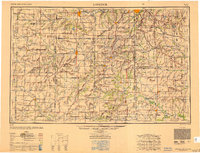 1950 Lawrence1950 Print · USGSMid-century Kansas and Missouri come alive in this map of the river-valley corridors just as the interstate era was beginning. Researchers can trace the legacy of major rail lines like the Union Pacific RR and locate ancestral roots in towns from Lawrence to Harrisonville.
 - 1956 Map of Williamsburg, 1958 Print
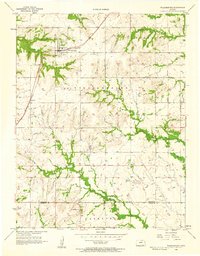 1956 Williamsburg1958 Print · USGSWilliamsburg and Silkville appear in the mid-fifties at a time when the railroad still anchored the life of these eastern Kansas townships. Genealogists can trace family sites at Mt Hope Cem and St Patricks Sch, or follow the diagonal of the Old Indian Boundary.3 unique versions available
 - 1956 Map of Lawrence, 1967 Print
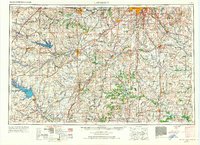 1956 Lawrence1967 Print · USGSEastern Kansas and the Missouri border country are captured here during the mid-century transition to the interstate era. Genealogists and local historians can trace family-named terrain like Summers Mound and the footprint of Sunflower Ordnance Works near Baldwin City.4 unique versions available
 - 1957 Map of Waverly, 1958 Print
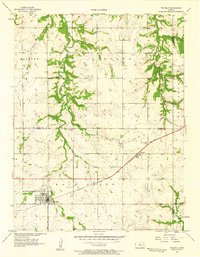 1957 Waverly1958 Print · USGSCoffey County in the late 1950s was a landscape defined by the prairie-spanning rails and rural crossroads. Local researchers can trace family landmarks like Boothe Hall, Rosemont Ch, and the historical path of the Old Indian Boundary.2 unique versions available
 - 1961 Map of Lawrence
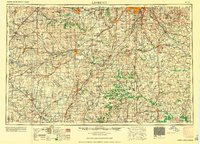 1961 Lawrence1961 Print · USGSThe Kansas-Missouri borderland shows its mid-century transition from a rail-dependent agricultural region to a suburbanizing landscape. Genealogists can trace family footprints through numerous Cem sites and distinctive terrain landmarks like Graves Mound and Summers Mound.
 - 1965 Map of Richmond, 1967 Print
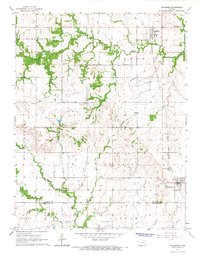 1965 Richmond1967 Print · USGSThe Kansas prairie south of Ottawa comes alive in the mid-sixties, anchored by the rail-side towns of Princeton and Richmond. Genealogists and local historians can locate rural landmarks like Mt Olivet Ch, Acorn Community Hall, and the winding Old Channel Sac Creek.2 unique versions available
 - 1966 Map of Bush City, 1967 Print
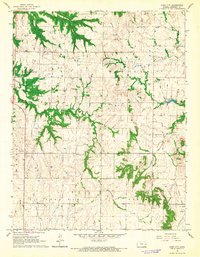 1966 Bush City1967 Print · USGSAnderson County during the mid-sixties reveals a rural landscape transitioning from rail to road and energy extraction. Researchers can trace the Old Railroad Grade and find family sites at Springfield Cem or the namesake Bush City.2 unique versions available
 - 1966 Map of Westphalia, 1967 Print
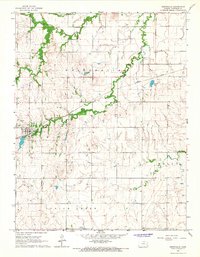 1966 Westphalia1967 Print · USGSWestphalia and the surrounding Anderson County prairies are captured in the mid-1960s as a well-established rail and farming community. Genealogists and local historians can trace the town grid and find specific rural landmarks like St Teresa Cem, Cherry Mound Ch, and the Missouri Pacific rail corridor.
 - 1966 Map of Garnett East, 1967 Print
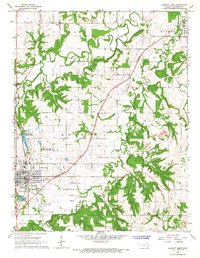 1966 Garnett East1967 Print · USGSAnderson County's rural character and the growth of its county seat are captured here in the mid-sixties. Genealogists and local historians can trace family locations near Scipio and Greeley, or locate legacy sites like Judy Sch and St John Cem.2 unique versions available
 - 1966 Map of Lane, 1967 Print
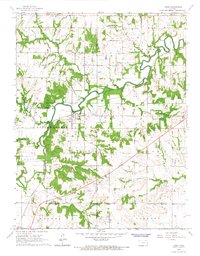 1966 Lane1967 Print · USGSThe rural borderlands of Franklin and Miami counties are captured in the mid-1960s, centered on the winding Pottawatomie Creek. Researchers can trace local lineage through Needham Cem and find vanished rural schools like Fairview Sch and Indianapolis Sch.2 unique versions available
 - 1966 Map of Centerville, 1967 Print
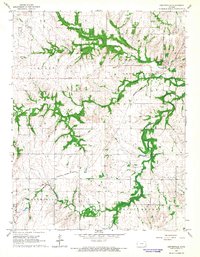 1966 Centerville1967 Print · USGSCenterville and the surrounding townships of Linn and Anderson counties are captured here in the mid-1960s during a period of steady oil exploration. Researchers can trace the legacy of local transport and burial sites through the Old RR Grade, Oakwood Cem, and the tracks of the Missouri Kansas Texas.2 unique versions available
 - 1966 Map of Welda, 1967 Print
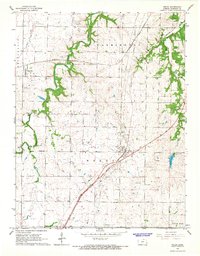 1966 Welda1967 Print · USGSAnderson County during the mid-sixties shows a landscape defined by the intersection of the Atchison Topeka and Santa Fe railroad and rural industry. Family historians can trace local roots at Hyatt Cem, locate the old Washington Sch, or examine the early Oil Field development near Welda.
 - 1966 Map of Garnett NW, 1967 Print
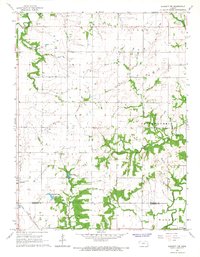 1966 Garnett NW1967 Print · USGSEastern Kansas prairie and creek valleys are captured here in the mid-1960s as the railroad and small-town life shaped the landscape. Genealogists and historians can trace the ATCHISON TOPEKA AND SANTA FE tracks past Richmond or locate family plots at Baker Cem and Berea Cem.2 unique versions available
 - 1966 Map of Harris, 1967 Print
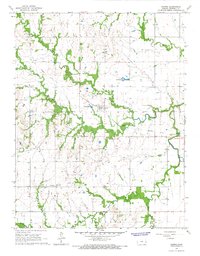 1966 Harris1967 Print · USGSAnderson County during the mid-1960s shows a landscape of steady agricultural life and evolving infrastructure. Local historians can trace the path of the Old Railroad Grade and locate family history at Central City Cem or Cedar Creek Ch.2 unique versions available
 - 1966 Map of Garnett SE, 1967 Print
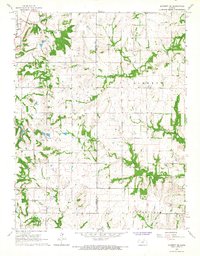 1966 Garnett SE1967 Print · USGSEastern Kansas rural life comes into focus in the mid-1960s along the Anderson and Linn County line. Researchers can trace land tracts near Greeley or locate ancestral sites at Wait Cem and Sutton Valley Cem.2 unique versions available
 - 1966 Map of Geneva, 1967 Print
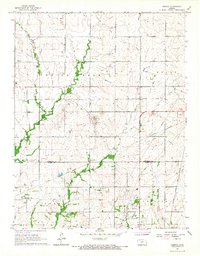 1966 Geneva1967 Print · USGSThe rural borders of Anderson and Allen Counties come into focus during the mid-1960s, showing a landscape defined by prairie creeks and fossil fuel extraction. Researchers can locate family landmarks like Northcott Ch and Geneva Cem or trace the path of the Atchison Topeka and Santa Fe railroad.
 - 1966 Map of Kincaid, 1967 Print
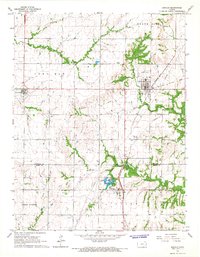 1966 Kincaid1967 Print · USGSThe rural landscape of Anderson and Allen Counties is captured here in the mid-1960s, showing the agricultural and industrial heart of eastern Kansas. Genealogists and historians can trace the Missouri - Kansas - Texas Railroad and locate community landmarks like Fairview Chapel and Mt Zion Cem.2 unique versions available
 - 1966 Map of Garnett West, 1967 Print
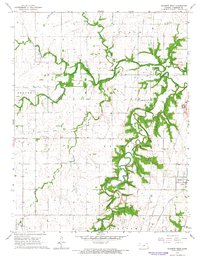 1966 Garnett West1967 Print · USGSAnderson County, Kansas, is captured here in the mid-1960s as a landscape of prairie agriculture and vital rail connections. Researchers can trace the Old Railroad Grade through Glenlock or locate family history at the Amish Cem and West Scipio Cem.2 unique versions available
 - 1966 Map of Colony, 1967 Print
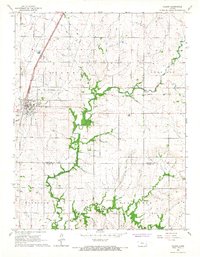 1966 Colony1967 Print · USGSAnderson and Allen Counties show a landscape of shifting industry and rail transit during the mid-1960s. Researchers can trace the legacy of local transport via the Atchison Topeka and Santa Fe or find family roots at Pleasant Valley Cem.
 - 1966 Map of Blue Mound, 1967 Print
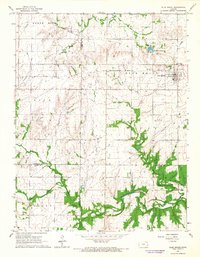 1966 Blue Mound1967 Print · USGSThe rural landscape of Linn and Anderson counties comes into focus in the mid-1960s, centered on the town of Blue Mound. Genealogists and historians can trace an Old Railroad Grade and several burial sites like Osage Cem and Boulware Cem.
 - 1971 Map of Waverly SE, 1973 Print
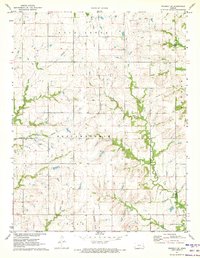 1971 Waverly SE1973 Print · USGSCoffey and Anderson counties are captured in the early seventies as a network of creek-fed prairie townships and rural farmsteads. Genealogists and researchers can trace local land patterns through Wells and the drainage of Pottawatomie Creek and Elm Creek.
 - 1971 Map of Neosho Falls, 1973 Print
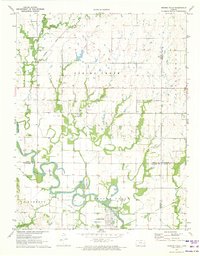 1971 Neosho Falls1973 Print · USGSNeosho Falls and the surrounding river valley are detailed in this early 1970s survey as the community thrived along the Neosho. Researchers can trace historic family-named burial sites like Stoeltzing Cem and Cedarvale Cem or locate traces of an Old Railroad Grade.
 - 1971 Map of Aliceville, 1973 Print
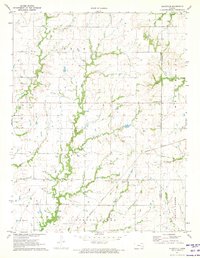 1971 Aliceville1973 Print · USGSCoffey County's rural townships and the village of Aliceville are frozen in time during the early seventies. Genealogists and local historians can trace family ties through landmarks like Star Cem, St Johns Cem, and the rural Scott Valley Ch.2 unique versions available
 - 1985 Map of Garnett
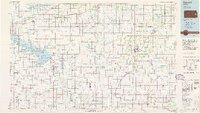 1985 Garnett1985 Print · USGSAnderson County and its neighbors in the mid-eighties show a landscape of rising reservoirs and enduring rail towns. Genealogists and historians can trace the transition from rail to highway at Beto Junction or locate heritage sites like Silkville and Neosho Rapids.
Showing maps 1-25 of 26
Top cities of Anderson County
- Garnett historical maps
- Colony historical maps
- Greeley historical maps
- Welda historical maps
- Kincaid historical maps
- Westphalia historical maps
See more
Frequently asked questions
- What are the different types of historical maps available for Anderson County?
- What is the oldest map of Anderson County?
- Where can I purchase historical maps of Anderson County for my home or office?
- Where can I download high-res historical maps of Anderson County?
- Are there historical topographic maps available for Anderson County?
- Is there historical aerial imagery available for Anderson County?
- Where are historical maps of Anderson County sourced from?