1900s (20th Century) Maps of Saint Bernard Parish, Louisiana
Explore 157 historic maps of Saint Bernard Parish from the 1900s (20th Century). These maps offer a rare glimpse into what life looked like during the 1900s — showing old roads, neighborhoods, homes, and landmarks that have changed or disappeared over time.
Whether you're researching your family's past, planning a metal detecting trip, or studying how Saint Bernard Parish's landscape evolved across the 1900s, these high-resolution maps are a powerful tool for exploring the history of this region.
- Focus on a specific era: All maps on this page are from the 1900s, giving you a focused view of this time period.
- See what’s changed: Compare century-old streets, trails, and buildings to today's modern landscape using overlays and satellite layers.
- Research with precision: Use these maps for genealogy, historical research, land use analysis, or educational projects.
- View, download, or print: Maps are fully viewable online in high resolution, and can be downloaded or printed for your own records.
Start exploring Saint Bernard Parish's history through authentic maps from the 1900s. This is your window into the past.
Saint Bernard Parish, LA maps
(157)- 1932 Map of New Orleans NE
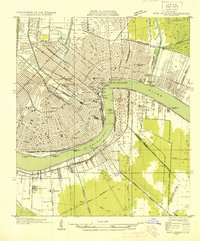 1932 New Orleans NE1932 Print · USGSNew Orleans and the West Bank riverfront are seen in the early thirties, showing the dense grid of the French Quarter and the sprawling medical and university districts. Researchers can find old landmarks like St Louis Cathedral, the Custom House, and Gretna High School.
 - 1935 Map of English Lookout
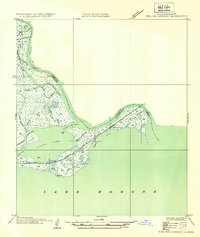 1935 English Lookout1935 Print · USGSThe coastal marshlands at the Louisiana-Mississippi line are captured in the mid-1930s as the rail line bridges the delta. Trace the historic route of the Louisville and Nashville railroad through English Lookout and across the waters of Little Lake.
 - 1935 Map of Morgan Harbor
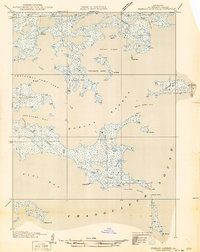 1935 Morgan Harbor1935 Print · USGSCoastal St. Bernard Parish is revealed in the mid-1930s as a complex network of bayous and islands accessible only by water. Historians and genealogists can trace the traditional waterways of Bayou La Loutre, Comfort Island, and the distinctive Deadman Pt.
 - 1935 Map of Lake Athanasio
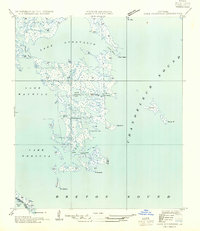 1935 Lake Athanasio1935 Print · USGSCoastal St. Bernard Parish was a complex network of marsh and open water in the mid-1930s, just as aerial surveying began to map the delta in detail. Researchers can trace the historic shoreline from Coon Nest I down to Mozambique Pt, including the named waters of Seven Dollar Bay.
 - 1935 Map of Delacroix
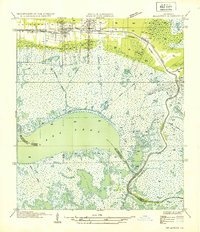 1935 Delacroix1935 Print · USGSCoastal St. Bernard Parish and its marshland communities appear in the mid-1930s as a complex network of bayous, canals, and rail. Researchers can trace the extension of the Louisiana Southern railroad to fishing outposts like Delacroix and Reggio.
 - 1935 Map of Grand Island Pass
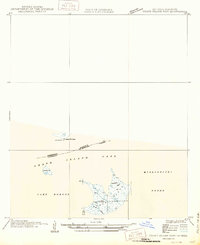 1935 Grand Island Pass1935 Print · USGSThe maritime boundary between Mississippi and Louisiana is captured here in the mid-1930s, centering on the tidal marshes of Grand Island. Researchers can trace the winding paths of Gauthier Bayou and West Bayou through the coastal wetlands.2 unique versions available
 - 1935 Map of Mitchell Keys
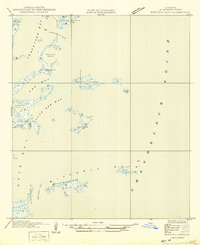 1935 Mitchell Keys1935 Print · USGSCoastal St. Bernard Parish is captured here in the mid-1930s, showing the complex marshland before decades of shoreline retreat. Researchers can trace the original footprints of Mitchell Keys, Martin Island, and the winding Live Oak Bayou.
 - 1935 Map of Lake Calebasse
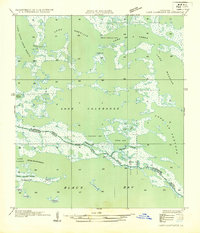 1935 Lake Calebasse1935 Print · USGSCoastal Louisiana marshlands appear as a dense network of bayous and lagoons in the mid-1930s, documenting the intricate boundary of St. Bernard and Plaquemines Parishes. Researchers can trace the winding Bayou Terre Aux Boeufs and find isolated landmarks like Coquille and Greaseboat Island.
 - 1936 Map of Chef Menteur, 1938 Print
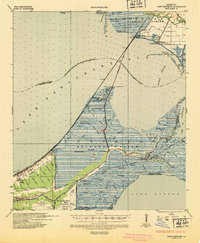 1936 Chef Menteur1938 Print · USGSCoastal New Orleans and the Rigolets area are shown in the mid-1930s as drainage projects and rail lines reshaped the marshlands. Researchers can trace early settlements at Little Woods and Micheaud, or locate sites like Fort Macomb and the Dead Cypress Swamp.2 unique versions available
 - 1936 Map of Rigolets, 1949 Print
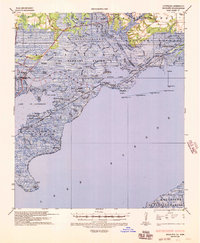 1936 Rigolets1949 Print · USGSCoastal Louisiana and Mississippi meet in the mid-1930s where the Pearl River delta fragments into a maze of islands and bayous. Researchers can trace the early path of Highway No 90, the defenses at Fort Pike, and settlements like Pearlington or Baldwin Lodge.
 - 1937 Map of Chef Menteur
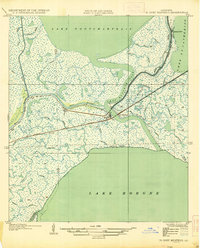 1937 Chef Menteur1937 Print · USGSCoastal Orleans Parish in the late 1930s was a critical junction of rail and water traffic between the great lakes of the Gulf. You can trace the historic site of Ft Mc Comb and the original path of the Louisville and Nashville railroad across Chef Menteur Pass.
 - 1938 Map of Little Woods
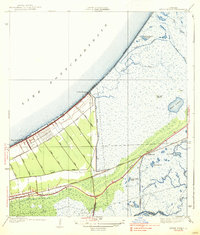 1938 Little Woods1938 Print · USGSThe eastern reaches of New Orleans are shown in the late 1930s as modern drainage and rail lines began to transform the coastal marsh. Researchers can trace the development of Little Woods, Edge Lake, and the rail-side industries near Micheaud and Sugar Mill Lake.2 unique versions available
 - 1939 Map of Shell Beach
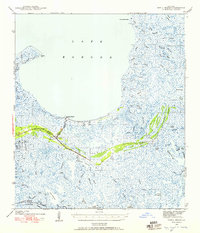 1939 Shell Beach1939 Print · USGSCoastal St. Bernard Parish is captured here in the late thirties, showing a landscape defined by tidewater bayous and early fishing settlements. Genealogists and local historians can trace the foundations of Alluvial City and Yscloskey or locate the site of Old Ft Beauregard.
 - 1939 Map of New Orleans East
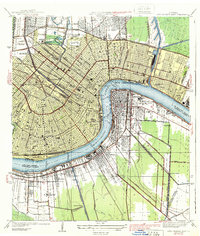 1939 New Orleans East1939 Print · USGSThe crescent city and its surrounding river parishes are captured in the late 1930s, showing New Orleans' transition into a modern port and educational hub. Genealogists can trace family roots through neighborhoods like Algiers and Arabi, or locate ancestors in St Louis Cem and Metairie Cemetery.3 unique versions available
 - 1939 Map of Chalmette
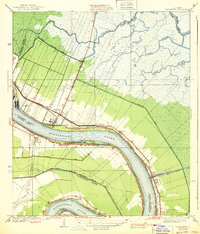 1939 Chalmette1939 Print · USGSSt. Bernard Parish during the late 1930s reveals a world of riverfront plantations and growing rail corridors along the Mississippi. Genealogists and local historians can trace early settlements like Versailles and Meraux, or locate landmarks such as the Chalmette Nat Cem and Sinclair Ch.3 unique versions available
 - 1940 Map of Belle Chasse
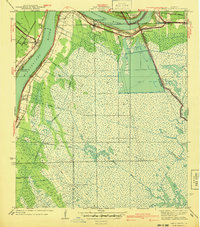 1940 Belle Chasse1940 Print · USGSCoastal Louisiana during the late 1930s is defined here by its intricate canal systems and riverside rail hubs. Trace the local economy through the Sea Train Terminal at Belle Chasse or the marshland paths near Tigers Ridge and Lake Lery.
 - 1941 Map of Black Bay
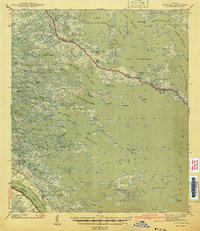 1941 Black Bay1941 Print · USGSCoastal Plaquemines Parish and St. Bernard Parish are shown in detail at the end of the 1930s, when river life and marsh navigation defined the region. Researchers can locate riverfront settlements like City Price and Happy Jack or trace the waterways of Lake Coquille and Petain Lagoon.
 - 1941 Map of Delacroix
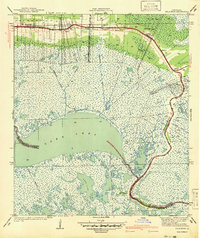 1941 Delacroix1941 Print · USGSCoastal St. Bernard Parish was a world of water and marsh during the late 1930s and early 1940s. Genealogists and local historians can trace the string of settlements along the bayou from St Bernard down to Delacroix, while mapping old waterways like the Magnolia Canal and Howards Ditch.
 - 1941 Map of Shell Beach
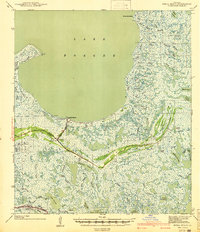 1941 Shell Beach1941 Print · USGSSt. Bernard Parish at the dawn of the 1940s reveals a coastal world of rail-connected fishing outposts and historic fortifications. Genealogists and local historians can trace the foundations of Shell Beach, the Old Bayou Railroad Grade, and the site of Old Ft Beauregard.2 unique versions available
 - 1942 Map of St. Bernard, 1949 Print
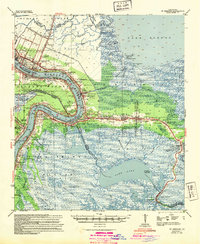 1942 St. Bernard1949 Print · USGSCoastal St. Bernard and Plaquemines Parishes are shown during the early 1940s, capturing the delta’s transition from rural settlements to an industrial oil and rail corridor. Researchers can trace family roots at the Delacroix Island School or locate historic sites like Chalmette National Monument and the Martello Tower.
 - 1943 Map of Little Woods
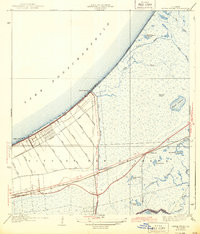 1943 Little Woods1943 Print · USGSThe eastern reaches of New Orleans in the early 1940s reveal a landscape in transition as drainage canals began to reshape the historic marshlands. Genealogists and historians can trace early lakeside settlements like Little Woods and Micheaud, as well as the paths of the Southern Railway and the winding Bayou Sauvage.
 - 1944 Map of Black Bay
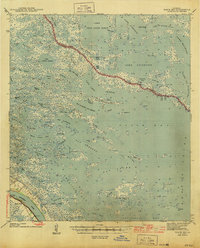 1944 Black Bay1944 Print · USGSCoastal Plaquemines Parish and the Mississippi River bank are documented here during the mid-1940s. Genealogists and historians can trace the riverside corridor near City Price and Happy Jack, or explore the complex bayou network including Lake Jean Louis Robin and Belle Isle.
 - 1945 Map of New Orleans
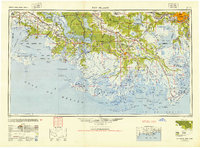 1945 New Orleans1945 Print · USGSCoastal Louisiana and the Mississippi delta are captured here just after the war, showing the region's transition into a modern industrial and transit hub. Genealogists can trace family settlements along Bayou Teche or identify rail stops for the Illinois Central and Texas & Pacific lines.
 - 1946 Map of Oak Mound Bayou
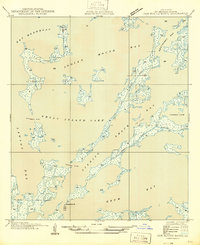 1946 Oak Mound Bayou1946 Print · USGSCoastal St. Bernard Parish is documented here during the mid-1940s, showing the intricate marshlands and waterways of the Louisiana delta. Researchers can trace historical navigation routes through Newton Pass and locate landmarks like Oak Mound Bayou and Deadmans Bayou.
 - 1946 Map of Isle Au Pitre
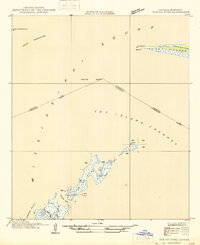 1946 Isle Au Pitre1946 Print · USGSThe maritime border between Mississippi and Louisiana is captured here just after the war, showing the intricate marshlands and navigation routes. Researchers can trace the shifting sands of Cat Island and the isolated lights of Merrill Shell Bank LH and Cat Island LH.
Showing maps 1-25 of 157
Top cities of Saint Bernard Parish
Frequently asked questions
- What are the different types of historical maps available for Saint Bernard Parish?
- What is the oldest map of Saint Bernard Parish?
- Where can I purchase historical maps of Saint Bernard Parish for my home or office?
- Where can I download high-res historical maps of Saint Bernard Parish?
- Are there historical topographic maps available for Saint Bernard Parish?
- Is there historical aerial imagery available for Saint Bernard Parish?
- Where are historical maps of Saint Bernard Parish sourced from?