1900s (20th Century) Maps of Calvert County, Maryland
Explore 43 historic maps of Calvert County from the 1900s (20th Century). These maps offer a rare glimpse into what life looked like during the 1900s — showing old roads, neighborhoods, homes, and landmarks that have changed or disappeared over time.
Whether you're researching your family's past, planning a metal detecting trip, or studying how Calvert County's landscape evolved across the 1900s, these high-resolution maps are a powerful tool for exploring the history of this region.
- Focus on a specific era: All maps on this page are from the 1900s, giving you a focused view of this time period.
- See what’s changed: Compare century-old streets, trails, and buildings to today's modern landscape using overlays and satellite layers.
- Research with precision: Use these maps for genealogy, historical research, land use analysis, or educational projects.
- View, download, or print: Maps are fully viewable online in high resolution, and can be downloaded or printed for your own records.
Start exploring Calvert County's history through authentic maps from the 1900s. This is your window into the past.
Calvert County, MD maps
(43)- 1901 Map of Drum Point
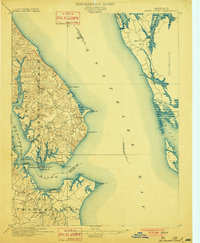 1901 Drum Point1901 Print · USGSThe maritime heart of the lower Chesapeake Bay comes alive in this turn-of-the-century survey of the Calvert and St. Mary’s coastline. Genealogists and historians can trace old landings and light stations like Millstone Landing, Spencers Wharf, and the Drum Pt. L.H. at the mouth of the Patuxent River.
 - 1901 Map of Prince Frederick
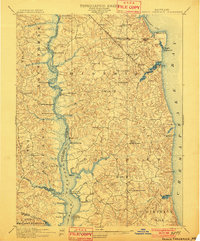 1901 Prince Frederick1901 Print · USGSThe Tidewater region of Maryland is captured here at the dawn of the twentieth century, when river travel and steamship wharves still defined the local economy. Researchers can locate vanished landings and ferry crossings like Magruder Ferry, Leitch Wharf, and Lower Marlboro.
 - 1901 Map of Leonardtown
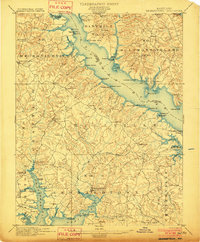 1901 Leonardtown1901 Print · USGSMaryland's tidewater country at the turn of the century is defined by its deep reliance on the river and bay. Genealogists and historians can trace the vital maritime economy through old landings and wharves like Sotterly Wharf, Abells Wharf, and Coburns Wharf.3 unique versions available
 - 1904 Map of Sharps Island
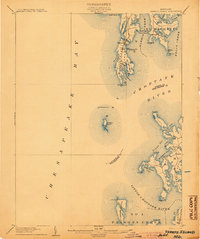 1904 Sharps Island1904 Print · USGSThe Eastern Shore at the turn of the century shows a world of tidewater landings and island communities along the Choptank River. Genealogists and maritime historians can trace early settlements like Neavitt and Avalon, or locate the original site of the Sharps Island L.H.3 unique versions available
 - 1905 Map of Owensville
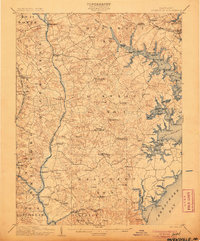 1905 Owensville1905 Print · USGSCoastal Maryland in the early twentieth century was a landscape of tide-water wharves and rural post offices. Genealogists can trace family connections through sites like Owensville West River PO, Hartges Wharf, and Mitchellville PO.5 unique versions available
 - 1905 Map of Drum Point
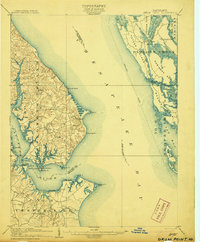 1905 Drum Point1905 Print · USGSThe Chesapeake Bay shoreline at the turn of the century shows a landscape defined by deep-water landings and remote island settlements. Genealogists and maritime historians can trace early wharves and landings like Spencers Wharf, Millstone Landing, and the village of Solomons.4 unique versions available
 - 1906 Map of St. Marys
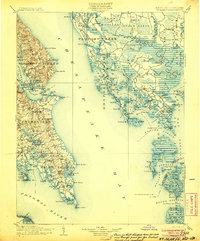 1906 St. Marys1906 Print · USGSChesapeake Bay and the Potomac River converge in this 1906 survey of the Maryland and Virginia tidewater. Historians can trace the region's maritime heritage through dozens of named landings and islands, from Solomons Id. to the remote reaches of Smith Island.4 unique versions available
 - 1906 Map of Patuxent
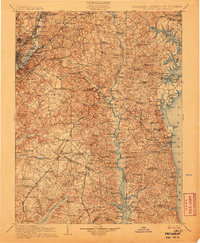 1906 Patuxent1906 Print · USGSThe Tidewater region of Maryland and the outskirts of the District of Columbia are shown here at the turn of the century. Researchers can trace the early footprints of Maryland Agril. College, find riverfront infrastructure at Milltown Landing, and follow long-established routes like the Marlboro Turnpike.4 unique versions available
 - 1908 Map of Choptank
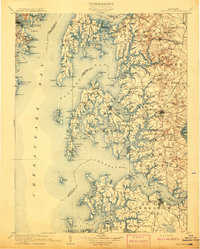 1908 Choptank1908 Print · USGSMaryland's Eastern Shore and the Chesapeake Bay are captured here at the start of the twentieth century, showing a world of steamships and rail. Genealogists can trace family names at St Michaels, Oxford, and waterfront landings like Claiborne or Arundel on the Bay.5 unique versions available
 - 1910 Map of Prince Frederick
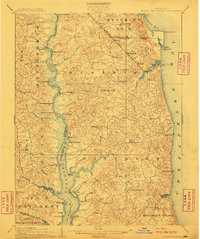 1910 Prince Frederick1910 Print · USGSCoastal Calvert County comes alive in the early twentieth century, showing a landscape defined by the Patuxent River and the bay. Genealogists can trace old wharves and family settlements from Lower Marlboro to the Chesapeake Beach RR line.3 unique versions available
 - 1936 Map of Leonardtown
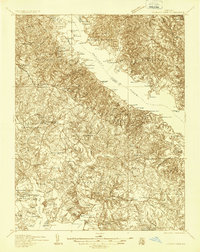 1936 Leonardtown1936 Print · USGSSt. Mary's County wharves and rural parishes are captured in detail during the mid-1930s. Genealogists can trace family footprints at Old All Faith Ch, identify old school sites like Maryland Springs Sch, or locate historic landings such as Williams Wharf.
 - 1938 Map of Prince Frederick
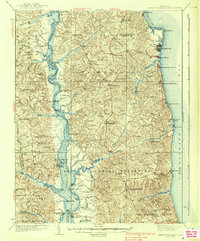 1938 Prince Frederick1938 Print · USGSCalvert County at the height of the 1930s reveals a Maryland landscape defined by tobacco farming and bay-front resorts. Researchers can locate vanished rural landmarks like the Cedar Hill Sch, explore the wharves at Deep Landing, or trace the early layout of Chesapeake Beach.3 unique versions available
 - 1939 Map of Leonardtown
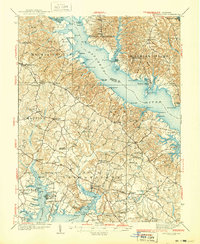 1939 Leonardtown1939 Print · USGSSouthern Maryland's river-oriented landscape is captured here in the late 1930s, centered on the community of Leonardtown. Genealogists can trace family roots through numerous country schools and landmarks like Bannaker Sch, St Andrews Ch, and the many landings along the Patuxent River.3 unique versions available
 - 1942 Map of Drum Point
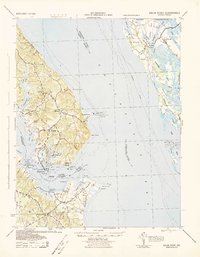 1942 Drum Point1942 Print · USGSThe Chesapeake Bay shoreline in the early 1940s reveals a world of maritime activity and isolated coastal communities. Genealogists and local historians can trace the foundations of Solomons, locate Spencers Wharf, and explore the marshes of Taylors Island.
 - 1942 Map of Barren Island, 1957 Print
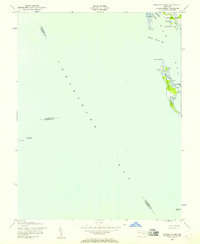 1942 Barren Island1957 Print · USGSChesapeake Bay waters surround the isolated marshes of Dorchester County during the early 1940s. Maritime researchers can locate key navigational aids like the Cedar Point Lighthouse and trace the tidal channels of The Big Broads and Barren I Thorofare.3 unique versions available
 - 1942 Map of Taylors Island, 1961 Print
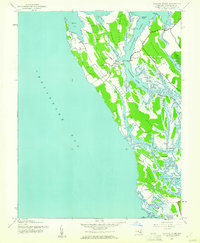 1942 Taylors Island1961 Print · USGSThe Eastern Shore of Maryland in the early 1940s reveals a tidewater landscape of isolated necks and marshy islands. Genealogists can trace family footprints around Smithville, Bethlehem Ch, and the complex shorelines of Robinson Neck.
 - 1943 Map of Barren Island
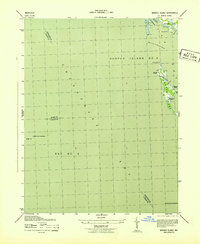 1943 Barren Island1943 Print · USGSThe Chesapeake Bay shoreline of Dorchester County is captured here during the early war years, highlighting a fragile maritime landscape. Researchers can trace historic water navigation markers and coastal features like Barren Island, Cedar Point Lighthouse, and Meekins Neck.
 - 1943 Map of Cove Point
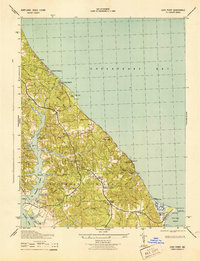 1943 Cove Point1943 Print · USGSCoastal Calvert County appears here during the height of the second World War, showing a peninsula balanced between traditional maritime life and mobilization. You can trace the development of Camp Conoy and the U S Army Camp alongside historic landmarks like Middleham Chapel and the Cove Point Light House.4 unique versions available
 - 1943 Map of Taylors Island
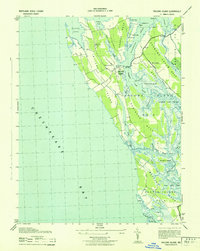 1943 Taylors Island1943 Print · USGSDorchester County's tidal landscape and island communities are detailed during the mid-forties, showing the intricate network of marshy necks and creeks. Trace local history through family-named sites like Dunnock Island or visit the rural centers of Smithville and Taylors Island.
 - 1944 Map of Solomons Island
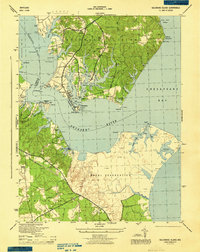 1944 Solomons Island1944 Print · USGSCoastal Maryland at the mouth of the Patuxent River is captured here in the mid-1940s, highlighting the expansion of the Naval Reservation. Genealogists and local historians can locate early communities like Johnstown, Jarboesville, and the Pearson Po settlement.4 unique versions available
 - 1944 Map of West River
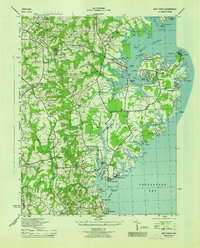 1944 West River1944 Print · USGSCoastal Anne Arundel County comes alive during the war years, showing a landscape of maritime industry and rural crossroads. Genealogists can trace family roots through Tracys Landing, the Franklin Ch and Cem, and schools like Nutwell Sch.
 - 1944 Map of Bristol
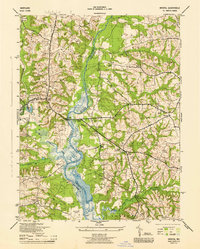 1944 Bristol1944 Print · USGSMid-century Anne Arundel and Prince George's counties are captured here along the banks of the Patuxent River during the Second World War. Researchers can trace rural lineages through numerous community sites like Sollers Chapel, Bristol Sch, and the old Chesapeake Beach RR line.
 - 1948 Map of Washington
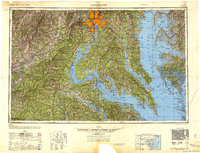 1948 Washington1948 Print · USGSThe Potomac and Chesapeake regions in the late 1940s reveal a landscape of expanding military reach and deep-rooted Tidewater settlements. Trace old rail corridors like the Richmond Fredericksburg & Potomac RR or locate landmarks like the Wakefield Washington Monument and St. Marys College.2 unique versions available
 - 1950 Map of Leonardtown, 1964 Print
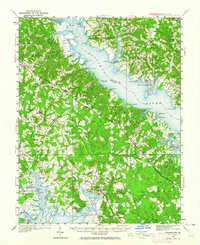 1950 Leonardtown1964 Print · USGSMid-century Southern Maryland comes alive on this peninsula bounded by the Patuxent and Potomac estuaries. Genealogists and historians can trace family-named points and rural infrastructure through landmarks like St Andrews Ch, Williams Wharf, and Broomes Island.
 - 1953 Map of Mechanicsville, 1956 Print
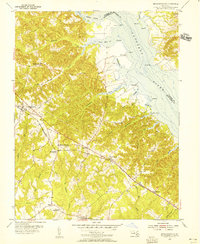 1953 Mechanicsville1956 Print · USGSSt. Mary's County in the early fifties shows a rural landscape defined by the Patuxent River and its tidal creeks. Genealogists and local historians can trace family-named points and early schools like Brent High Sch, St Joseph Sch, and the community of Mechanicsville.4 unique versions available
Showing maps 1-25 of 43
Top cities of Calvert County
- Chesapeake Ranch Estates historical maps
- Chesapeake Beach historical maps
- Solomons historical maps
- Drum Point historical maps
- Dunkirk historical maps
- Prince Frederick historical maps
See more
Frequently asked questions
- What are the different types of historical maps available for Calvert County?
- What is the oldest map of Calvert County?
- Where can I purchase historical maps of Calvert County for my home or office?
- Where can I download high-res historical maps of Calvert County?
- Are there historical topographic maps available for Calvert County?
- Is there historical aerial imagery available for Calvert County?
- Where are historical maps of Calvert County sourced from?