1930s Maps of Worcester County, Massachusetts
Explore 24 historic maps of Worcester County from the 1930s. These maps offer a rare glimpse into what life looked like during the 1930s — showing old roads, neighborhoods, homes, and landmarks that have changed or disappeared over time.
Whether you're researching your family's past, planning a metal detecting trip, or studying how Worcester County's landscape evolved across the 1930s, these high-resolution maps are a powerful tool for exploring the history of this region.
- Focus on a specific era: All maps on this page are from the 1930s, giving you a focused view of this time period.
- See what’s changed: Compare century-old streets, trails, and buildings to today's modern landscape using overlays and satellite layers.
- Research with precision: Use these maps for genealogy, historical research, land use analysis, or educational projects.
- View, download, or print: Maps are fully viewable online in high resolution, and can be downloaded or printed for your own records.
Start exploring Worcester County's history through authentic maps from the 1930s. This is your window into the past.
Worcester County, MA maps
(24)- 1931 Map of Groton
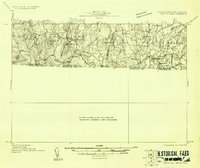 1931 Groton1931 Print · USGSThe Massachusetts and New Hampshire borderlands in the early thirties reveal a landscape of river-powered rail and rural industry. Genealogists can trace family landmarks and transport hubs like Hollis Sta, Potanopa Pond, and the Runnels Bridge.
 - 1931 Map of Fitchburg
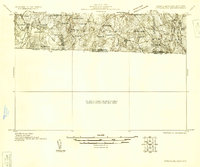 1931 Fitchburg1931 Print · USGSThe Massachusetts and New Hampshire border region was a network of mill villages and mountain ridges in the early thirties. Genealogists and historians can locate rural landmarks like School No 8, the High Bridge, and the Boston and Maine rail line.
 - 1932 Map of Warwick
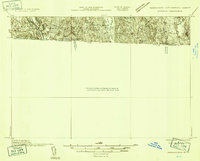 1932 Warwick1932 Print · USGSIn the early 1930s, the tri-state border region of Massachusetts, New Hampshire, and Vermont was a vital corridor of rail and river transit. Genealogists and researchers can trace the old rail lines of the Central Vermont Ry, locate the East Northfield Sta, or find family landmarks like Curtis Corners and Wheeler Fall.
 - 1932 Map of Winchendon
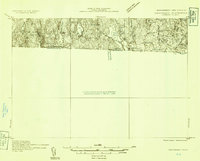 1932 Winchendon1932 Print · USGSThe borderlands of New Hampshire and Massachusetts come into focus during the early thirties, showing a rural landscape dominated by glacial lakes and high ridges. Researchers can trace the Boston and Maine line through State Line or locate family sites at Rand Cem and Sch No 1.
 - 1934 Map of Worcester
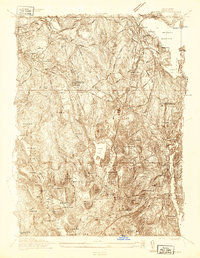 1934 Worcester1934 Print · USGSMid-depression Worcester and Holden emerge as a dense network of industrial ponds, institutions, and rail lines. Genealogists can trace family connections through the Grove Cem, numerous local schools like Chaffin Sch, and the neighborhoods around Union Sta.
 - 1935 Map of Ayer
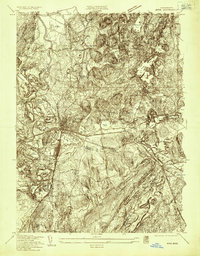 1935 Ayer1935 Print · USGSThe intersection of Middlesex and Worcester counties in the mid-1930s reveals a landscape of military bases, historic academies, and industrial ponds. Researchers can trace the layout of Fort Devens, the grounds of the Groton School, and the unique settlement at Shaker Village.
 - 1935 Map of Warwick
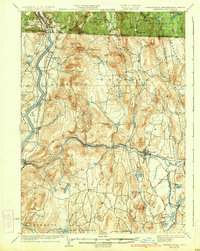 1935 Warwick1935 Print · USGSUpper Massachusetts and the Tri-State borderlands thrive during the mid-thirties as rail corridors and river valleys connect mountain villages. Researchers can trace the Central Vermont Ry through Northfield or locate family landmarks like Barrows Cem and Barber Sch.2 unique versions available
 - 1935 Map of Groton
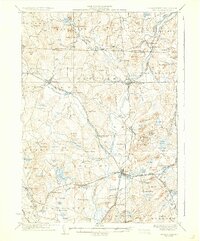 1935 Groton1935 Print · USGSCrossing the New Hampshire border in the 1930s, this area was a bustling hub of rail transport and riverside industry. Researchers can trace the legacy of communal life at Shaker Village, locate the campus of Groton School, or follow the lines of the Boston and Maine RR through towns like Pepperell and Shirley.
 - 1935 Map of Fitchburg
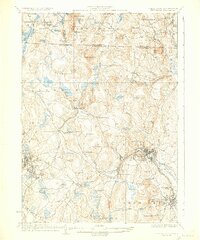 1935 Fitchburg1935 Print · USGSThe industrial corridor and border hills of north-central Massachusetts and southern New Hampshire are captured here in the mid-1930s. Trace the intricate rail networks of the Old Colony Railroad and find local landmarks like School No 8 or Rollstone Hill.3 unique versions available
 - 1935 Map of Millbury
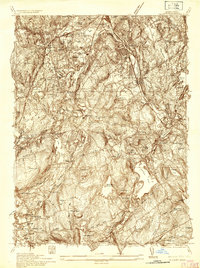 1935 Millbury1935 Print · USGSThe Worcester County countryside in the mid-1930s reveals a dense network of industrial hamlets and rail lines before the modern interstate era. Researchers can trace family roots at St Roche Cem or Bnai Brith Cem and locate vanished schoolhouses like the Hammond Sch.
 - 1935 Map of Shirley
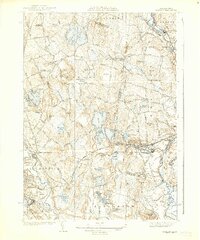 1935 Shirley1935 Print · USGSThe Nashua River valley during the mid-1930s shows a region defined by its rail connections and hilltop villages. Genealogists can trace family sites near Shirley Center, the Industrial School, and cemeteries like St Leo Cem.3 unique versions available
 - 1935 Map of Winchendon
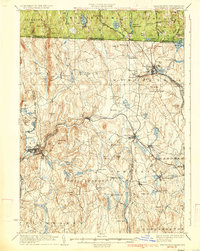 1935 Winchendon1935 Print · USGSIn the mid-1930s, the border between Massachusetts and New Hampshire was defined by busy rail corridors and small mill towns. Researchers can trace family-named sites and industrial infrastructure from Athol Center to Pequoig Station and the rural School No 1.4 unique versions available
 - 1936 Map of Groton
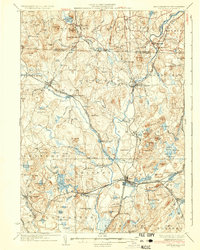 1936 Groton1936 Print · USGSNorthern Middlesex County and southern New Hampshire appear here in the mid-1930s, showing a landscape shaped by river power and a dense rail network. Researchers can trace historic sites like the Shaker Village and Groton School, or locate old depots at Townsend Harbor and Ayer.3 unique versions available
 - 1936 Map of Fitchburg
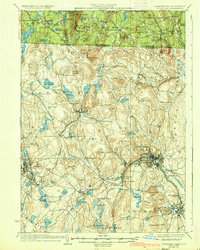 1936 Fitchburg1936 Print · USGSNorthwestern Massachusetts and southern New Hampshire are shown here during the mid-1930s, featuring a mature network of rail lines and industrial river towns. Genealogists can locate family landmarks like School No 9 or trace the early paths of the Fitchburg Railroad and Old Colony Railroad Fitchburg Branch.2 unique versions available
 - 1937 Map of Leicester
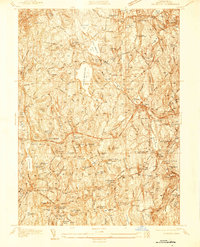 1937 Leicester1937 Print · USGSWorcester County's industrial villages and highland farms are captured in detail just before the late-century expansion. Genealogists can trace family sites like the Clark Barton Home, Gore Cem, and the specialized Charlton Home Farm.
 - 1937 Map of Orange
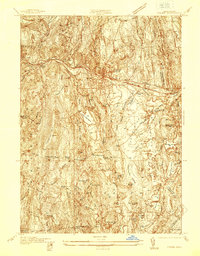 1937 Orange1937 Print · USGSThe Millers River valley and the Franklin-Worcester county line are captured here in the late thirties. Researchers can trace the Boston and Maine Railroad through Orange or locate family sites like Wilbur Cem and Morse Village Sch.
 - 1937 Map of Mt Grace
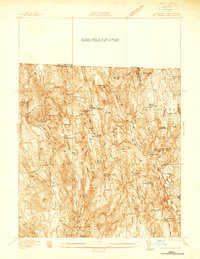 1937 Mt Grace1937 Print · USGSThe rural highlands of North-Central Massachusetts are captured here in the late 1930s before modern development. Researchers can trace family-named sites like Mayo Corners and Blissville, or locate early conservation landmarks like the CCC Camp and the Fire Tower on Mt Grace.
 - 1937 Map of Paxton
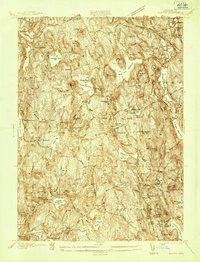 1937 Paxton1937 Print · USGSWorcester County's upland terrain is captured here in the late 1930s, featuring a landscape of hill-top settlements and industrial hamlets. Genealogists and historians can trace the foundations of Upper Wire Village, locate the Veterans Hospital, or explore the shores of Lake Whittemore.
 - 1939 Map of Wachusett Mtn
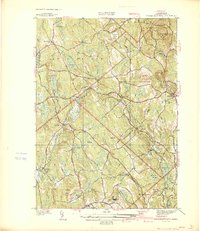 1939 Wachusett Mtn1939 Print · USGSWorcester County is captured here in the late 1930s, showing the intersection of new state infrastructure and historic rail villages. Researchers can trace family sites at Woodlawn Cem or follow the engineering of the Quabbin Aqueduct near Hubbardston Sta.
 - 1939 Map of Worcester South
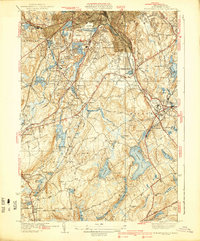 1939 Worcester South1939 Print · USGSThe Worcester highlands south of the city appear here in the late 1930s, showing a landscape of textile-era mill ponds and expanding suburban rail stops. Researchers can trace family history at St Johns Cemetery or locate old neighborhood landmarks like St Josephs Ch and Hammond Sch.4 unique versions available
 - 1939 Map of Ayer
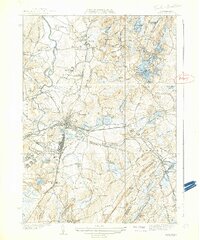 1939 Ayer1939 Print · USGSMiddlesex County in the late 1930s is a hub of military activity and historic settlements at the crossroads of the rail. Trace ancestral roots at Shaker Village, Pingryville, or the expansive grounds of Fort Devens.6 unique versions available
 - 1939 Map of Shirley
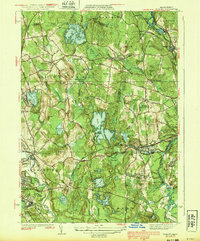 1939 Shirley1939 Print · USGSWorcester and Middlesex counties are shown in the late thirties, when rail lines and river valleys defined the region's industrial and social life. Genealogists and researchers can locate the Industrial School, family-named landmarks like Kezar Hill, and numerous cemeteries including St Cecelia Cemetery.3 unique versions available
 - 1939 Map of Worcester North
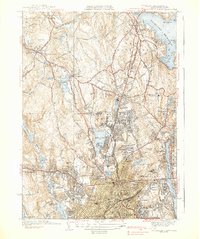 1939 Worcester North1939 Print · USGSThe Worcester hills and reservoirs appear in detail during the late 1930s, documenting a landscape of expanding educational institutions and civic infrastructure. Genealogists and historians can trace Assumption College, Grove Cem, and the old City Farm near Morningdale.5 unique versions available
 - 1939 Map of Franklin, 1942 Print
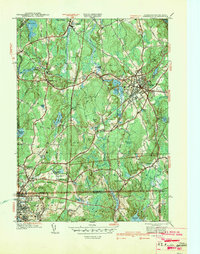 1939 Franklin1942 Print · USGSThe Massachusetts and Rhode Island borderlands are captured here just before the war, showing the industrial nodes of Franklin and Woonsocket. Genealogists can trace family roots at Ballow Meetinghouse, St Marys Cem, and the old campus of Dean Academy.
End of results
Showing maps 1-24 of 24
Top cities of Worcester County
- Worcester historical maps
- Leominster historical maps
- Fitchburg historical maps
- Shrewsbury historical maps
- Milford historical maps
- Gardner historical maps
See more
Frequently asked questions
- What are the different types of historical maps available for Worcester County?
- What is the oldest map of Worcester County?
- Where can I purchase historical maps of Worcester County for my home or office?
- Where can I download high-res historical maps of Worcester County?
- Are there historical topographic maps available for Worcester County?
- Is there historical aerial imagery available for Worcester County?
- Where are historical maps of Worcester County sourced from?