Old Maps of Kittson County, Minnesota for Metal Detecting
Plan your next treasure hunt with 211 historic maps of Kittson County. Find old homesites, ghost towns, trails, and gathering spots that may be lost to time — perfect for identifying promising metal detecting locations.
- Locate forgotten sites: Uncover places like long-lost settlements, abandoned rail lines, or gathering spots.
- Plan better hunts: Use map overlays combined with LiDAR or satellite views to narrow in on historically rich areas.
- Made for detectorists: Thousands of hobbyists use these maps to discover relics, coins, and hidden history.
Use these historic maps to boost your research and find new opportunities beneath the surface of Kittson County.
Kittson County, MN maps
(211)- 1918 Map of Hemmington
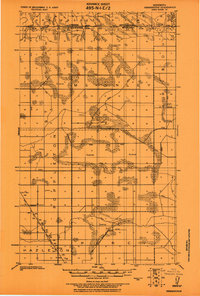 1918 Hemmington1918 Print · USGSThe international borderlands of northern Minnesota are captured here at the end of the Great War, showing a landscape of drainage ditches and pioneer farming. Genealogists can locate several School sites, the Church in Poppleton, and early transit points like Farm Xing along the railroad.
 - 1919 Map of Pelan
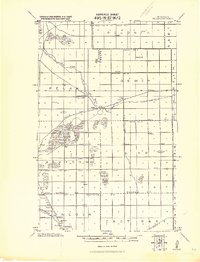 1919 Pelan1919 Print · USGSNorthwestern Minnesota at the close of the Great War was a landscape defined by massive drainage projects. Researchers can trace the early townships of Pelan and Linda, identifying the locations of numerous rural Schools and local hubs like Sanwick.
 - 1930 Map of Juneberry
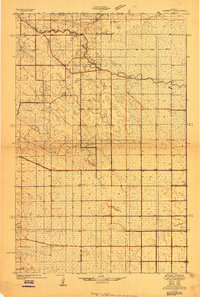 1930 Juneberry1930 Print · USGSThe northern Minnesota borderlands come into focus at the start of the 1930s, showing the early efforts to drain the vast marshy plains. Genealogists and local historians can locate rural schoolhouses like Oak Point Sch and family-named features such as Johnson Sch and Moose Point.
 - 1932 Map of Juneberry
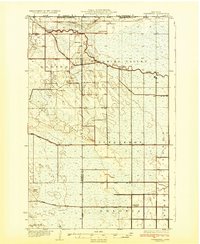 1932 Juneberry1932 Print · USGSThe northern Minnesota borderlands and Roseau County wetlands are captured here in the early thirties, just as large-scale drainage projects transformed the terrain. Researchers can trace the rural school system through Oak Point Sch and Johnson Sch, or locate the settlement of Caribou near the Roseau River.2 unique versions available
 - 1939 Map of Drayton, 1954 Print
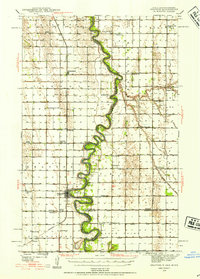 1939 Drayton1954 Print · USGSThe Red River valley at the onset of the Second World War shows a landscape defined by tight river bends and a thriving railroad economy. Genealogists and local historians can trace family locations near dozens of rural schools and churches like Daymon Sch, Tabitha Ch, and the settlement of Bowesmont.2 unique versions available
 - 1939 Map of Pembina, 1958 Print
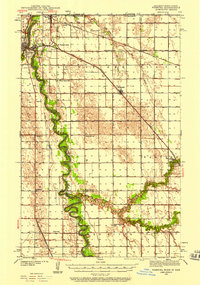 1939 Pembina1958 Print · USGSThe international border at the Red River Valley was a busy corridor of rail and river transit in the late 1930s. Genealogists can locate numerous rural schoolhouses like Fleece Sch and Joe River Sch, or trace the tracks of the Great Northern through St Vincent.3 unique versions available
 - 1939 Map of Kennedy, 1963 Print
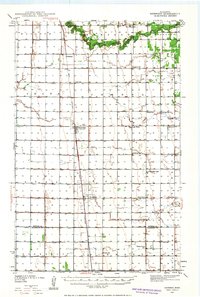 1939 Kennedy1963 Print · USGSUpper Minnesota prairie life is centered on the Great Northern railroad in the years before the war. Genealogists and local historians can trace family roots through numerous country schools and churches like McKinley Sch, Happy Corner, and Enok Ch.2 unique versions available
 - 1941 Map of Kennedy
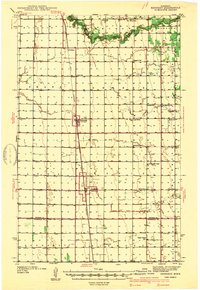 1941 Kennedy1941 Print · USGSNorthwest Minnesota farming life is centered on the rail corridor during the late 1930s. Genealogists and historians can trace the foundations of rural society through landmarks like West Emmaus Ch, Happy Corner, and the Whalen Sch.
 - 1941 Map of Drayton
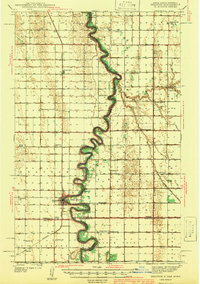 1941 Drayton1941 Print · USGSThe Red River of the North snakes across the border of North Dakota and Minnesota during the late 1930s. Genealogists and historians can trace rail-side towns like Bowesmont and Drayton, or locate rural landmarks such as Skjeberg Ch and the Airway Beacon.2 unique versions available
 - 1941 Map of Hallock
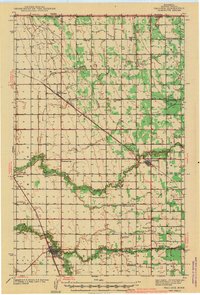 1941 Hallock1941 Print · USGSUpper Minnesota near the Canadian border thrived as a rail-and-river agricultural corridor in the early 1940s. Genealogists can trace early rural life through a dense grid of country schools like Grasshopper Sch and Webster Sch, alongside the Soo Line railroad.3 unique versions available
 - 1941 Map of Pembina
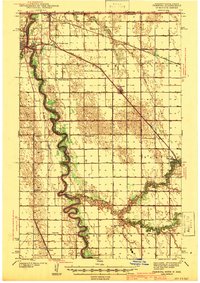 1941 Pembina1941 Print · USGSThe Red River valley at the Canadian border comes alive in this pre-war survey of the North Dakota-Minnesota line. Genealogists can trace family roots through numerous rural landmarks like the Icelandic Cem, North Star Ch, and the Fleece Sch.2 unique versions available
 - 1952 Map of Thief River Falls, 1967 Print
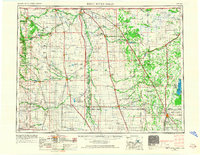 1952 Thief River Falls1967 Print · USGSThe Red River Valley's agricultural and conservation landscape is captured in the mid-1950s, detailing a web of rail lines and international border crossings. Researchers can trace family roots in towns like Thief River Falls, locate the State School for Blind, and survey landmarks like the Agassiz National Wildlife Refuge.2 unique versions available
 - 1956 Map of Thief River Falls
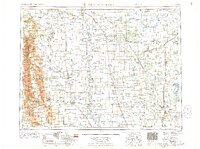 1956 Thief River Falls1956 Print · USGSThe Red River Valley in the mid-1950s is captured here as a sprawling network of rail corridors and wildlife refuges along the Canadian border. Trace the vanished transport routes of the Dismantled railroad and Abandoned railroad or locate local landmarks like the Herrick Elevator and State School for Blind.
 - 1956 Map of Karlstad, 1958 Print
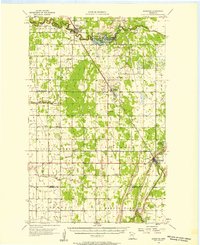 1956 Karlstad1958 Print · USGSNorthwestern Minnesota in the mid-fifties is captured here as a grid of grain-country townships connected by the Soo Line. Trace the rural development of the era through sites like Lake Bronson State Park, Bepson Sch, and Hegland Ch.2 unique versions available
 - 1957 Map of Thief River Falls
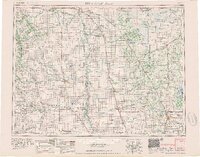 1957 Thief River Falls1957 Print · USGSThe Red River Valley in the mid-fifties is captured here as a thriving network of rail towns and conservation lands. Genealogists and historians can trace family roots through settlements like Grafton, Pembina, and Hallock, or locate landmarks such as the State School for Blind and the Great Northern RR corridor.
 - 1957 Map of Pelan, 1959 Print
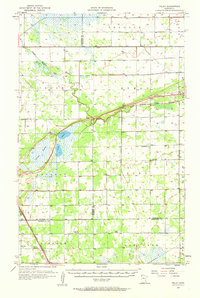 1957 Pelan1959 Print · USGSNorthwestern Minnesota in the late fifties was a landscape of township grids and river branches. Genealogists and historians can trace local landmarks like Zion Ch, the rail line of the Minneapolis St Paul and Sault Ste Marie, and the settlement of Pelan.
 - 1966 Map of Skull Lake, 1967 Print
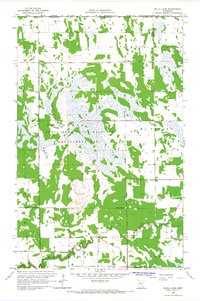 1966 Skull Lake1967 Print · USGSSettled along the Manitoba border in the mid-sixties, this Kittson County landscape shows a network of drainage ditches and conservation lands. Trace local history at McKinley Cem, the First Lutheran Ch, and the banks of the North Branch Two Rivers.
 - 1966 Map of Caribou, 1967 Print
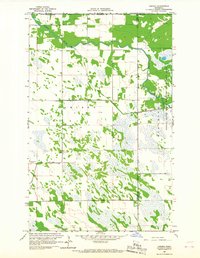 1966 Caribou1967 Print · USGSThe Minnesota-Manitoba border comes into focus in the mid-1960s, showing the remote northern reaches of Kittson County. Genealogists and local historians can locate the Caribou settlement and its Cem, or trace the engineering of Judicial Ditch No 32.
 - 1966 Map of Skull Lake NE, 1967 Print
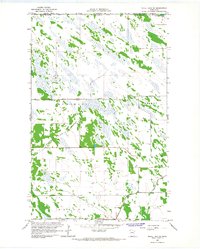 1966 Skull Lake NE1967 Print · USGSThe northern edge of Kittson County meets the Canadian border in the mid-1960s, showing a landscape defined by township lines and drainage projects. Researchers can trace the extensive network of engineered waterways, including State Ditch No 84 and County Ditch No 14, through McKinley and Caribou.
 - 1966 Map of Skull Lake SE, 1967 Print
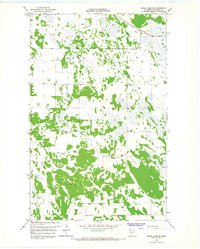 1966 Skull Lake SE1967 Print · USGSThe northwestern Minnesota wetlands are seen here in the mid-1960s, showing a landscape transformed by large-scale drainage efforts. Researchers can trace the engineering of the prairie through Judicial Ditch No 31 and across the townships of Cannon and Percy.
 - 1966 Map of Juneberry Ridge, 1967 Print
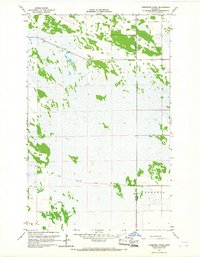 1966 Juneberry Ridge1967 Print · USGSThe borderlands of Kittson and Roseau counties are shown here in the mid-sixties, dominated by agricultural drainage networks. Genealogists and researchers can trace the settlement of Polonia or locate old landmarks like Juneberry Ridge and Moose Point.2 unique versions available
 - 1966 Map of Skull Lake SW, 1967 Print
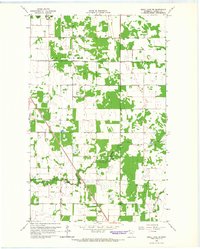 1966 Skull Lake SW1967 Print · USGSNorthwestern Minnesota's agricultural landscape is captured here in the mid-1960s, showing a region defined by extensive drainage projects and the Soo Line. Researchers can trace the Middle Branch Two Rivers alongside local Townhall locations and several Sandpit operations.
 - 1967 Map of Thief River Falls
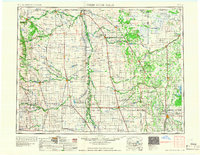 1967 Thief River Falls1967 Print · USGSThe Red River Valley and the international border come alive in the 1960s, showing a landscape shaped by major rail lines and river commerce. Genealogists and historians can trace the paths of the Great Northern and Soo Line through towns like Thief River Falls, Grafton, and Hallock.
 - 1971 Map of Bowesmont, 1973 Print
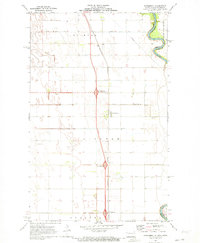 1971 Bowesmont1973 Print · USGSPembina County at the start of the 1970s reveals a landscape defined by the winding North Red River and a growing highway system. Local historians can trace the rail-and-road corridor through Bowesmont, Pittsburg, and the Burlington Northern line.2 unique versions available
 - 1971 Map of Drayton, 1973 Print
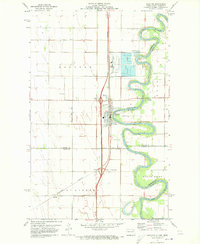 1971 Drayton1973 Print · USGSThe Red River valley in the early 1970s reveals a landscape of fertile farmland and river-dependent industry. Researchers can trace the rail lines of the Burlington Northern through Drayton and locate family landmarks like Drayton Cem and Herrick.2 unique versions available
Showing maps 1-25 of 211
Top cities of Kittson County
- Hallock historical maps
- Karlstad historical maps
- Lancaster historical maps
- Kennedy historical maps
- Lake Bronson historical maps
- Deerwood historical maps
See more
Frequently asked questions
- What are the different types of historical maps available for Kittson County?
- What is the oldest map of Kittson County?
- Where can I purchase historical maps of Kittson County for my home or office?
- Where can I download high-res historical maps of Kittson County?
- Are there historical topographic maps available for Kittson County?
- Is there historical aerial imagery available for Kittson County?
- Where are historical maps of Kittson County sourced from?