1960s Maps of Lake of the Woods County, Minnesota
Explore 33 historic maps of Lake of the Woods County from the 1960s. These maps offer a rare glimpse into what life looked like during the 1960s — showing old roads, neighborhoods, homes, and landmarks that have changed or disappeared over time.
Whether you're researching your family's past, planning a metal detecting trip, or studying how Lake of the Woods County's landscape evolved across the 1960s, these high-resolution maps are a powerful tool for exploring the history of this region.
- Focus on a specific era: All maps on this page are from the 1960s, giving you a focused view of this time period.
- See what’s changed: Compare century-old streets, trails, and buildings to today's modern landscape using overlays and satellite layers.
- Research with precision: Use these maps for genealogy, historical research, land use analysis, or educational projects.
- View, download, or print: Maps are fully viewable online in high resolution, and can be downloaded or printed for your own records.
Start exploring Lake of the Woods County's history through authentic maps from the 1960s. This is your window into the past.
Lake of the Woods County, MN maps
(33)- 1963 Map of Kenora, 1968 Print
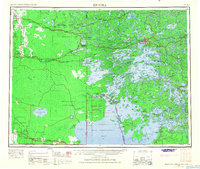 1963 Kenora1968 Print · USGSThe Lake of the Woods borderlands in the early sixties reveal a complex web of remote peninsulas and rail-linked settlements. Trace the path of the Canadian Pacific Railway through Kenora or locate island outposts like Falcon Island and Big Island.2 unique versions available
 - 1967 Map of Flag Island, 1969 Print
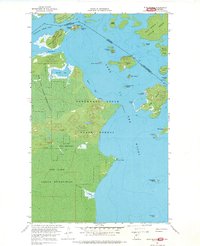 1967 Flag Island1969 Print · USGSThe northernmost point of the contiguous United States is captured here during the late sixties, where the forest meets the water of the borderlands. Researchers can locate the settlement of Penasse, the historic Fort St Charles, and seasonal routes like the Winter Trail.
 - 1967 Map of Williams, 1969 Print
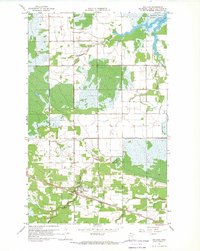 1967 Williams1969 Print · USGSWilliams and the surrounding Lake of the Woods wilderness are captured here in the late sixties as the Canadian National railway still shaped the local economy. Researchers can locate Pine Hill Cem, the grounds of Zippel Bay State Park, and the winding Zippel Creek.2 unique versions available
 - 1967 Map of Buffalo Bay NW, 1969 Print
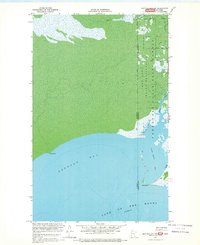 1967 Buffalo Bay NW1969 Print · USGSThe northernmost frontier of Minnesota meets the Canadian border in the late sixties, showcasing the isolated Northwest Angle. Trace the seasonal Winter Road and Winter Trail through the Red Lake Indian Reservation and along Stony Creek.
 - 1967 Map of Roosevelt NW, 1969 Print
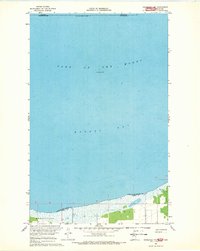 1967 Roosevelt NW1969 Print · USGSThe northern borderlands of Minnesota meet Manitoba in the late 1960s at the wide waters of Lake of the Woods. Genealogists and researchers can trace the shoreline settlement of Moranville and the marshy terrain surrounding Laona.
 - 1967 Map of Roosevelt, 1969 Print
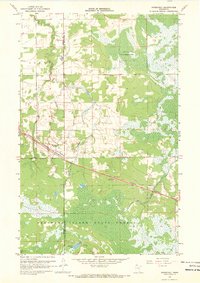 1967 Roosevelt1969 Print · USGSThe village of Roosevelt is shown at a pivotal moment in the late sixties, centered on the border of Roseau and Lake of the Woods counties. Genealogists and historians can trace the Canadian National rail corridor or locate landmarks like Norquist Lake and the Krull Trail.2 unique versions available
 - 1967 Map of Williams NW, 1969 Print
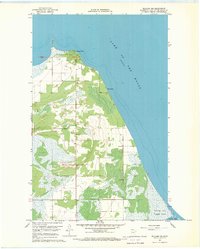 1967 Williams NW1969 Print · USGSThe northern shores of Minnesota meet the water in the late 1960s, showing a landscape of coastal marshes and small lakeside settlements. Genealogists and historians can trace the area around Birch Beach, locate the Cem, and see the site of the Prosper Lookout Tower.
 - 1967 Map of Williams SE, 1969 Print
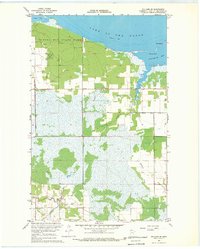 1967 Williams SE1969 Print · USGSLake of the Woods in the late sixties shows a remote northern landscape of state park land and tribal territory. Researchers can trace the drainage network of Judicial Ditch No 28 and the natural shorelines of Zippel Bay and Fourmile Bay.
 - 1967 Map of Garden Island West, 1969 Print
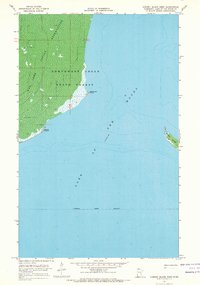 1967 Garden Island West1969 Print · USGSThe northernmost reaches of Minnesota are captured here in the late sixties, where the forest meets the water. Trace the remote boundaries of the Red Lake Indian Reservation and find landmarks like Garden Island and Driftwood Point.
 - 1967 Map of Buffalo Bay NE, 1969 Print
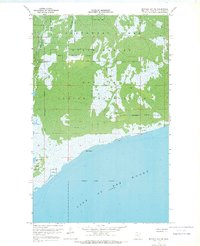 1967 Buffalo Bay NE1969 Print · USGSThe Northwest Angle of Minnesota appears as a remote wilderness of forest and swamp in the late 1960s. Researchers can trace the seasonal Winter Road and identify specific landmarks like the Boise Cascade Camp and the Lookout Tower.
 - 1967 Map of Garden Island East, 1969 Print
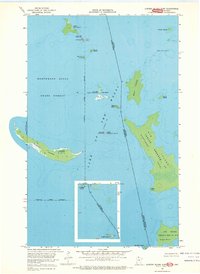 1967 Garden Island East1969 Print · USGSLake of the Woods is captured during the late sixties, showing the intricate international border and tribal lands within the Northwest Angle. Researchers can trace the shoreline of the Red Lake Indian Res and survey remote island clusters like Little Oak Island and Garden Island.
 - 1967 Map of Wheelers Point, 1969 Print
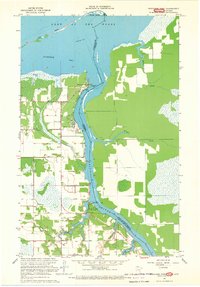 1967 Wheelers Point1969 Print · USGSThe international boundary at the edge of Lake of the Woods is captured here in the late sixties as the Rainy River reaches the border. Researchers can trace the layout of Wheelers Point, identify the Wheeler Sch, and locate the Wabanica Tale Ch near the riverbank.
 - 1967 Map of Roosevelt NE, 1969 Print
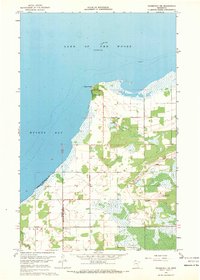 1967 Roosevelt NE1969 Print · USGSThe northern shoreline of Minnesota at Lake of the Woods comes into focus during the late sixties. Trace local history through the lakeside settlement of Arnesen, the church at Mt Carmel Ch, and navigation markers like Gull Rock Light.2 unique versions available
 - 1967 Map of Oak Island, 1969 Print
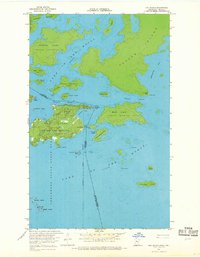 1967 Oak Island1969 Print · USGSThe northernmost point of the contiguous United States is captured here in the late sixties, where lake-bound border politics meet indigenous history. Genealogists and historians can trace the boundary between U.S. Customs and Canadian Customs near Oak Island and Massacre Island.
 - 1967 Map of Angle Inlet, 1969 Print
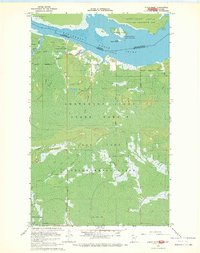 1967 Angle Inlet1969 Print · USGSThe Northwest Angle in the late sixties reveals the unique isolation of the nation's northernmost point. Genealogists and researchers can trace the roads and seasonal Winter Trail routes connecting Angle Inlet to Carlson Airfield and the Angle Inlet Sch.
 - 1967 Map of Warroad, 1969 Print
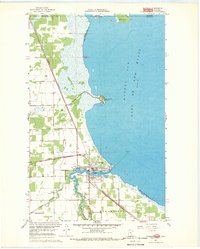 1967 Warroad1969 Print · USGSThe northern border town of Warroad is shown in the late sixties at the edge of the vast Lake of the Woods. Researchers can trace the dual rail lines of the Canadian National and Great Northern, find local burial grounds at Riverside Cem, or locate the historic U S Customhouse.3 unique versions available
 - 1967 Map of Angle Inlet SW, 1969 Print
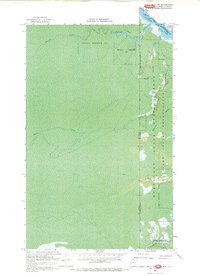 1967 Angle Inlet SW1969 Print · USGSThe Northwest Angle at the end of the 1960s remains a remote interface of international borders and tribal lands. Researchers can trace historic transit corridors like Dawson Road and Winter Trail as they cross the Red Lake Indian Reservation.
 - 1968 Map of Baudette SE, 1970 Print
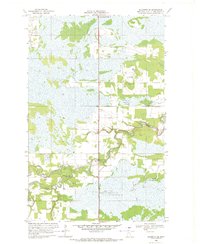 1968 Baudette SE1970 Print · USGSThe Lake of the Woods wilderness in the late sixties reveals a landscape of winding waterways and protected tribal lands. Genealogists and historians can trace the boundaries of the Red Lake Indian Reservation and follow the routes of the Winter Trail and Rapid River.
 - 1968 Map of Clementson, 1970 Print
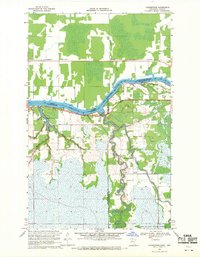 1968 Clementson1970 Print · USGSThe border country along the Rainy River comes alive in the late sixties, showing the vital connection between water and settlement. Genealogists can trace family sites at Silver Creek Cem or follow the path of the CANADIAN NATIONAL rail line.
 - 1968 Map of Graceton SE, 1970 Print
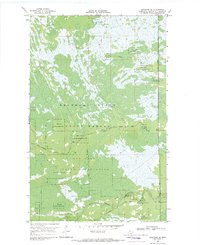 1968 Graceton SE1970 Print · USGSLake of the Woods County in the late sixties shows a remote wilderness landscape defined by winter access and reservation boundaries. Genealogists and historians can trace the Hamilton Farm Cem and old routes like Pitt Grade or the Winter Trail.
 - 1968 Map of Clementson SW, 1970 Print
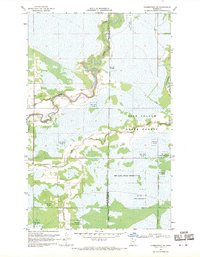 1968 Clementson SW1970 Print · USGSNorthern Minnesota's river systems and tribal lands are meticulously detailed in the late 1960s. Genealogists and historians can trace the meandering Rapid River and locate the settlement at Bartons within the Red Lake Indian Reservation.
 - 1968 Map of Baudette SW, 1970 Print
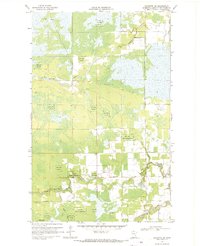 1968 Baudette SW1970 Print · USGSNorthern Minnesota's river country is captured here in the late sixties, where the Red Lake Indian Reservation meets the Rapid River. Trace the old Bankton Trail or locate family landmarks like Carp Chapel and the local Lookout Tower.
 - 1968 Map of Graceton NW, 1971 Print
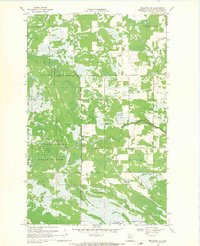 1968 Graceton NW1971 Print · USGSNorthern Minnesota's forested wetlands appear as they were in the late sixties, where the Red Lake Indian Reservation meets the state forest. Researchers can trace the winding Winter Road River and remote access routes like Krull Trail.
 - 1968 Map of Winter Road Lake, 1971 Print
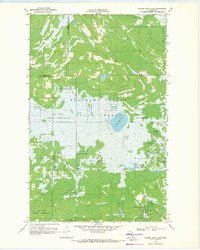 1968 Winter Road Lake1971 Print · USGSThe wilderness of Lake of the Woods County is captured in the late sixties, where vast peatlands meet the Red Lake Indian Reservation. Trace the original paths of the Krull Trail and Nelson Trail as they weave past Winter Road Lake.2 unique versions available
 - 1968 Map of Pitt, 1971 Print
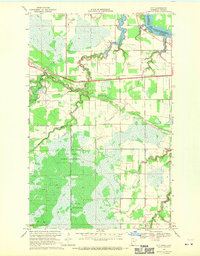 1968 Pitt1971 Print · USGSNear the Canadian border in the late sixties, this northern Minnesota landscape is defined by the Rainy River and the Red Lake Indian Reservation. Genealogists and local historians can locate the Pitt settlement and Hagen Sch along the Canadian National rail line.
Showing maps 1-25 of 33
Top cities of Lake of the Woods County
Frequently asked questions
- What are the different types of historical maps available for Lake of the Woods County?
- What is the oldest map of Lake of the Woods County?
- Where can I purchase historical maps of Lake of the Woods County for my home or office?
- Where can I download high-res historical maps of Lake of the Woods County?
- Are there historical topographic maps available for Lake of the Woods County?
- Is there historical aerial imagery available for Lake of the Woods County?
- Where are historical maps of Lake of the Woods County sourced from?