1950s Maps of Chariton County, Missouri
Explore 24 historic maps of Chariton County from the 1950s. These maps offer a rare glimpse into what life looked like during the 1950s — showing old roads, neighborhoods, homes, and landmarks that have changed or disappeared over time.
Whether you're researching your family's past, planning a metal detecting trip, or studying how Chariton County's landscape evolved across the 1950s, these high-resolution maps are a powerful tool for exploring the history of this region.
- Focus on a specific era: All maps on this page are from the 1950s, giving you a focused view of this time period.
- See what’s changed: Compare century-old streets, trails, and buildings to today's modern landscape using overlays and satellite layers.
- Research with precision: Use these maps for genealogy, historical research, land use analysis, or educational projects.
- View, download, or print: Maps are fully viewable online in high resolution, and can be downloaded or printed for your own records.
Start exploring Chariton County's history through authentic maps from the 1950s. This is your window into the past.
Chariton County, MO maps
(24)- 1950 Map of Sumner
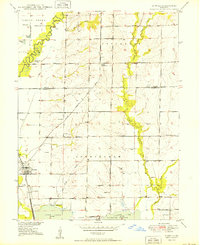 1950 Sumner1950 Print · USGSMid-century Chariton County comes to life at this rail junction where the Wabash line intersects the Chicago Burlington and Quincy. Genealogists can trace local roots at Purvis Cem, Prairie Mound Sch, and the Forker Boomer PO.2 unique versions available
 - 1950 Map of Rothville
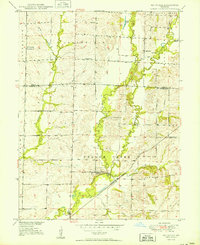 1950 Rothville1950 Print · USGSThe village of Rothville and the surrounding Chariton County countryside are shown here at the mid-century mark. Genealogists can trace early landmarks like Stains Cem, South Eagle Ch, and several rural schoolhouses including Pershing Sch and Holloway Sch.2 unique versions available
 - 1950 Map of Hale, 1956 Print
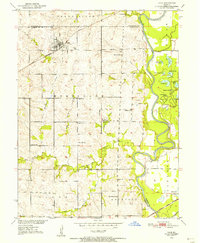 1950 Hale1956 Print · USGSCarroll County was a landscape of river-bend lakes and rural schoolhouses in the mid-twentieth century. Genealogists can trace family footprints through sites like Elizabeth Cemetery or Hazel Hill School, while exploring the oxbows of the Grand River.2 unique versions available
 - 1951 Map of Hale
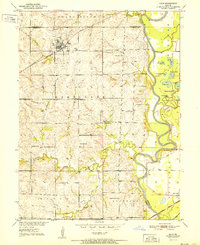 1951 Hale1951 Print · USGSNorthwestern Missouri farming life and river management are preserved here in the early fifties. Genealogists can locate family landmarks like Elizabeth Cem, Winfrey Cem, and numerous rural schools including Battsville Sch.
 - 1951 Map of Bosworth, 1952 Print
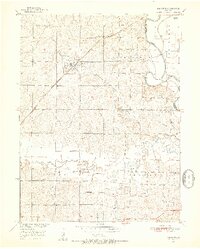 1951 Bosworth1952 Print · USGSBosworth and the rural townships of Carroll County are captured here at the start of the 1950s. Researchers can trace the legacy of early Missouri education and rail life through sites like West Fairview Sch, Mt Carmel Ch, and the ATCHISON TOPEKA AND SANTA FE line.4 unique versions available
 - 1951 Map of Brunswick West, 1952 Print
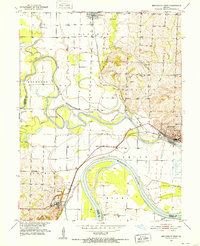 1951 Brunswick West1952 Print · USGSThe river bottomlands of Chariton and Carroll Counties are captured here in the early 1950s, showing a landscape defined by the winding Missouri River. Genealogists and researchers can locate several rural schools such as Smith Sch and local burial sites like Allega Cem.4 unique versions available
 - 1951 Map of Brunswick East, 1952 Print
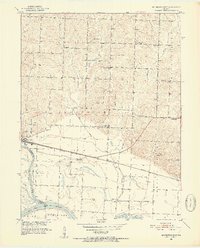 1951 Brunswick East1952 Print · USGSChariton County, Missouri, is captured in the early fifties as the riverfront economy and rural school system underwent significant shifts. Genealogists can trace family landmarks and defunct rural districts like Warden Sch and Prairie Chapel Cem along the Wabash line.3 unique versions available
 - 1951 Map of Hale, 1952 Print
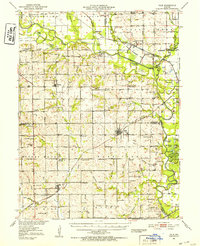 1951 Hale1952 Print · USGSNorth-central Missouri's river lowlands are captured here in the early fifties, showing the area around Hale and the Grand River floodplain. Researchers can trace defunct rural infrastructure like Hazel Green Sch and the Sumner Bridge crossing.3 unique versions available
 - 1951 Map of New Frankfort, 1952 Print
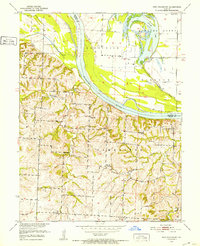 1951 New Frankfort1952 Print · USGSThe Missouri River bluffs and bottomlands of Saline County appear here in the early fifties, documenting a landscape of rural schools and family cemeteries. Genealogists can trace the locations of New Frankfort Cem, High Hill Sch, and Prospect Ch.2 unique versions available
 - 1953 Map of Moberly
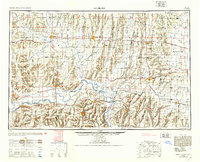 1953 Moberly1953 Print · USGSMid-century north-central Missouri is documented here as a bustling intersection of river commerce and heavy rail. Researchers can trace historic family-named landmarks and transport hubs from the Missouri River corridor to the rail yards of Moberly, Chillicothe, and Macon.
 - 1953 Map of Marceline, 1955 Print
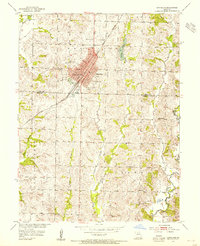 1953 Marceline1955 Print · USGSMarceline and the surrounding rural townships of north-central Missouri are shown here in the mid-1950s as the railroad remained a central economic force. Researchers can locate family landmarks like St Bonaventure Cem or trace the early layout of Marceline Airport and Park Sch.2 unique versions available
 - 1953 Map of Armstrong, 1955 Print
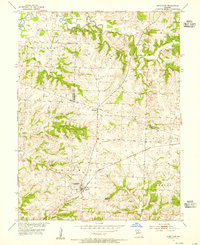 1953 Armstrong1955 Print · USGSHoward and Randolph counties come alive in the mid-1950s as the rail-driven economy of the Missouri interior is captured in fine detail. Genealogists can trace family footprints at Wesley Chapel Cem, Sharon Sch, and the busy rail hub of Armstrong.2 unique versions available
 - 1953 Map of Clifton Hill, 1955 Print
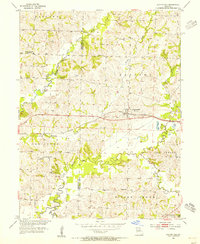 1953 Clifton Hill1955 Print · USGSRandolph and Chariton Counties come to life in the 1950s as the WABASH railroad connects the small community of Clifton Hill. Genealogists can trace family names through several rural burial grounds like Gross Cem and early school sites.2 unique versions available
 - 1953 Map of Prairie Hill, 1955 Print
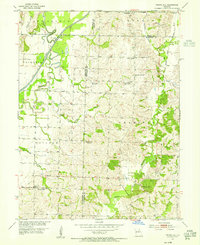 1953 Prairie Hill1955 Print · USGSNorth-central Missouri farming and mining communities come into focus in the mid-1950s. Genealogists and local historians can trace family locations near Prairie Hill, Cumberland Chapel, and the now-abandoned Old Grove Ch (Abandoned).2 unique versions available
 - 1953 Map of Lagonda, 1955 Print
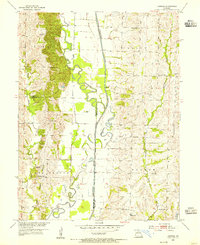 1953 Lagonda1955 Print · USGSThe border of Macon and Chariton Counties in the early fifties shows a landscape of small farming communities defined by the winding paths of the Old Channel Chariton River. Researchers can trace rural school locations like Minefree School and find family burial sites at Rice Cemetery or Dodson Cemetery.2 unique versions available
 - 1953 Map of Wien, 1955 Print
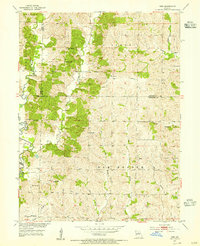 1953 Wien1955 Print · USGSChariton and Macon counties are shown in the early 1950s, a period when rural schoolhouses and country churches still anchored the Missouri landscape. Genealogists can trace family footprints at St Marys Cem or locate former local landmarks like Raub Sch and Plainview Ch.2 unique versions available
 - 1953 Map of Bynumville, 1955 Print
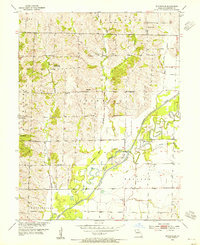 1953 Bynumville1955 Print · USGSChariton County’s river bottomlands and rural townships are shown here in the mid-fifties, just as floodplain engineering reshaped the landscape. Researchers can trace family roots at Mt Zion Ch or Pee Dee Cem and locate vanished schoolhouses like the Brewer Sch.2 unique versions available
 - 1953 Map of Mike, 1955 Print
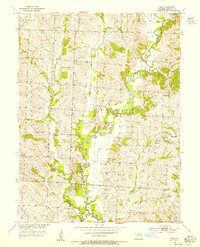 1953 Mike1955 Print · USGSChariton County in the early fifties shows a landscape of winding river bottoms and tight-knit rural communities. Genealogists can locate long-standing landmarks like St Joseph Ch, Pollard Sch, and the Welch Cem near the small settlement of Mike.2 unique versions available
 - 1954 Map of Moberly, 1969 Print
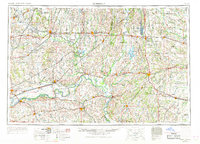 1954 Moberly1969 Print · USGSMid-century Missouri is captured here during a period of transition for its river towns and rail hubs. Genealogists and historians can trace the paths of the Wabash railroad through Moberly or explore the riverside layout of Lexington and Brunswick.3 unique versions available
 - 1956 Map of Salisbury, 1957 Print
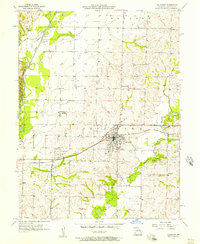 1956 Salisbury1957 Print · USGSMid-century Chariton County comes alive in this survey of the river bottomlands and rail corridors during the 1950s. Genealogists and local historians can trace family plots at Salisbury Cem or locate the old Landing Field and the Wabash line.2 unique versions available
 - 1956 Map of Keytesville, 1957 Print
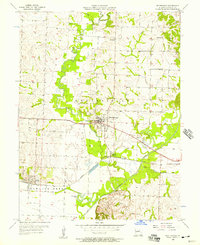 1956 Keytesville1957 Print · USGSKeytesville and the surrounding Chariton County bottomlands are captured here in the mid-fifties as the local economy revolved around the river and rail. Researchers can locate family landmarks like Varner Cem, the County Infirmary, and the small siding at Keytesville Station.2 unique versions available
 - 1956 Map of Forest Green, 1957 Print
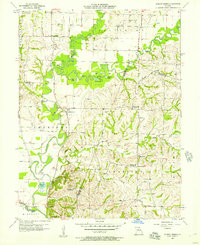 1956 Forest Green1957 Print · USGSMid-century Chariton County is defined here by the winding Little Chariton River and its sprawling network of rural schools and family cemeteries. Genealogists can trace sites like Lewis Mill, Nordmeyer Sch, and Marian Hill Ch.2 unique versions available
 - 1956 Map of Cambridge, 1957 Print
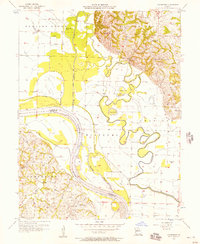 1956 Cambridge1957 Print · USGSThe Missouri River bottoms of Chariton and Saline Counties are shown in the mid-fifties, dominated by the winding Chariton River and its cutoffs. Genealogists can locate family names at Aholt Cem, Vance Sch, and the riverside settlement of Cambridge.2 unique versions available
 - 1957 Map of Moberly
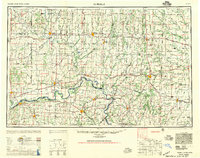 1957 Moberly1957 Print · USGSNorth-central Missouri in the late nineteen-forties and fifties remains a landscape defined by its great rivers and a dense network of steam and diesel rail lines. Genealogists and historians can trace the paths of the Wabash RR and Santa Fe RR through historic junctions like Moberly, Brookfield, and Macon.
End of results
Showing maps 1-24 of 24
Top cities of Chariton County
- Salisbury historical maps
- Brunswick historical maps
- Keytesville historical maps
- Cunningham historical maps
- Mendon historical maps
- Sumner historical maps
See more
Frequently asked questions
- What are the different types of historical maps available for Chariton County?
- What is the oldest map of Chariton County?
- Where can I purchase historical maps of Chariton County for my home or office?
- Where can I download high-res historical maps of Chariton County?
- Are there historical topographic maps available for Chariton County?
- Is there historical aerial imagery available for Chariton County?
- Where are historical maps of Chariton County sourced from?