1900s (20th Century) Maps of Johnson County, Missouri
Explore 39 historic maps of Johnson County from the 1900s (20th Century). These maps offer a rare glimpse into what life looked like during the 1900s — showing old roads, neighborhoods, homes, and landmarks that have changed or disappeared over time.
Whether you're researching your family's past, planning a metal detecting trip, or studying how Johnson County's landscape evolved across the 1900s, these high-resolution maps are a powerful tool for exploring the history of this region.
- Focus on a specific era: All maps on this page are from the 1900s, giving you a focused view of this time period.
- See what’s changed: Compare century-old streets, trails, and buildings to today's modern landscape using overlays and satellite layers.
- Research with precision: Use these maps for genealogy, historical research, land use analysis, or educational projects.
- View, download, or print: Maps are fully viewable online in high resolution, and can be downloaded or printed for your own records.
Start exploring Johnson County's history through authentic maps from the 1900s. This is your window into the past.
Johnson County, MO maps
(39)- 1917 Map of Knobnoster
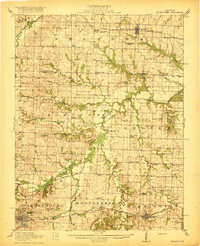 1917 Knobnoster1917 Print · USGSSettlement and education are deeply rooted in this early twentieth-century survey of Johnson County, Missouri. Genealogists can trace family school districts like Hepsidam School and Union Prairie School or locate early rail stops at Knobnoster and Montserrat.3 unique versions available
 - 1939 Map of Sweet Springs
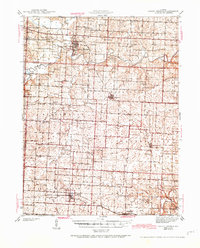 1939 Sweet Springs1939 Print · USGSThe rural borderlands of Saline and Pettis Counties are captured here at the end of the 1930s as the rail and highway systems began to modernize the landscape. Genealogists can locate numerous country schoolhouses and churches like Sunny Dell Sch, Oak Grove Cem, and Houstonia.
 - 1940 Map of Sweet Springs
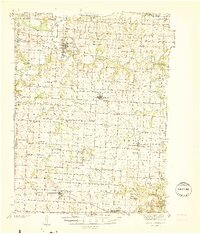 1940 Sweet Springs1940 Print · USGSWestern Missouri in the late thirties is revealed here as a landscape of interconnected river valleys and tightly knit rural communities. Genealogists and historians can trace family roots through numerous country schools and landmarks like High Hill Cem, Bleak Mound, and the Missouri Pacific rail line.
 - 1941 Map of Sweet Springs
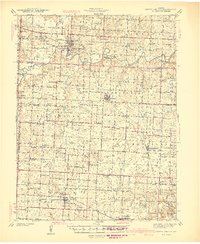 1941 Sweet Springs1941 Print · USGSCentral Missouri farmland at the end of the Depression is defined here by the winding Blackwater River and the critical Missouri Pacific rail line. Genealogists and local historians can locate dozens of country schools and churches, such as Holy Cross Sch, Dunksburg, and the High Hill Cem.2 unique versions available
 - 1945 Map of Sweet Springs
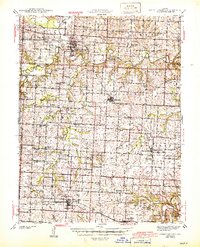 1945 Sweet Springs1945 Print · USGSCentral Missouri farmland at the end of the 1930s is revealed here, spanning the intersection of four counties. Genealogists can trace family roots through numerous rural landmarks like Holy Cross Ch, Weber Sch, and the isolated High Hill Cem.2 unique versions available
 - 1947 Map of Jefferson City, 1949 Print
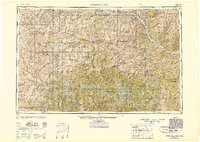 1947 Jefferson City1949 Print · USGSCentral Missouri and the northern Ozarks come into focus in this late 1940s survey of the river-and-rail landscape. Genealogists and historians can trace the growth of Jefferson City and Sedalia or locate family roots near Bagnell Dam and the Lake of the Ozarks.
 - 1947 Map of Lawrence, 1954 Print
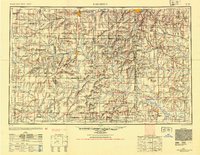 1947 Lawrence1954 Print · USGSEastern Kansas and western Missouri thrive in the late 1940s, showing a landscape defined by major river valleys and a dense railway network. Genealogists can trace family settlements from Lawrence to Greenwood and locate landmarks like Olathe Navy and Lake Lotawana.
 - 1950 Map of Lawrence
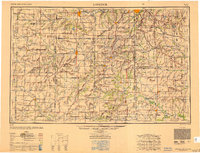 1950 Lawrence1950 Print · USGSMid-century Kansas and Missouri come alive in this map of the river-valley corridors just as the interstate era was beginning. Researchers can trace the legacy of major rail lines like the Union Pacific RR and locate ancestral roots in towns from Lawrence to Harrisonville.
 - 1954 Map of Jefferson City
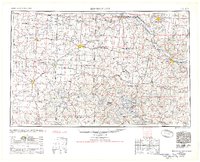 1954 Jefferson City1954 Print · USGSCentral Missouri in the early postwar years showcases a landscape defined by the winding Lake of the Ozarks and the state capital at Jefferson City. Researchers can trace the mid-century rail networks of the Missouri Pacific RR and locate rural communities like Tuscumbia, St Elizabeth, and St Anthony.2 unique versions available
 - 1954 Map of Centerview, 1955 Print
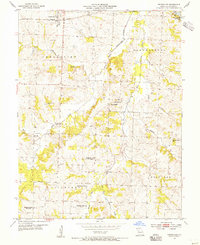 1954 Centerview1955 Print · USGSCenterview and the surrounding rural townships are captured here in the mid-1950s as a landscape of small schools and family farms. Local historians can trace the sites of Houts Chapel, Perile Springs, and several rural schools including the Glendale Sch.2 unique versions available
 - 1954 Map of East Lynne, 1955 Print
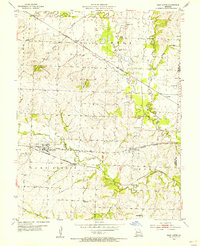 1954 East Lynne1955 Print · USGSEastern Cass County is shown here in the mid-1950s, a time when three major railroads still defined the local economy and geography. Researchers can trace rural life through landmarks like Staley Mound Cem, Smith Sch, and the depot at Gunn City (Station).
 - 1954 Map of Quick City, 1955 Print
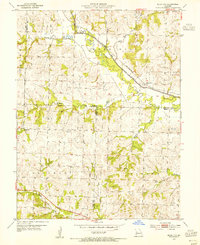 1954 Quick City1955 Print · USGSMid-century Johnson County comes into focus as a landscape of small schools and family cemeteries along the ST LOUIS SAN FRANCISCO rail line. Genealogists can trace rural roots at Quick City or locate ancestral sites at Grant Cem and Forest Sch.
 - 1954 Map of Kingsville, 1955 Print
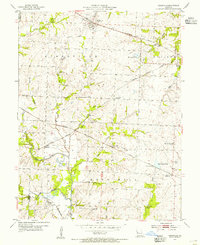 1954 Kingsville1955 Print · USGSRailroad development in western Johnson County reached its peak in the mid-fifties, centering on the junction of five different lines. Genealogists and rail historians can trace local family landmarks like Rose Hill Cem, Stout Sch, and the small settlement of Latour.2 unique versions available
 - 1954 Map of Holden, 1955 Print
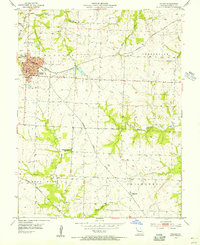 1954 Holden1955 Print · USGSMid-century Johnson County is defined by its rail connectivity and dispersed farming communities. Family historians can trace the foundations of Holden and Magnolia, or locate rural sites like Fairview Cem and the Pleasant Shade Sch (Abandoned).
 - 1955 Map of Leeton, 1956 Print
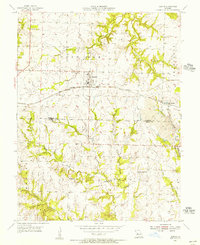 1955 Leeton1956 Print · USGSThe Leeton area at the height of the 1950s reveals a landscape defined by crossing railroads and active rural industry. Family researchers can locate numerous burial sites and schools like Sardis Cem, Hickory Grove Ch, and Pleasant View Sch.2 unique versions available
 - 1955 Map of Windsor, 1956 Print
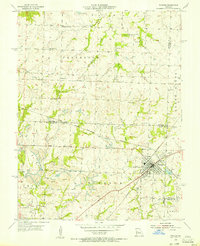 1955 Windsor1956 Print · USGSThe rail junctions and coal mines of Henry County are captured here in the mid-1950s as industry shaped the West Central Missouri landscape. Genealogists and local historians can trace the foundations of Windsor through landmarks like Laurel Oak Cem, the Windsor Fairgrounds, and the rural Sunny Side Sch.2 unique versions available
 - 1955 Map of Cornelia, 1956 Print
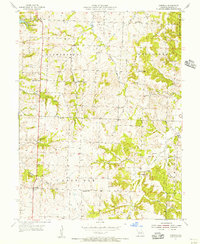 1955 Cornelia1956 Print · USGSJohnson County is captured here in the mid-1950s, showing a rural landscape of crossroads settlements and family farmsteads. Researchers can trace the locations of defunct country schools and churches like Valley Sch and Bethel Ch, or locate ancestral plots at Adams Memorial Cem.3 unique versions available
 - 1955 Map of Chilhowee, 1956 Print
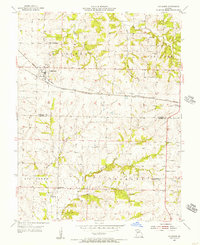 1955 Chilhowee1956 Print · USGSMid-century West Central Missouri is captured here during a time of rural stability and local industry along the county line. Researchers can trace the rail corridor through Chilhowee or locate family sites like Old Chilhowee, Shiloh Ch, and Carrsville Cem.2 unique versions available
 - 1955 Map of Burtville, 1956 Print
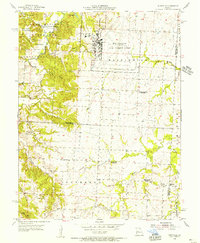 1955 Burtville1956 Print · USGSMid-century Johnson County is captured here during the expansion of Whiteman Air Force Base alongside the developing Knob Noster State Park. Genealogists can locate legacy sites like Ellis Cem, the settlement of Burtville, and several rural schoolhouses.2 unique versions available
 - 1955 Map of Blairstown, 1956 Print
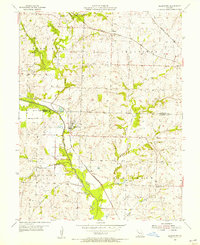 1955 Blairstown1956 Print · USGSIn the mid-1950s, the Henry County border was a busy crossroads of the Chicago Rock Island and Pacific and other major rail lines. Researchers can trace family plots at Quick Cem or locate old community centers like Blairstown and Norris.
 - 1955 Map of Jefferson City, 1967 Print
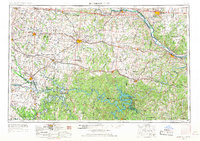 1955 Jefferson City1967 Print · USGSCentral Missouri in the mid-fifties is defined by the winding Missouri River and the expanding reach of Lake of the Ozarks. Researchers can trace the rail corridors of the Missouri Pacific or locate the early footprint of Whiteman AFB and Jefferson City.4 unique versions available
 - 1956 Map of Lawrence, 1967 Print
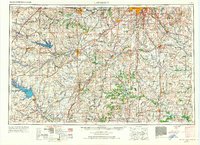 1956 Lawrence1967 Print · USGSEastern Kansas and the Missouri border country are captured here during the mid-century transition to the interstate era. Genealogists and local historians can trace family-named terrain like Summers Mound and the footprint of Sunflower Ordnance Works near Baldwin City.4 unique versions available
 - 1958 Map of Jefferson City
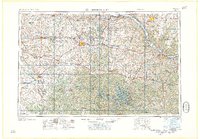 1958 Jefferson City1958 Print · USGSCentral Missouri in the late fifties shows a region transforming through the growth of Whiteman Air Force Base and the Lake of the Ozarks. Researchers can trace rail lines like the Missouri Pacific or find family roots at Enloe Cemetery and Mount Pleasant Cem.
 - 1959 Map of Jefferson City
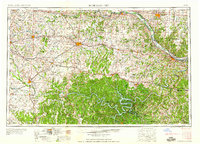 1959 Jefferson City1959 Print · USGSCentral Missouri is captured during the mid-fifties as the river economy and rail networks like the Missouri Pacific met the rise of the automobile. Local researchers can trace family landmarks and rural infrastructure from the Lake of the Ozarks up to Providence Cemetery and Knob Noster State Park.
 - 1961 Map of Lawrence
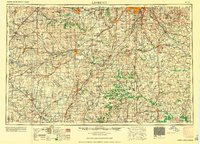 1961 Lawrence1961 Print · USGSThe Kansas-Missouri borderland shows its mid-century transition from a rail-dependent agricultural region to a suburbanizing landscape. Genealogists can trace family footprints through numerous Cem sites and distinctive terrain landmarks like Graves Mound and Summers Mound.
Showing maps 1-25 of 39
Top cities of Johnson County
- Warrensburg historical maps
- Knob Noster historical maps
- Holden historical maps
- Leeton historical maps
- Chilhowee historical maps
- Kingsville historical maps
See more
Frequently asked questions
- What are the different types of historical maps available for Johnson County?
- What is the oldest map of Johnson County?
- Where can I purchase historical maps of Johnson County for my home or office?
- Where can I download high-res historical maps of Johnson County?
- Are there historical topographic maps available for Johnson County?
- Is there historical aerial imagery available for Johnson County?
- Where are historical maps of Johnson County sourced from?