Old Maps of Lafayette County, Missouri
Explore 142 old maps of Lafayette County, spanning from 1885 to today. These high-resolution historic maps reveal how streets, neighborhoods, landmarks, and natural features evolved over time — perfect for genealogy, metal detecting, research, and local history exploration.
What you can do with these maps:
- See how Lafayette County changed over time: Compare historical maps to modern-day views to trace roads, homesites, rail lines & more.
- View detailed metadata: Each map includes creators, publishers, year, scale, and archive source.
- Overlay maps with satellite & LiDAR: Visualize the past alongside modern tools to explore terrain & human change.
- Trusted historical sources: Maps sourced from the USGS, Library of Congress, and other archives.
- Access maps your way: View online, download high-res files, or order prints for personal or research use.
Start exploring old maps of Lafayette County to uncover forgotten places, hidden landmarks, and the deep history beneath your feet.
Lafayette County, MO maps
(142)- 1885 Map of Warrensburg, 1954 Print
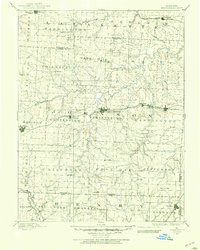 1885 Warrensburg1954 Print · USGSJohnson County and the surrounding Missouri prairie are captured here during the 1880s as the railroad era transformed the region. Researchers can trace the early footprints of settlements like Warrensburg, identify historic mines at Carbon Hill, and locate old landmarks like Iron Spring and Normal school.
 - 1887 Map of Harrisonville
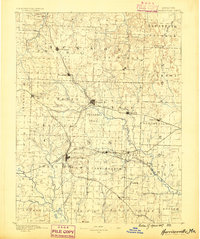 1887 Harrisonville1887 Print · USGSMissouri's western borderlands are seen here during the rail boom of the late nineteenth century. Genealogists and historians can trace the early development of Harrisonville and Lees Summit, alongside smaller settlements like Lone Jack, Peculiar, and Garden City.
 - 1887 Map of Sedalia
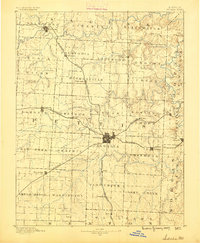 1887 Sedalia1887 Print · USGSIn the late nineteenth century, the rail corridors of central Missouri radiated from the bustling hub of Sedalia. Researchers can trace the development of early settlements like Georgetown and Houstonia along the Missouri Pacific Railroad.
 - 1887 Map of Warrensburg
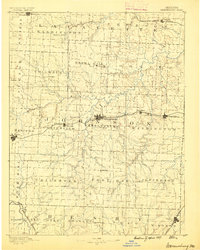 1887 Warrensburg1887 Print · USGSMissouri's central plains are captured here in the mid-1880s, documenting the vital rail corridor through Warrensburg and Knob Noster. Genealogists can trace early homesteads near Carbon Hill, Chilhowee, or the Iron Spring during a period of rapid agricultural growth.
 - 1889 Map of Lexington
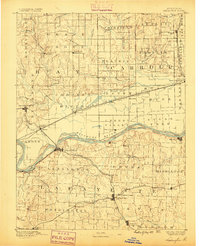 1889 Lexington1889 Print · USGSLafayette and Ray Counties are captured here during the late nineteenth-century rail boom. Researchers can trace the development of river towns and rail junctions like Lexington, Lexington Junction, and the riverside landing at Miles Point.6 unique versions available
 - 1890 Map of Marshall
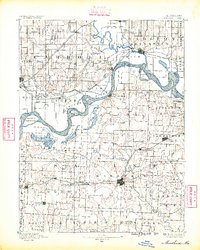 1890 Marshall1890 Print · USGSSaline and Carroll counties come alive in this late nineteenth-century survey, showing the Missouri River bottomlands before modern channelization. Genealogists and historians can trace defunct river landings and rail stops like Eugene City, Laynesville, and Miami Station.
 - 1892 Map of Marshall, 1896 Print
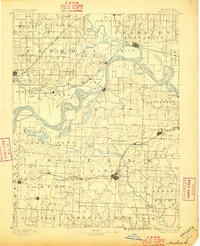 1892 Marshall1896 Print · USGSNorth-central Missouri in the 1890s is defined by its vibrant river commerce and expanding rail networks. Genealogists and historians can trace family roots through old settlements like Malta Bend, Laynesville, and Salt Springs along the Missouri River.
 - 1892 Map of Harrisonville, 1902 Print
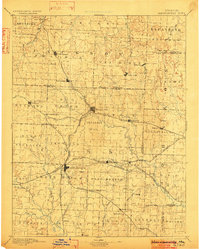 1892 Harrisonville1902 Print · USGSWestern Missouri comes into focus during the late nineteenth-century rail boom as new townships and post offices began to dot the prairie. Trace the development of early rail hubs like Harrisonville and Pleasant Hill or locate old community centers such as Chapel Hill and Daugherty (Eight Mile P. O.).2 unique versions available
 - 1894 Map of Harrisonville
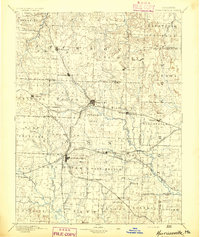 1894 Harrisonville1894 Print · USGSCass and Jackson counties come to life in the 1890s as a burgeoning rail network links remote prairie outposts. Genealogists can trace early homesteads and mail stops like Daugherty (Eight Mile P. O.), Peculiar, and Lone Jack.
 - 1894 Map of Sedalia
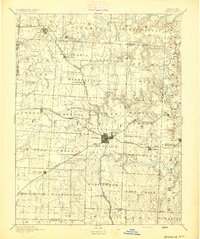 1894 Sedalia1894 Print · USGSCentral Missouri's rail-and-river network is frozen in time during the late 19th century, centered on the growing hub of Sedalia. Researchers can trace the path of the Sedalia Warsaw And Southwestern RR and find vanished points like Dumpville and Mc Allister Springs.5 unique versions available
 - 1894 Map of Independence
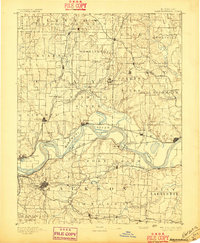 1894 Independence1894 Print · USGSThe river valley and rail corridors of western Missouri are captured in detail during the late nineteenth century. Researchers can trace the early layouts of Liberty and Independence alongside lost river features like Liberty Landing and Cooley Lake.5 unique versions available
 - 1894 Map of Warrensburg
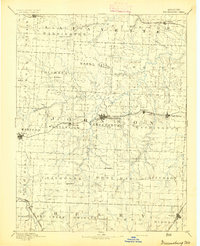 1894 Warrensburg1894 Print · USGSJohnson County was a burgeoning rail and coal hub in the 1890s, anchored by the growth of Warrensburg. Researchers can trace old family sites and transport routes through vanished mining points like Carbon Hill and rural stops such as Cornelia and Iron Spring.5 unique versions available
 - 1901 Map of Marshall
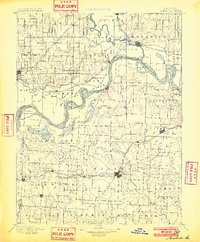 1901 Marshall1901 Print · USGSCentral Missouri thrives along the river and rail lines at the turn of the century. Trace the early footprints of Marshall and Slater, or locate long-standing river landings and rural stations like Miami Station, Malta Bend, and Laynesville.5 unique versions available
 - 1917 Map of Knobnoster
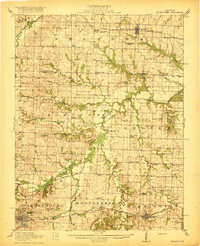 1917 Knobnoster1917 Print · USGSSettlement and education are deeply rooted in this early twentieth-century survey of Johnson County, Missouri. Genealogists can trace family school districts like Hepsidam School and Union Prairie School or locate early rail stops at Knobnoster and Montserrat.3 unique versions available
 - 1939 Map of Sweet Springs
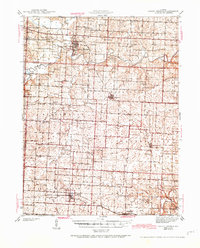 1939 Sweet Springs1939 Print · USGSThe rural borderlands of Saline and Pettis Counties are captured here at the end of the 1930s as the rail and highway systems began to modernize the landscape. Genealogists can locate numerous country schoolhouses and churches like Sunny Dell Sch, Oak Grove Cem, and Houstonia.
 - 1940 Map of Sweet Springs
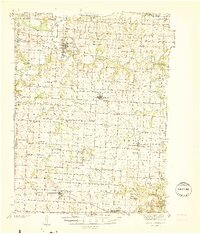 1940 Sweet Springs1940 Print · USGSWestern Missouri in the late thirties is revealed here as a landscape of interconnected river valleys and tightly knit rural communities. Genealogists and historians can trace family roots through numerous country schools and landmarks like High Hill Cem, Bleak Mound, and the Missouri Pacific rail line.
 - 1941 Map of Sweet Springs
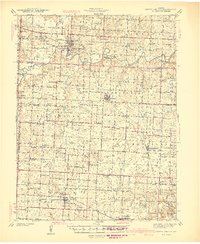 1941 Sweet Springs1941 Print · USGSCentral Missouri farmland at the end of the Depression is defined here by the winding Blackwater River and the critical Missouri Pacific rail line. Genealogists and local historians can locate dozens of country schools and churches, such as Holy Cross Sch, Dunksburg, and the High Hill Cem.2 unique versions available
 - 1945 Map of Sweet Springs
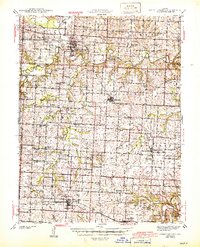 1945 Sweet Springs1945 Print · USGSCentral Missouri farmland at the end of the 1930s is revealed here, spanning the intersection of four counties. Genealogists can trace family roots through numerous rural landmarks like Holy Cross Ch, Weber Sch, and the isolated High Hill Cem.2 unique versions available
 - 1947 Map of Jefferson City, 1949 Print
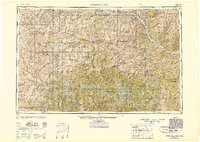 1947 Jefferson City1949 Print · USGSCentral Missouri and the northern Ozarks come into focus in this late 1940s survey of the river-and-rail landscape. Genealogists and historians can trace the growth of Jefferson City and Sedalia or locate family roots near Bagnell Dam and the Lake of the Ozarks.
 - 1947 Map of Lawrence, 1954 Print
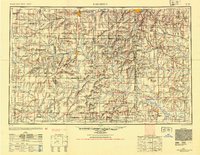 1947 Lawrence1954 Print · USGSEastern Kansas and western Missouri thrive in the late 1940s, showing a landscape defined by major river valleys and a dense railway network. Genealogists can trace family settlements from Lawrence to Greenwood and locate landmarks like Olathe Navy and Lake Lotawana.
 - 1949 Map of Mayview, 1956 Print
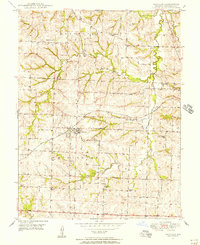 1949 Mayview1956 Print · USGSLafayette County agricultural and mining life is captured here in the late Forties, centered on the railroad town of Mayview. Genealogists and historians can locate numerous rural schools like Plum Grove Sch and churches including Marvin Chapel.2 unique versions available
 - 1949 Map of Lexington East, 1963 Print
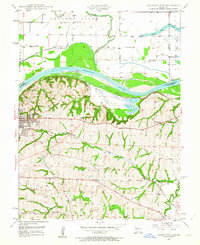 1949 Lexington East1963 Print · USGSLafayette County enters the post-war era as a hub of river commerce and rural education. Researchers can trace historic coal operations at various Mine Dumps or locate local landmarks like Wentworth Military Academy and the Slusher Sch.3 unique versions available
 - 1949 Map of Lexington West, 1963 Print
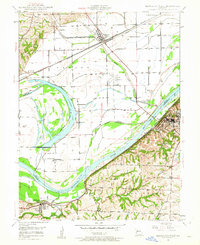 1949 Lexington West1963 Print · USGSThe Missouri River floodplain in the late 1940s reveals a complex network of rail lines and riverfront industry between Ray and Lafayette counties. Researchers can trace the river's influence through features like the Sunshine Lake oxbow, the Henrietta rail junction, and the Myrick riverfront.3 unique versions available
 - 1949 Map of Odessa North, 1976 Print
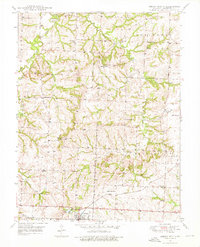 1949 Odessa North1976 Print · USGSLafayette County countryside is captured here in the late 1940s, just as the postwar era began to reshape rural Missouri. You can trace dozens of landmarks including the GULF MOBILE AND OHIO line, Greenton Ch, and old country schools like Cabbage Neck Sch.2 unique versions available
 - 1950 Map of Lexington East
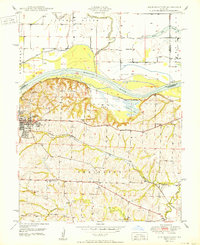 1950 Lexington East1950 Print · USGSMid-century Lafayette County comes alive through this survey of the river valley and its surrounding uplands. Genealogists and historians can trace local family roots at Forest Grove Cem, Slusher Cem, and several rural schoolhouses like Burns Sch.
Showing maps 1-25 of 142
Top cities of Lafayette County
- Odessa historical maps
- Higginsville historical maps
- Lexington historical maps
- Concordia historical maps
- Waverly historical maps
- Wellington historical maps
See more
Frequently asked questions
- What are the different types of historical maps available for Lafayette County?
- What is the oldest map of Lafayette County?
- Where can I purchase historical maps of Lafayette County for my home or office?
- Where can I download high-res historical maps of Lafayette County?
- Are there historical topographic maps available for Lafayette County?
- Is there historical aerial imagery available for Lafayette County?
- Where are historical maps of Lafayette County sourced from?