1950s Maps of Lafayette County, Missouri
Explore 29 historic maps of Lafayette County from the 1950s. These maps offer a rare glimpse into what life looked like during the 1950s — showing old roads, neighborhoods, homes, and landmarks that have changed or disappeared over time.
Whether you're researching your family's past, planning a metal detecting trip, or studying how Lafayette County's landscape evolved across the 1950s, these high-resolution maps are a powerful tool for exploring the history of this region.
- Focus on a specific era: All maps on this page are from the 1950s, giving you a focused view of this time period.
- See what’s changed: Compare century-old streets, trails, and buildings to today's modern landscape using overlays and satellite layers.
- Research with precision: Use these maps for genealogy, historical research, land use analysis, or educational projects.
- View, download, or print: Maps are fully viewable online in high resolution, and can be downloaded or printed for your own records.
Start exploring Lafayette County's history through authentic maps from the 1950s. This is your window into the past.
Lafayette County, MO maps
(29)- 1950 Map of Lexington East
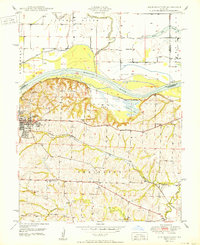 1950 Lexington East1950 Print · USGSMid-century Lafayette County comes alive through this survey of the river valley and its surrounding uplands. Genealogists and historians can trace local family roots at Forest Grove Cem, Slusher Cem, and several rural schoolhouses like Burns Sch.
 - 1950 Map of Mayview
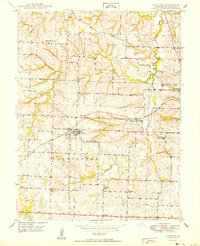 1950 Mayview1950 Print · USGSLafayette County was a landscape of coal mining and country schoolhouses at mid-century, centered on the rail hub of Mayview. Researchers can trace old family landmarks like Marvin Chapel and numerous vanished rural schools, including Wheatly Sch and Elm Grove Sch.
 - 1950 Map of Kansas City
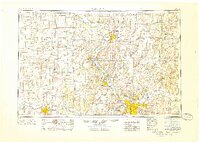 1950 Kansas City1950 Print · USGSMid-century Kansas and Missouri are captured here during a period of industrial growth and shifting transportation. Genealogists and historians can trace rail lines like the Wabash RR or locate ancestral homes near the Potawatomi Indian Reservation and Horton.
 - 1950 Map of Odessa North
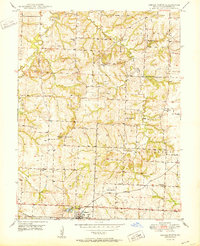 1950 Odessa North1950 Print · USGSLafayette County was a patchwork of small school districts and family farms at mid-century, centered around the town of Odessa. Genealogists and local historians can trace the locations of rural landmarks like Greenton Ch, Cabbage Neck Sch, and the Gulf Mobile and Ohio railroad.2 unique versions available
 - 1950 Map of Lawrence
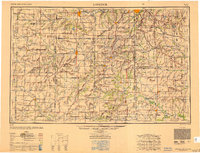 1950 Lawrence1950 Print · USGSMid-century Kansas and Missouri come alive in this map of the river-valley corridors just as the interstate era was beginning. Researchers can trace the legacy of major rail lines like the Union Pacific RR and locate ancestral roots in towns from Lawrence to Harrisonville.
 - 1950 Map of Camden, 1955 Print
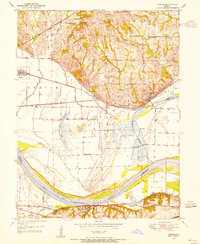 1950 Camden1955 Print · USGSThe Missouri River bottomlands in the early 1950s show a landscape shaped by three major railroads and a complex levee system. Genealogists and local historians can trace family roots at New Hope Church, Lillard School, and the Cravens Cemetery.4 unique versions available
 - 1950 Map of Bates City, 1959 Print
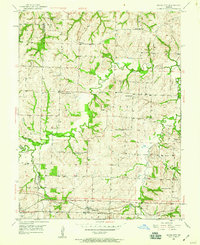 1950 Bates City1959 Print · USGSLafayette and Jackson Counties at the start of the 1950s are characterized by small farming communities and a high density of rural schools. Genealogists can locate family landmarks like Anderson Cem and Pleasant Prairie Sch, or trace the rail corridor of the Gulf Mobile and Ohio.2 unique versions available
 - 1950 Map of Lexington West, 1965 Print
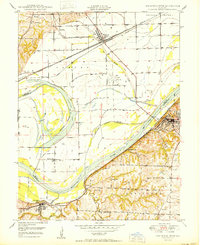 1950 Lexington West1965 Print · USGSThe Missouri River bluffs at the turn of the 1950s reveal a landscape of coal mining and river navigation along the Ray and Lafayette county lines. Researchers can trace family history through sites like Lexington Battle Ground, Sunshine Sch, and Foster Cem.
 - 1950 Map of Dover, 1977 Print
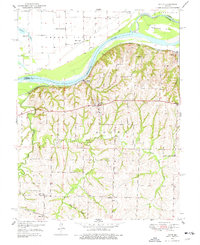 1950 Dover1977 Print · USGSLafayette County river life and rural education are preserved here in the early 1950s, showing a landscape shaped by the Missouri River and the rail line. Researchers can trace family roots through numerous local landmarks like Dover Station, Page City School, and Baltimore Island.2 unique versions available
 - 1951 Map of Dover
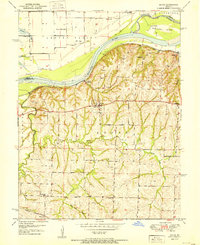 1951 Dover1951 Print · USGSThe bluffs of Lafayette County overlook the Missouri River bottomlands during the early 1950s. Genealogists and local historians can trace a dense network of rural schools like Dawson School and Page City School alongside the Missouri Pacific rail line.2 unique versions available
 - 1951 Map of Alma
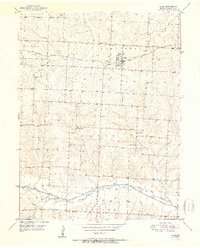 1951 Alma1951 Print · USGSLafayette County agricultural life and early aviation infrastructure are captured here in the early fifties. Genealogists and local historians can trace family roots through Alma and several country schools like Elk Grove Sch or cemeteries such as Maple Cem.3 unique versions available
 - 1951 Map of Camden
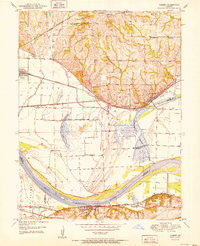 1951 Camden1951 Print · USGSThe Missouri River floodplain comes alive in this mid-century survey of the Ray and Lafayette county border. Genealogists and local historians can trace rural family sites like Lewis Cem and South Point Cem or locate the old Lillard Sch.2 unique versions available
 - 1951 Map of Bates City
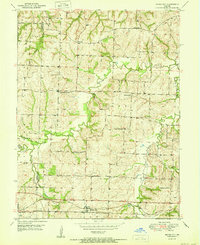 1951 Bates City1951 Print · USGSBates City and Oak Grove are captured here in the early 1950s, showing the rural character of the Jackson and Lafayette County border. Genealogists can trace family footprints through numerous country schools like Fish Sch and burial sites such as Anderson Cem.2 unique versions available
 - 1951 Map of Higginsville
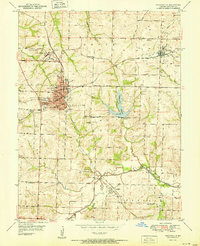 1951 Higginsville1951 Print · USGSHigginsville and Corder thrive as mid-century rail and mining centers in Lafayette County. Researchers can trace the Gulf Mobile and Ohio tracks past the Confederate Home or locate rural landmarks like Peacock Sch and Calvary Cem.
 - 1951 Map of Carrollton East, 1952 Print
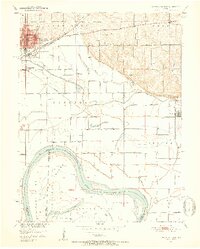 1951 Carrollton East1952 Print · USGSCarroll County at mid-century reveals a landscape defined by the winding Missouri River and a dense network of country schools. Researchers can trace the dual rail lines of the Wabash and Atchison Topeka and Santa Fe near Wakenda and Dietrich Sch.4 unique versions available
 - 1951 Map of Waverly, 1952 Print
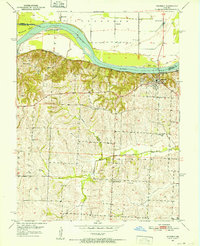 1951 Waverly1952 Print · USGSThe Missouri River bluffs and the settlement of Waverly are captured here in the early fifties, showing the river-and-rail economy before modern highway expansion. Researchers can find numerous rural landmarks, from Three Groves Ch to local schools like Hazel Hill Sch and Brown Sch.4 unique versions available
 - 1953 Map of Moberly
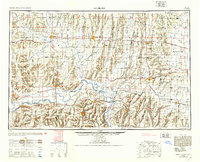 1953 Moberly1953 Print · USGSMid-century north-central Missouri is documented here as a bustling intersection of river commerce and heavy rail. Researchers can trace historic family-named landmarks and transport hubs from the Missouri River corridor to the rail yards of Moberly, Chillicothe, and Macon.
 - 1953 Map of Blackburn, 1955 Print
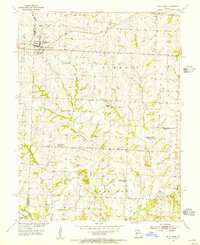 1953 Blackburn1955 Print · USGSThe Saline and Lafayette County line was a landscape of shifting rural education and rail-side commerce in the early 1950s. Genealogists can trace family names and community centers through sites like Blackburn Cem, Kennedy Sch, and the now-abandoned Carmean Sch.2 unique versions available
 - 1953 Map of Grand Pass, 1955 Print
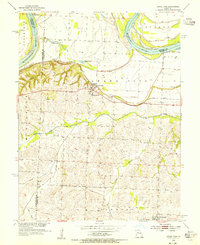 1953 Grand Pass1955 Print · USGSMid-century Saline County comes into focus in this study of the river bluffs and bottomlands during the early fifties. Genealogists and local historians can locate the Mt Nebo Cem, trace the Missouri Pacific line, and find the Santa Fe Sch.2 unique versions available
 - 1954 Map of Jefferson City
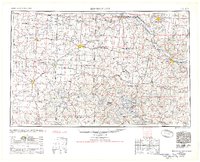 1954 Jefferson City1954 Print · USGSCentral Missouri in the early postwar years showcases a landscape defined by the winding Lake of the Ozarks and the state capital at Jefferson City. Researchers can trace the mid-century rail networks of the Missouri Pacific RR and locate rural communities like Tuscumbia, St Elizabeth, and St Anthony.2 unique versions available
 - 1954 Map of Kansas City
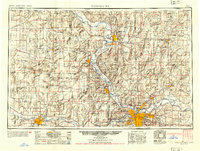 1954 Kansas City1954 Print · USGSThe Missouri-Kansas borderlands flourished in the post-war era as river commerce and rail networks converged at the Missouri River. Genealogists and historians can trace the foundations of Kansas City and smaller rural hubs like Hiawatha or Sabetha.
 - 1954 Map of Moberly, 1969 Print
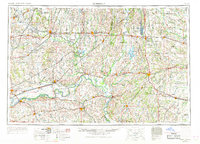 1954 Moberly1969 Print · USGSMid-century Missouri is captured here during a period of transition for its river towns and rail hubs. Genealogists and historians can trace the paths of the Wabash railroad through Moberly or explore the riverside layout of Lexington and Brunswick.3 unique versions available
 - 1955 Map of Jefferson City, 1967 Print
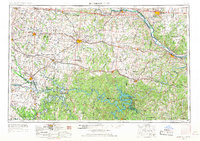 1955 Jefferson City1967 Print · USGSCentral Missouri in the mid-fifties is defined by the winding Missouri River and the expanding reach of Lake of the Ozarks. Researchers can trace the rail corridors of the Missouri Pacific or locate the early footprint of Whiteman AFB and Jefferson City.4 unique versions available
 - 1956 Map of Kansas City, 1967 Print
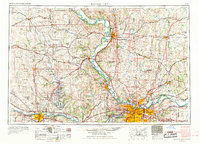 1956 Kansas City1967 Print · USGSThe Kansas-Missouri border region thrived during the mid-fifties, centered on the growing metropolitan cores and the busy river valleys. Researchers can trace the layout of significant government sites like Fort Leavenworth and the Lake City Army Ammunition Plant.4 unique versions available
 - 1956 Map of Lawrence, 1967 Print
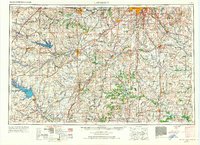 1956 Lawrence1967 Print · USGSEastern Kansas and the Missouri border country are captured here during the mid-century transition to the interstate era. Genealogists and local historians can trace family-named terrain like Summers Mound and the footprint of Sunflower Ordnance Works near Baldwin City.4 unique versions available
Showing maps 1-25 of 29
Top cities of Lafayette County
- Odessa historical maps
- Higginsville historical maps
- Lexington historical maps
- Concordia historical maps
- Waverly historical maps
- Wellington historical maps
See more
Frequently asked questions
- What are the different types of historical maps available for Lafayette County?
- What is the oldest map of Lafayette County?
- Where can I purchase historical maps of Lafayette County for my home or office?
- Where can I download high-res historical maps of Lafayette County?
- Are there historical topographic maps available for Lafayette County?
- Is there historical aerial imagery available for Lafayette County?
- Where are historical maps of Lafayette County sourced from?