1900s (20th Century) Maps of Park County, Montana
Explore 131 historic maps of Park County from the 1900s (20th Century). These maps offer a rare glimpse into what life looked like during the 1900s — showing old roads, neighborhoods, homes, and landmarks that have changed or disappeared over time.
Whether you're researching your family's past, planning a metal detecting trip, or studying how Park County's landscape evolved across the 1900s, these high-resolution maps are a powerful tool for exploring the history of this region.
- Focus on a specific era: All maps on this page are from the 1900s, giving you a focused view of this time period.
- See what’s changed: Compare century-old streets, trails, and buildings to today's modern landscape using overlays and satellite layers.
- Research with precision: Use these maps for genealogy, historical research, land use analysis, or educational projects.
- View, download, or print: Maps are fully viewable online in high resolution, and can be downloaded or printed for your own records.
Start exploring Park County's history through authentic maps from the 1900s. This is your window into the past.
Park County, MT maps
(131)- 1901 Map of Canyon
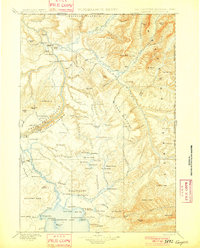 1901 Canyon1901 Print · USGSYellowstone's northeast wilderness appears at the dawn of the twentieth century, detailing the park's early infrastructure and raw geothermal wonders. Researchers can trace the original locations of Yanceys, Baronett Bridge, and unique curiosities like the Fossil Forest.
 - 1901 Map of Gallatin
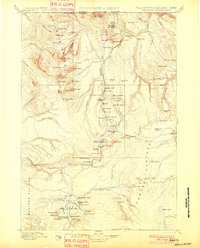 1901 Gallatin1901 Print · USGSThe high plateau of the Yellowstone country appears here in the late nineteenth century, just as its hydrothermal wonders were becoming globally known. Researchers can locate early campsites and lodges near the Norris Geyser Basin, Obsidian Cliff, and Mammoth Hot Springs.
 - 1902 Map of Little Belt Mts.
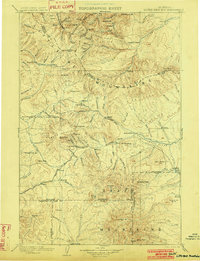 1902 Little Belt Mts.1902 Print · USGSMeagher County at the close of the nineteenth century is a landscape of mountain mining camps and riverside settlements. Researchers can trace early industry and family roots near the Sapphire Mine, the town of White Sulphur Springs, and the camp at Neihart.3 unique versions available
 - 1907 Map of Canyon
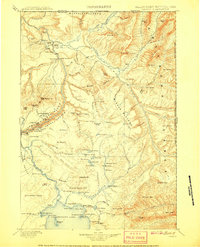 1907 Canyon1907 Print · USGSYellowstone during the early years of the National Park Service era showcases a landscape defined by geothermal wonders and frontier outposts. Trace the early tourism routes past Yanceys and the Mushpots or locate historic features like Baronett Bridge.
 - 1908 Map of Gallatin
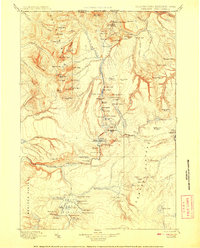 1908 Gallatin1908 Print · USGSYellowstone National Park in the early 1900s reveals a wilderness of hydrothermal wonders and early frontier outposts. Trace the locations of original park structures like Fort Yellowstone and thermal landmarks including Norris Geyser Basin and Beryl Spring.
 - 1911 Map of Gallatin
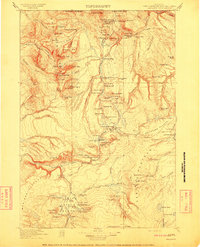 1911 Gallatin1911 Print · USGSYellowstone's thermal wonders and early military outposts are recorded in detail just after the turn of the century. Researchers can trace the early road and trail systems connecting landmark sites like Fort Yellowstone, the Norris Geyser Basin, and the Fountain Hotel.2 unique versions available
 - 1911 Map of Canyon
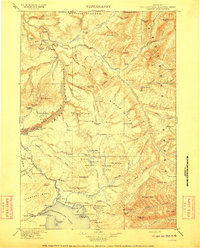 1911 Canyon1911 Print · USGSYellowstone National Park is captured here in the early twentieth century as a fledgling wilderness preserve. Researchers can trace the early road system including the Cooke Road and find historic sites like Yanceys, the Canyon Hotel, and Fishing Bridge.6 unique versions available
 - 1940 Map of Mt. Cowen, 1958 Print
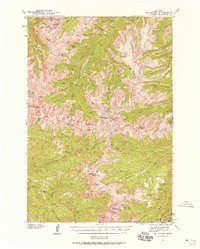 1940 Mt. Cowen1958 Print · USGSPark County's high mountain wilderness is captured here during the late Depression era, just before the war. Researchers can trace the early trail networks and backcountry landmarks like End Lookout, Beaver Meadows, and the peak of Mt Cowen.4 unique versions available
 - 1940 Map of Mt Wallace, 1963 Print
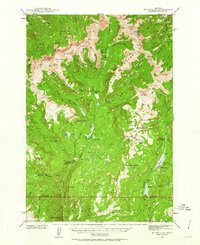 1940 Mt Wallace1963 Print · USGSPark County high country is documented here at the start of the 1940s, where national forest and park lands converge. Researchers can trace remote routes like the Poacher Trail and find isolated outposts such as Bull Moose Cabin and Hellroaring Ranger Station.3 unique versions available
 - 1941 Map of Mt Douglas, 1958 Print
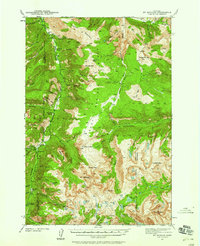 1941 Mt Douglas1958 Print · USGSHigh-altitude Montana ranching and resource extraction are captured here at the start of the 1940s. Genealogists and historians can trace early land use at Clydehurst Ranch, the Gish Mine, and the Fourmile Guard Station.4 unique versions available
 - 1942 Map of Cutoff Mtn, 1959 Print
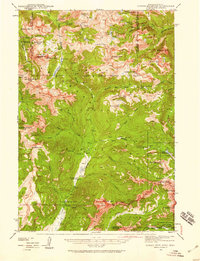 1942 Cutoff Mtn1959 Print · USGSThe Absaroka-Beartooth wilderness along the Montana-Wyoming border is captured here in the early 1940s. Researchers can trace the high-country trails and sites like the Independence Mine, Silver Tip Ranch, and the Cooke Ranger Sta.4 unique versions available
 - 1943 Map of Mt Wallace
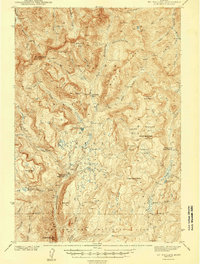 1943 Mt Wallace1943 Print · USGSThe Absaroka wilderness at the edge of Yellowstone comes to life in the late 1930s, showing a remote landscape of high basins and ranger outposts. Trace the early trails and lookouts of the era, from Hellroaring Ranger Station to the Bull Moose Cabin and Poacher Trail.3 unique versions available
 - 1943 Map of Mt Douglas
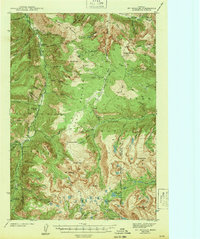 1943 Mt Douglas1943 Print · USGSHigh-altitude Montana ranching and forestry are documented here in the early 1940s, before modern road networks reached these alpine basins. Researchers can locate remote outposts like Clydehurst Ranch or trace the backcountry administrative boundaries near Fourmile Guard Station and Snowy Peak.2 unique versions available
 - 1943 Map of Mt Cowen
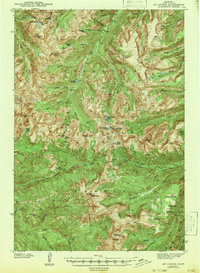 1943 Mt Cowen1943 Print · USGSPark County during the early 1940s is shown here as a landscape of high alpine peaks and remote water systems. Hikers and historians can trace the paths of the Boulder River and locate landmarks like Mt Cowen, Beaver Meadows, and Silver Pass.2 unique versions available
 - 1944 Map of Cutoff Mtn
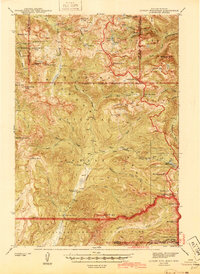 1944 Cutoff Mtn1944 Print · USGSThe northern gateway to Yellowstone and the high Absaroka wilderness are documented in the early 1940s, just as the park’s modern boundaries were being refined. Trace the historic Northeast Entrance, the remote Silver Tip Ranch, and the high-altitude Independence Mine.2 unique versions available
 - 1947 Map of Bozeman, 1948 Print
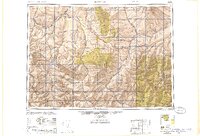 1947 Bozeman1948 Print · USGSBozeman and the surrounding mountain ranges are captured here just after the war, showing the vital rail and river networks of southwestern Montana. Genealogists and historians can trace routes to early settlements like Virginia City, Gallatin Gateway, and the mountain community of Jardine.
 - 1948 Map of Bozeman, 1951 Print
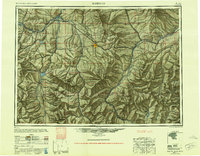 1948 Bozeman1951 Print · USGSSouthern Montana in the late 1940s is shown as a high-country crossroads of rail lines and river headwaters. Genealogists and historians can trace old town sites like Virginia City and McLeod alongside the Northern Pacific and Milwaukee Road railroads.
 - 1948 Map of White Sulphur Springs, 1951 Print
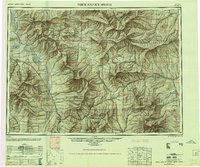 1948 White Sulphur Springs1951 Print · USGSMontana's capital and the high country of the Big Belt Mountains come alive in this mid-century survey. Trace the early hydroelectric developments at Canyon Ferry Dam or follow the historic rail lines through Ringling and Townsend.
 - 1951 Map of Bozeman Pass, 1952 Print
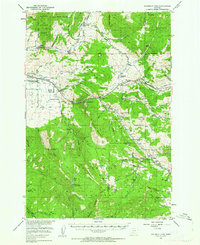 1951 Bozeman Pass1952 Print · USGSGallatin and Park counties are captured during the early 1950s, showing the high-country divide between Bozeman and Livingston. Genealogists and historians can trace family-named homesteads and old industrial sites like the Anaconda Copper Mines, Malmborg School, and the Shaodan Sawmill.5 unique versions available
 - 1951 Map of Ibex Mountain, 1952 Print
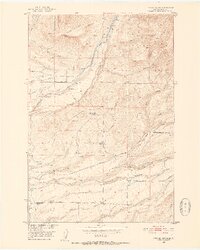 1951 Ibex Mountain1952 Print · USGSPark County ranching culture is at its peak in the mid-century as this survey captures the intersection of the Crazy Mountains and high-country homesteads. Genealogists and local historians can trace the foundations of legacy properties like Footer Ranch or locate the old Cottonwood School and Rock Creek Cemetery.5 unique versions available
 - 1951 Map of Sixteen NE, 1952 Print
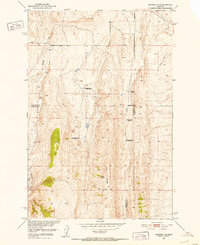 1951 Sixteen NE1952 Print · USGSThe ranching country of central Montana is captured here just after mid-century as homesteads were consolidating. Genealogists and historians can trace family landmarks and land-use shifts through sites like Campbell Ranch, Heath Ranch, and the Oil Well on Elk Ridge.3 unique versions available
 - 1951 Map of Mount Rae, 1953 Print
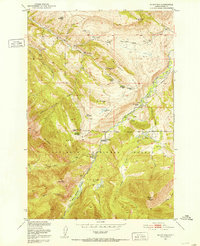 1951 Mount Rae1953 Print · USGSHigh country ranching and early homesteading in Park County are documented here in the early fifties. Genealogists can trace family sites like the Rogers Homestead (Aban'd) or locate the Gordon School and West Boulder Ranger Station.6 unique versions available
 - 1951 Map of Gobblers Knob, 1953 Print
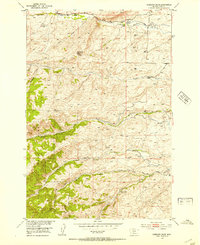 1951 Gobblers Knob1953 Print · USGSThe high ranching country of the Missouri River Basin is captured here in the early fifties, showing the interplay between forest lands and family holdings. Researchers can locate specific homesteads like Hansen Ranch and Gibson Ranch or trace old mining activity at several mines (inactive) near Gobblers Knob.4 unique versions available
 - 1951 Map of Clyde Park, 1953 Print
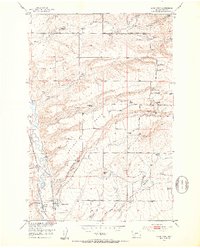 1951 Clyde Park1953 Print · USGSThe ranching country of Park County comes into focus in the early 1950s, centered on the rail-side settlement of Clyde Park. Genealogists and historians can trace family holdings like the Thompson Ranch, locate the Sumner School, or follow the Northern Pacific tracks through the Shields River valley.3 unique versions available
 - 1951 Map of Wallrock, 1953 Print
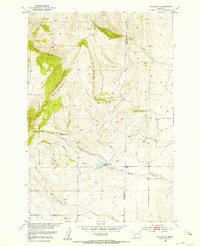 1951 Wallrock1953 Print · USGSGallatin and Park counties in the early fifties reveal a high-country landscape at the headwaters of the Missouri River Basin. Researchers can trace the complex drainage of Wallrock Basin and locate the mountain-fed Kistner-Hardy Dam near Wallrock.3 unique versions available
Showing maps 1-25 of 131
Top cities of Park County
Frequently asked questions
- What are the different types of historical maps available for Park County?
- What is the oldest map of Park County?
- Where can I purchase historical maps of Park County for my home or office?
- Where can I download high-res historical maps of Park County?
- Are there historical topographic maps available for Park County?
- Is there historical aerial imagery available for Park County?
- Where are historical maps of Park County sourced from?