1900s (20th Century) Maps of Morrill County, Nebraska
Explore 57 historic maps of Morrill County from the 1900s (20th Century). These maps offer a rare glimpse into what life looked like during the 1900s — showing old roads, neighborhoods, homes, and landmarks that have changed or disappeared over time.
Whether you're researching your family's past, planning a metal detecting trip, or studying how Morrill County's landscape evolved across the 1900s, these high-resolution maps are a powerful tool for exploring the history of this region.
- Focus on a specific era: All maps on this page are from the 1900s, giving you a focused view of this time period.
- See what’s changed: Compare century-old streets, trails, and buildings to today's modern landscape using overlays and satellite layers.
- Research with precision: Use these maps for genealogy, historical research, land use analysis, or educational projects.
- View, download, or print: Maps are fully viewable online in high resolution, and can be downloaded or printed for your own records.
Start exploring Morrill County's history through authentic maps from the 1900s. This is your window into the past.
Morrill County, NE maps
(57)- 1947 Map of Alliance, 1967 Print
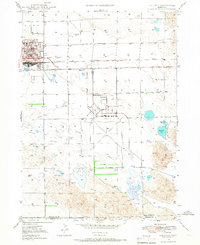 1947 Alliance1967 Print · USGSAlliance emerges as a bustling panhandle hub in the late 1940s, balancing its railroad roots with new aviation infrastructure. Researchers can locate the Courthouse, trace the Chicago Burlington and Quincy rail lines, and find rural landmarks like Greenwood Cem.2 unique versions available
 - 1947 Map of Bronco Lake, 1970 Print
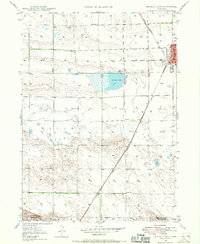 1947 Bronco Lake1970 Print · USGSThe Nebraska panhandle comes into focus in the late 1940s as the rail lines and rural school districts of Box Butte County are mapped in detail. Genealogists can trace the rural landscape through landmarks like Letan Sch, St Josephs Hospital, and the small settlement of Letan.2 unique versions available
 - 1948 Map of Hemingford 4 SW
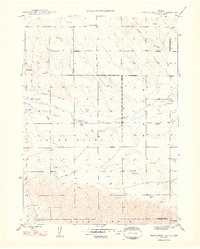 1948 Hemingford 4 SW1948 Print · USGSBox Butte and Morrill counties appear here in the late forties, revealing a working landscape of prairie ranching and isolated schoolhouses. Genealogists can locate family landmarks like School No 36 or trace the path of an Abandoned Canal and Snake Creek.4 unique versions available
 - 1948 Map of Hemingford 4 SE
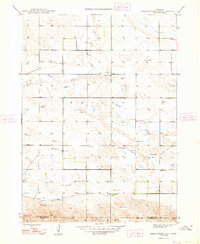 1948 Hemingford 4 SE1948 Print · USGSWestern Nebraska's ranching country comes into focus in the late 1940s, showing a landscape defined by water management and rural schooling. Genealogists can locate Hagaman Cem and trace the exact positions of School No 9 and School No 16 among the high plains.3 unique versions available
 - 1948 Map of Alliance
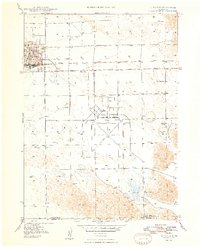 1948 Alliance1948 Print · USGSAlliance emerges as a bustling post-war rail and aviation hub in the Nebraska panhandle during the late forties. Genealogists and researchers can trace local landmarks like Greenwood Cem, East Point Sch, and the expansive Alliance Airport.2 unique versions available
 - 1948 Map of Antioch, 1966 Print
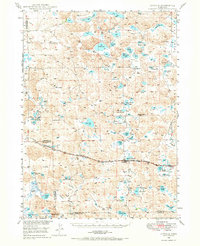 1948 Antioch1966 Print · USGSThe Nebraska sandhills near Antioch are captured here in the late 1940s, showing a landscape defined by alkali lakes and ranching. Genealogists can locate family holdings like Johnston Ranch and Bower Ranch, or trace school districts from School No 117 to School No 130.
 - 1949 Map of Lynn
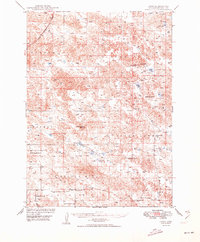 1949 Lynn1949 Print · USGSThe Nebraska panhandle in the late 1940s was a landscape of remote ranching outposts and vital water holes. Genealogists can trace rural life through numerous country schools like North School No 93 and landmark sites including Smith Ranch and Lynn.2 unique versions available
 - 1949 Map of Bronco Lake
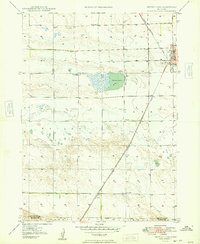 1949 Bronco Lake1949 Print · USGSNorthwestern Nebraska ranching and rail commerce take center stage in the late 1940s as the High Plains landscape begins its post-war shift. Trace the early footprint of Alliance or locate rural landmarks like Letan Sch and the namesake Bronco Lake.2 unique versions available
 - 1949 Map of Antioch
 1949 Antioch1949 Print · USGSSheridan County ranching and rail life are documented here in the late 1940s, just after the post-war aerial surveys. Researchers can trace rural school districts like School No 128 and the rail-side operations at Antioch and Hoffland.2 unique versions available
 - 1950 Map of Storm Lake
 1950 Storm Lake1950 Print · USGSThe Nebraska Sandhills come alive in this mid-century survey of Garden and Morrill Counties, where isolated cattle ranches dot a landscape of endless prairie potholes. Genealogists and historians can locate legacy homesteads like Storm Lake Ranch and Hill Ranch or find the remote sites of School No 10.
 - 1951 Map of Kilpatrick Lake
 1951 Kilpatrick Lake1951 Print · USGSIn the mid-century ranchlands of western Nebraska, the landscape is defined by family homesteads and the vital waters of Snake Creek. Researchers can trace the heritage of local estates like Hall Ranch and Henderson Ranch or locate the Severson Cem.2 unique versions available
 - 1954 Map of Scottsbluff, 1958 Print
 1954 Scottsbluff1958 Print · USGSThe Nebraska Panhandle's iconic landmarks and rail corridors are captured here during the mid-1950s. Researchers can trace the path of the North Platte River past Chimney Rock or locate the sprawling Sioux Ordnance Depot and the historic streets of Sidney.3 unique versions available
 - 1955 Map of Alliance, 1966 Print
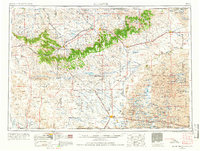 1955 Alliance1966 Print · USGSThe Nebraska panhandle comes into sharp focus during the mid-fifties, showing a landscape defined by the Niobrara River and the expanding Sand Hills. Researchers can trace the grounds of Fort Robinson, locate Saint Marys Church, or follow the Chicago Burlington and Quincy rail line through Hemingford.3 unique versions available
 - 1957 Map of Alliance
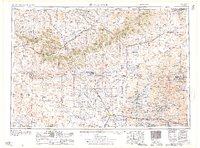 1957 Alliance1957 Print · USGSNorthwest Nebraska in the mid-fifties is captured here as a landscape of rail hubs, sprawling cattle ranches, and the eastern edge of the dunes. Genealogists and historians can trace rail lines through Alliance and Chadron or locate landmarks like Saint Marys Church and the Agate Spring Fossil Beds.
 - 1958 Map of Alliance
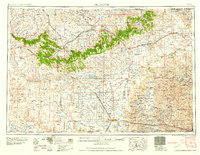 1958 Alliance1958 Print · USGSNorthwestern Nebraska in the late fifties shows a landscape shaped by the legacy of the high plains frontier and modern agricultural expansion. Genealogists and historians can trace rail-line settlements and landmarks like Fort Robinson and the Agate Spring Fossil Beds.
 - 1958 Map of Scottsbluff
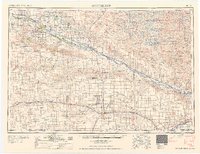 1958 Scottsbluff1958 Print · USGSThe Nebraska panhandle in the late fifties was a vital corridor of rail-and-river transport defined by the North Platte River and the Union Pacific. Genealogists and historians can trace rail stops like Reddus Station, explore the grounds of the Sioux Ordnance Depot, or locate landmarks like Chimney Rock.2 unique versions available
 - 1965 Map of Broadwater, 1967 Print
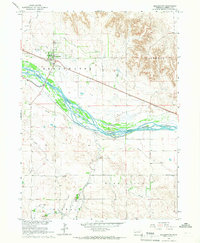 1965 Broadwater1967 Print · USGSThe North Platte River valley in the 1960s was a landscape defined by its irrigation canals and historical overland routes. Researchers can trace the path of the Emigrant Trail and locate family sites at Rose Hill Cem or the Silverthorne Cem.
 - 1965 Map of Bayard, 1967 Print
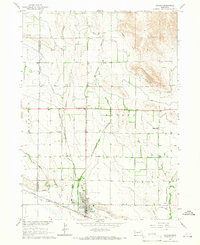 1965 Bayard1967 Print · USGSThe Nebraska panhandle in the mid-1960s shows a landscape transformed by irrigation and rail. Genealogists can trace the rural communities around Moomaw Corner and Craft, or locate local landmarks like School No 81 and Wildhorse Ch.
 - 1965 Map of Bridgeport NW, 1967 Print
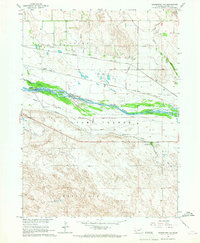 1965 Bridgeport NW1967 Print · USGSWestern Nebraska in the mid-sixties reveals a landscape defined by historic trails and intensive river irrigation. Genealogists and historians can trace the Emigrant Trail past the Oregon Trail Memorial Cem and the rail stops at Atkins and Mohler.
 - 1965 Map of Bayard NE, 1967 Print
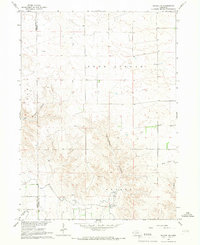 1965 Bayard NE1967 Print · USGSMorrill and Scotts Bluff counties are shown in the mid-1960s as the irrigation network of the High Plains reached maturity. Researchers can trace the complex path of the Highland High Line Canal and locate rural landmarks like School No 17 and the Wildhorse Dam.
 - 1965 Map of Angora SE, 1967 Print
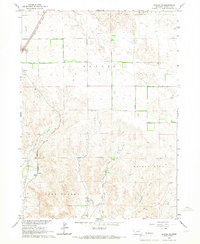 1965 Angora SE1967 Print · USGSMorrill County's ranching and rail landscape comes alive in this mid-sixties survey of western Nebraska. Researchers can trace the Chicago Burlington and Quincy rail line through Angora and Vance, or locate the site of Camp Clarke.
 - 1965 Map of South Bayard, 1967 Print
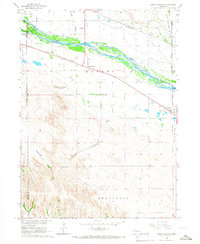 1965 South Bayard1967 Print · USGSMorrill County and the North Platte River valley are captured here in the mid-1960s, a landscape defined by pioneer history and modern irrigation. You can trace the path of the Emigrant Trail past Chimney Rock and locate rural landmarks like School No 50 and Facus Springs.
 - 1965 Map of Courthouse Rock, 1967 Print
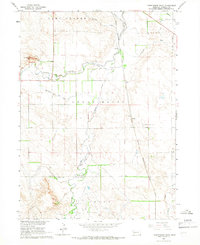 1965 Courthouse Rock1967 Print · USGSMorrill County in the mid-sixties reveals a landscape defined by historic western landmarks and vital irrigation networks. Researchers can trace the Emigrant Trail and locate local landmarks like Courthouse Rock Sch and the Hart Oil Field.
 - 1965 Map of Broadwater NW, 1967 Print
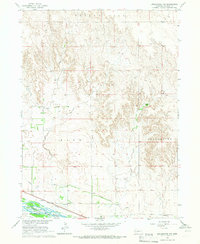 1965 Broadwater NW1967 Print · USGSMorrill County in the mid-1960s shows a landscape of river-valley agriculture and high-plains ranching. Local researchers can locate rural landmarks like Rocky Ridge Sch and Kelly Sch near the Northport Canal and the Union Pacific line.
 - 1965 Map of Angora NE, 1967 Print
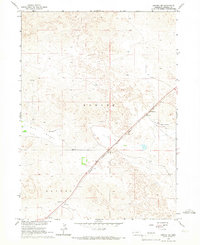 1965 Angora NE1967 Print · USGSMorrill County's rural landscape is captured in the mid-1960s as ranching and rail dominated the Nebraska panhandle. Genealogists and historians can trace the Chicago Burlington and Quincy railroad line through Bonner or locate the Hall Landing Strip.
Showing maps 1-25 of 57
Top cities of Morrill County
Frequently asked questions
- What are the different types of historical maps available for Morrill County?
- What is the oldest map of Morrill County?
- Where can I purchase historical maps of Morrill County for my home or office?
- Where can I download high-res historical maps of Morrill County?
- Are there historical topographic maps available for Morrill County?
- Is there historical aerial imagery available for Morrill County?
- Where are historical maps of Morrill County sourced from?