1950s Maps of Torrance County, New Mexico
Explore 18 historic maps of Torrance County from the 1950s. These maps offer a rare glimpse into what life looked like during the 1950s — showing old roads, neighborhoods, homes, and landmarks that have changed or disappeared over time.
Whether you're researching your family's past, planning a metal detecting trip, or studying how Torrance County's landscape evolved across the 1950s, these high-resolution maps are a powerful tool for exploring the history of this region.
- Focus on a specific era: All maps on this page are from the 1950s, giving you a focused view of this time period.
- See what’s changed: Compare century-old streets, trails, and buildings to today's modern landscape using overlays and satellite layers.
- Research with precision: Use these maps for genealogy, historical research, land use analysis, or educational projects.
- View, download, or print: Maps are fully viewable online in high resolution, and can be downloaded or printed for your own records.
Start exploring Torrance County's history through authentic maps from the 1950s. This is your window into the past.
Torrance County, NM maps
(18)- 1954 Map of Bosque Peak, 1955 Print
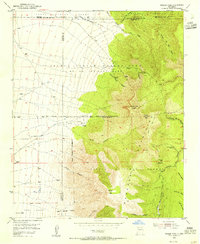 1954 Bosque Peak1955 Print · USGSThe Manzano Mountains and historic land grants define this New Mexico landscape in the mid-fifties. Researchers can trace the boundaries of the Isleta Indian Reservation and locate remote landmarks like Fourth of July Spring or Bosque Peak.3 unique versions available
 - 1954 Map of Chilili, 1955 Print
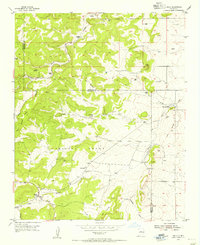 1954 Chilili1955 Print · USGSThe Chilili Grant in the 1950s reveals a landscape of high-country ranches and deep arroyos at the junction of Bernalillo and Torrance counties. Researchers can trace historic homesteads like the Thompson Place and Danvik Place or locate the site of Old Chilili.3 unique versions available
 - 1954 Map of Capilla Peak, 1955 Print
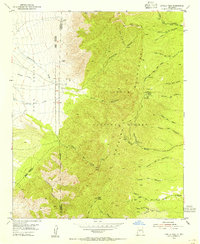 1954 Capilla Peak1955 Print · USGSThe Manzano Mountains during the mid-fifties reveal a rugged landscape of high-altitude lookouts and deep canyons on the border of Torrance and Valencia counties. Genealogists and historians can trace the Crest Trail and locate the former site of McKinley Place (Aband).4 unique versions available
 - 1954 Map of Torreon, 1955 Print
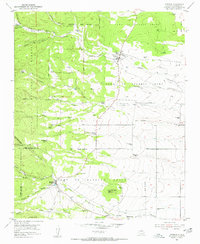 1954 Torreon1955 Print · USGSThe eastern foothills of the Manzano Mountains come to life in the mid-1950s, showing the intersection of historic land grants and family homesteads. Researchers can locate numerous named family sites like Bermudez Place and Anderson Place along the edges of the Cibola National Forest.2 unique versions available
 - 1954 Map of Tajique, 1955 Print
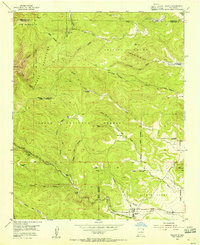 1954 Tajique1955 Print · USGSThe foothills of the Manzano Mountains in the mid-1950s reveal a landscape of Spanish land grants and family ranching. Genealogists can trace specific homesites like Riley Place and King Place or the former location of the Barales Sch (Aban'd).2 unique versions available
 - 1954 Map of Edgewood, 1955 Print
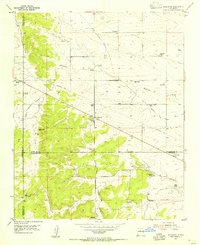 1954 Edgewood1955 Print · USGSMid-century Santa Fe County is captured here as a landscape of family ranching and early transit corridors. Genealogists and historians can trace the foundations of Edgewood through named landmarks like Mountain Valley Cemetery and the Old Railroad Grade.3 unique versions available
 - 1954 Map of Milbourn Ranch, 1955 Print
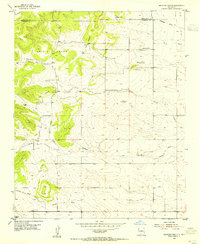 1954 Milbourn Ranch1955 Print · USGSRanching and early industry meet along the Bernalillo and Torrance County border during the mid-1950s. Genealogists and local historians can trace family landmarks like Garland Cemetery, Milbourn Ranch, and the rural Cedar Grove Ch.3 unique versions available
 - 1954 Map of Torreon, 1957 Print
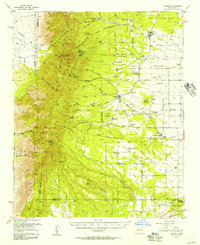 1954 Torreon1957 Print · USGSThe foothills of the Manzano Mountains in the mid-fifties reveal a landscape of ancient Spanish land grants and scattered family homesteads. Genealogists can locate specific family sites like Vigil Place or Sanchez Place and trace the proximity of Quarai Ruins State Mon.2 unique versions available
 - 1954 Map of Santa Fe, 1963 Print
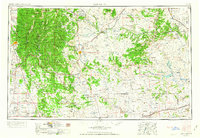 1954 Santa Fe1963 Print · USGSNew Mexico's high mountains and eastern plains meet in the mid-fifties, showing a landscape defined by the Sangre de Cristo Mountains and the Pecos River. Trace family roots and local history through San Christobal Church, Sena School, and the historic Las Vegas rail corridor.4 unique versions available
 - 1954 Map of Fort Sumner, 1964 Print
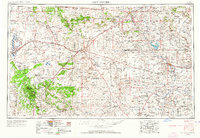 1954 Fort Sumner1964 Print · USGSEast-central New Mexico's ranching and rail heartland is captured here in the mid-1950s, centered on the strategic junctions of the high plains. Researchers can trace the development of early highway networks and rail towns like Vaughn, Fort Sumner, and the copper operations at Guadalupe Mine.3 unique versions available
 - 1954 Map of Socorro, 1972 Print
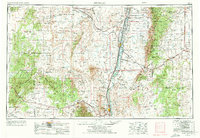 1954 Socorro1972 Print · USGSMid-century New Mexico comes into focus as the Rio Grande valley and the surrounding high desert undergo post-war growth. Genealogists and historians can trace old mountain settlements like Tajique and Punta de Agua or locate remote sites like the Torrance Mine.2 unique versions available
 - 1956 Map of Edgewood, 1957 Print
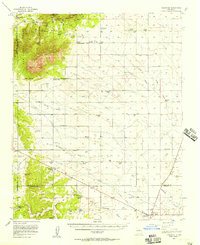 1956 Edgewood1957 Print · USGSThe ranching country of Santa Fe and Torrance Counties is captured here in the mid-fifties as the area around Edgewood begins to modernize. Genealogists and historians can trace numerous family landmarks like the Hill Ranch and Mtn View Cemetery, or locate early aviation history at Otto Airfield.3 unique versions available
 - 1956 Map of Estancia, 1958 Print
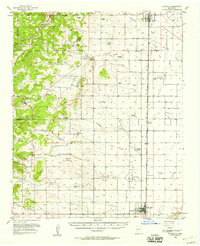 1956 Estancia1958 Print · USGSThe Estancia Valley in the mid-1950s was a landscape of remote ranches and high-altitude basins defined by the Atchison Topeka and Santa Fe rail line. Researchers can locate family homesteads like Hornsby Ranch, find the Garland Cem, or trace the old roads through Chilili.2 unique versions available
 - 1956 Map of Mountainair, 1958 Print
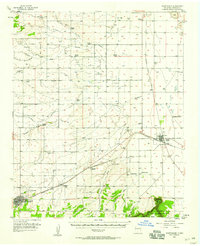 1956 Mountainair1958 Print · USGSTorrance County ranching and rail infrastructure are on full display in the mid-fifties, centered on the high valley near Mountainair. Genealogists can trace family holdings from the L K Markel Ranch to Broncho and locate sites like Ewing Sch.2 unique versions available
 - 1958 Map of Socorro
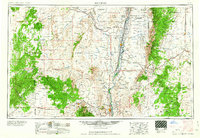 1958 Socorro1958 Print · USGSNew Mexico's high desert during the late fifties reveals a landscape of massive land grants and remote mining outposts. Researchers can trace the path of the Atchison Topeka and Santa Fe railroad as it connects Socorro and Belen to industrial sites like the Manganese Mill.
 - 1958 Map of Fort Sumner
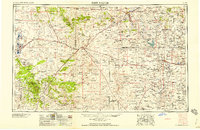 1958 Fort Sumner1958 Print · USGSEast-central New Mexico in the mid-fifties is captured here as a sprawling landscape of high mesas and cattle ranching. Researchers can trace the convergence of the Southern Pacific railroad at Vaughn and locate family landmarks like Borica School or Marquez Ranch.
 - 1958 Map of Santa Fe
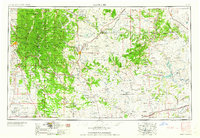 1958 Santa Fe1958 Print · USGSThe Sangre De Cristo Mountains meet the high plains in the late 1950s, showing a landscape defined by rail corridors and ranching. Genealogists can trace family-named sites like Upton Ranch or visit the Fort Union (Ruins) and Tuloso School.
 - 1958 Map of Albuquerque
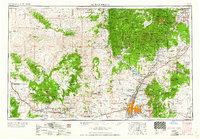 1958 Albuquerque1958 Print · USGSAlbuquerque and the surrounding high desert are captured here during a period of massive federal expansion and postwar growth. Researchers can trace the development of Kirtland Air Force Base, find ancestral homes in Pueblo de Santa Ana, or locate industrial sites like the Jackpile Mine.
End of results
Showing maps 1-18 of 18
Top cities of Torrance County
- Moriarty historical maps
- Estancia historical maps
- Mountainair historical maps
- Willard historical maps
- Encino historical maps
- Johnny's Place historical maps
Frequently asked questions
- What are the different types of historical maps available for Torrance County?
- What is the oldest map of Torrance County?
- Where can I purchase historical maps of Torrance County for my home or office?
- Where can I download high-res historical maps of Torrance County?
- Are there historical topographic maps available for Torrance County?
- Is there historical aerial imagery available for Torrance County?
- Where are historical maps of Torrance County sourced from?