1960s Maps of Carter County, Oklahoma
Explore 22 historic maps of Carter County from the 1960s. These maps offer a rare glimpse into what life looked like during the 1960s — showing old roads, neighborhoods, homes, and landmarks that have changed or disappeared over time.
Whether you're researching your family's past, planning a metal detecting trip, or studying how Carter County's landscape evolved across the 1960s, these high-resolution maps are a powerful tool for exploring the history of this region.
- Focus on a specific era: All maps on this page are from the 1960s, giving you a focused view of this time period.
- See what’s changed: Compare century-old streets, trails, and buildings to today's modern landscape using overlays and satellite layers.
- Research with precision: Use these maps for genealogy, historical research, land use analysis, or educational projects.
- View, download, or print: Maps are fully viewable online in high resolution, and can be downloaded or printed for your own records.
Start exploring Carter County's history through authentic maps from the 1960s. This is your window into the past.
Carter County, OK maps
(22)- 1963 Map of Ardmore
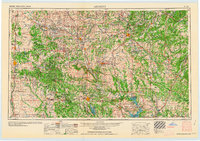 1963 Ardmore1963 Print · USGSSouthern Oklahoma during the early sixties shows a landscape defined by the Arbuckle Mountains and a booming energy economy. Genealogists and historians can trace family-named sites across the Ardmore Oil Field, find old schools like Southeastern State College, or locate historic markers such as Boggy Depot State Park.2 unique versions available
 - 1963 Map of Mannsville, 1964 Print
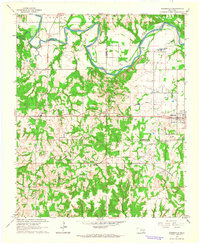 1963 Mannsville1964 Print · USGSSouthern Oklahoma's river valleys and rail corridors are documented here in the early sixties, centered on the community of Mannsville. Researchers can trace old family sites and rural landmarks like Durwood Sch, Nelda Cem, and the St Louis - San Francisco line.2 unique versions available
 - 1963 Map of Mc Millan, 1964 Print
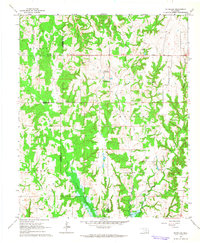 1963 Mc Millan1964 Print · USGSThe rural landscape of Marshall County is shown in the early sixties as Lake Texoma reached into the surrounding creek valleys. Researchers can trace family roots through sites like McMillan Cem, Pickens Ch, and the settlement of Enyille.2 unique versions available
 - 1963 Map of Nebo, 1964 Print
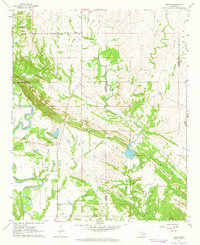 1963 Nebo1964 Print · USGSOklahoma's Arbuckle Mountains region is documented here in the early sixties, showing a landscape defined by the winding Washita River. Researchers can locate old community landmarks like the Nebo Sch and several family burial sites, including Hutchins Cem and Lone Cedar Cem.2 unique versions available
 - 1964 Map of Lake Murray, 1965 Print
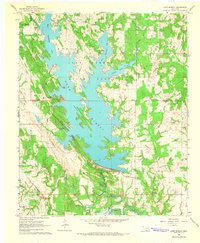 1964 Lake Murray1965 Print · USGSLove and Carter Counties center on the expansive waters of Lake Murray during the mid-sixties. Local historians and genealogists can trace the early road network around Greenville or locate family sites like Legate Cem and Wilson Cem.3 unique versions available
 - 1964 Map of Ardmore East, 1965 Print
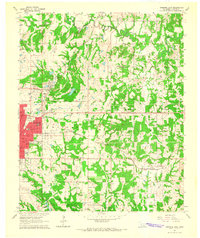 1964 Ardmore East1965 Print · USGSArdmore is shown during a period of steady growth in the 1960s, balancing its urban center with the recreational lands of the South. Researchers can trace local community roots through landmarks like Mt Zion Cemetery, Springdale School, and the St Louis - San Francisco rail line.4 unique versions available
 - 1964 Map of Ardmore West, 1965 Print
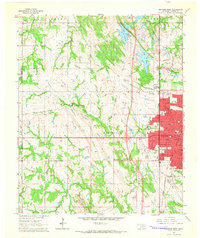 1964 Ardmore West1965 Print · USGSMid-century Ardmore and the rural stretches of Carter County are captured here as the city expanded westward toward the Criner Hills. Researchers can locate family sites at Rose Hill Cemetery, the historic Bloomfield Academy, or the settlement of Stobtown.3 unique versions available
 - 1964 Map of Gene Autry, 1965 Print
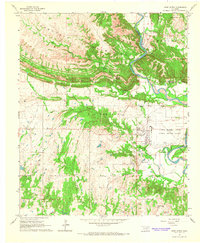 1964 Gene Autry1965 Print · USGSThe Arbuckle Mountains meet the Washita River during the mid-1960s, a period of industrial expansion for Carter County. Researchers can trace the heritage of Gene Autry and locate local landmarks like Academy Ch, Big Canyon Cem, and the Ardmore Municipal Airport.3 unique versions available
 - 1964 Map of Overbrook, 1965 Print
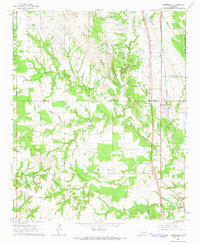 1964 Overbrook1965 Print · USGSLove and Carter Counties are captured in the mid-sixties during a period of transition, showing a landscape of oil production and emerging highways. Researchers can trace family sites like Crinnerville Ch or the McAlester Cem alongside the winding Hickory Creek.3 unique versions available
 - 1964 Map of Springer, 1965 Print
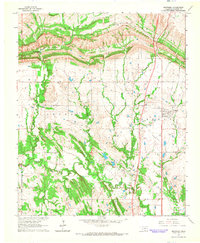 1964 Springer1965 Print · USGSSpringer and the southern Arbuckle Mountains come into focus during the mid-1960s, capturing a unique Oklahoma landscape of mountain ridges and prairie. Genealogists and local historians can trace family land and rural roads near Springer or locate the site of Henry House Falls.3 unique versions available
 - 1964 Map of Turner Falls, 1966 Print
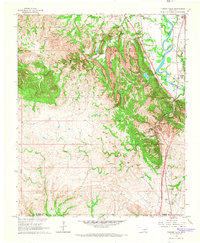 1964 Turner Falls1966 Print · USGSThe Arbuckle Mountains meet the Washita River in the mid-1960s, a time of significant highway expansion and recreation growth. Trace the waterfalls of Honey Creek, find the Green Hill Cem, or locate landmarks like the Jolly Aero Airport and Cedar Village.2 unique versions available
 - 1965 Map of Dougherty, 1966 Print
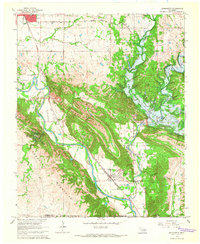 1965 Dougherty1966 Print · USGSThe Arbuckle Mountains and Washita River valley are captured mid-transition in the 1960s as a new reservoir begins to fill. Researchers can locate the Arbuckle Dam (Under Constr) and trace family landmarks like James Cem or the Falls Creek Assembly.3 unique versions available
 - 1968 Map of Fox NE, 1971 Print
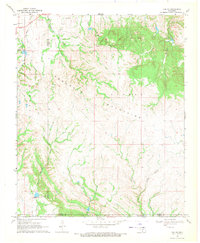 1968 Fox NE1971 Print · USGSThe Arbuckle Mountains landscape along the Carter and Murray county line is captured here in the late sixties. Researchers can trace rural landmarks and old watercourses such as Hennepin Cem, Mountain Lake, and the winding Eightmile Creek.
 - 1969 Map of Hennepin, 1971 Print
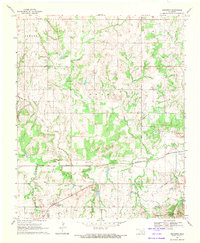 1969 Hennepin1971 Print · USGSSouthern Oklahoma at the end of the sixties reveals a landscape shaped by petroleum production and deep-rooted rural settlements. Researchers can locate the Fort Arbuckle Ruins and trace the boundaries of the Elmore Oil Field near Hennepin.2 unique versions available
 - 1969 Map of Healdton, 1971 Print
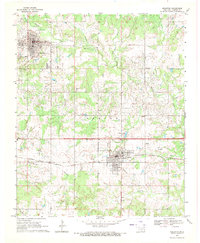 1969 Healdton1971 Print · USGSOil extraction and rail commerce define this Oklahoma landscape during the late sixties. Researchers can trace family history at Mt Olive Cemetery and explore the industrial layout of Hewitt Field between the towns of Healdton and Wilson.
 - 1969 Map of Lone Grove, 1971 Print
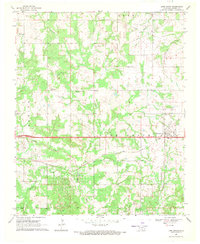 1969 Lone Grove1971 Print · USGSLone Grove was expanding along the Santa Fe rail line in the late sixties as the local petroleum industry grew. Researchers can locate family landmarks like Lone Grove Cem, the Blue Ribbon Ch, and the extensive southern Oil Field.2 unique versions available
 - 1969 Map of Healdton SW, 1971 Print
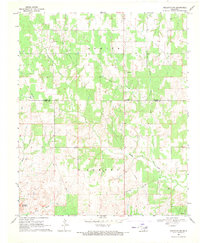 1969 Healdton SW1971 Print · USGSIn the late sixties, the borderlands of Love and Carter County remained a landscape of creek-side settlements and active oil production. Researchers can pinpoint the rural Reck Ch, the historic Morgan Cem, and the family-named Simon Cem.2 unique versions available
 - 1969 Map of Milo, 1971 Print
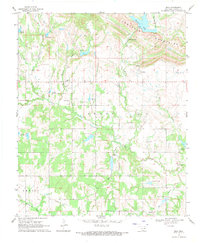 1969 Milo1971 Print · USGSIn the hills of Carter County during the late sixties, the settlements of Milo and Woodford anchored a landscape defined by the Arbuckle Mountains. Researchers can trace rural life through sites like Milo Cem, St Paul Ch, and numerous scattered Oil Wells.
 - 1969 Map of Elmore City South, 1971 Print
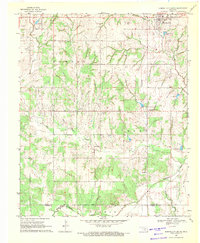 1969 Elmore City South1971 Print · USGSElmore City and the surrounding Garvin County oil fields are captured here in the late sixties at the height of regional production. Researchers can locate family landmarks like Little Flock Ch, trace the Elmore Field infrastructure, and find the now-obscured Refinery and Satterwhite settlement.
 - 1969 Map of Healdton SE, 1971 Print
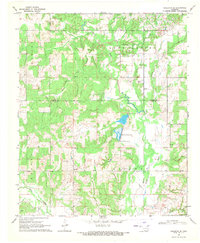 1969 Healdton SE1971 Print · USGSSouthern Oklahoma's rural landscape comes alive in this late-sixties survey of the Oswalt and Cheek vicinity. Genealogists and local historians can trace family roots through landmarks like Oswalt Cemetery, Lone Grove Church, and Battle Springs Lake.2 unique versions available
 - 1969 Map of Tatums, 1971 Print
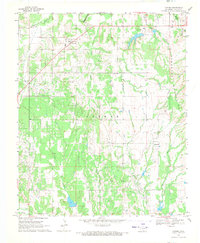 1969 Tatums1971 Print · USGSSouthern Oklahoma at the end of the sixties reveals a landscape of petroleum production and historic rural communities. Genealogists can trace family roots through Tatums Cem and Pooleville Cem or locate the Pilgrim Ch near the Arbuckle Mountains.2 unique versions available
 - 1969 Map of Fox, 1971 Print
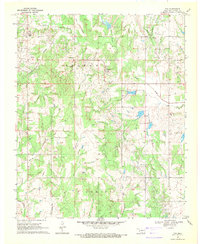 1969 Fox1971 Print · USGSOil extraction and rural life converge in Carter County during the late 1960s, showing the extensive infrastructure of the local petroleum industry. Researchers can pinpoint early oil well locations, follow the path of Hug-me-tight Branch, and locate landmarks like Midway Ch and Oil Springs Cem.
End of results
Showing maps 1-22 of 22
Top cities of Carter County
- Ardmore historical maps
- Lone Grove historical maps
- Healdton historical maps
- Wilson historical maps
- Dickson historical maps
- Springer historical maps
See more
Frequently asked questions
- What are the different types of historical maps available for Carter County?
- What is the oldest map of Carter County?
- Where can I purchase historical maps of Carter County for my home or office?
- Where can I download high-res historical maps of Carter County?
- Are there historical topographic maps available for Carter County?
- Is there historical aerial imagery available for Carter County?
- Where are historical maps of Carter County sourced from?