1960s Maps of Major County, Oklahoma
Explore 14 historic maps of Major County from the 1960s. These maps offer a rare glimpse into what life looked like during the 1960s — showing old roads, neighborhoods, homes, and landmarks that have changed or disappeared over time.
Whether you're researching your family's past, planning a metal detecting trip, or studying how Major County's landscape evolved across the 1960s, these high-resolution maps are a powerful tool for exploring the history of this region.
- Focus on a specific era: All maps on this page are from the 1960s, giving you a focused view of this time period.
- See what’s changed: Compare century-old streets, trails, and buildings to today's modern landscape using overlays and satellite layers.
- Research with precision: Use these maps for genealogy, historical research, land use analysis, or educational projects.
- View, download, or print: Maps are fully viewable online in high resolution, and can be downloaded or printed for your own records.
Start exploring Major County's history through authentic maps from the 1960s. This is your window into the past.
Major County, OK maps
(14)- 1969 Map of Phroso, 1971 Print
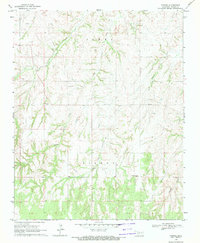 1969 Phroso1971 Print · USGSThe rural landscape of Major County in the late sixties shows the intersection of ranching and the energy industry. Genealogists and researchers can trace family landmarks like Mt Zion Cem or the settlement at Phroso near Griever Creek.
 - 1969 Map of Belva, 1971 Print
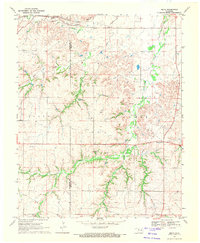 1969 Belva1971 Print · USGSMajor County in the late sixties shows a landscape in transition from ranching to an energy-producing economy. Genealogists and researchers can trace the Atchison Topeka and Santa Fe Railroad Grade or locate landmarks like Belva and Bat Cave.
 - 1969 Map of Glass Mountains NW, 1971 Print
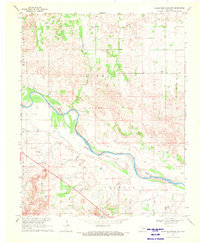 1969 Glass Mountains NW1971 Print · USGSOklahoma's Glass Mountains region comes into focus during the late sixties as the riverbed defines the county line. Researchers can trace land ownership through labels like Jones and Crowell, or locate the historic Galena Cem near the Cimarron River.2 unique versions available
 - 1969 Map of Fairview NE, 1971 Print
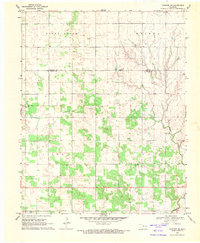 1969 Fairview NE1971 Print · USGSMajor and Alfalfa counties appear in the late sixties as a landscape of rural homesteads and emerging energy production. Researchers can trace local lineage through several sites like Square Cedar Cem, Wildwood Ch, and the small settlement of Carwile.
 - 1969 Map of Glass Mountains, 1971 Print
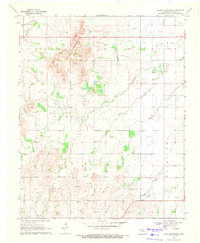 1969 Glass Mountains1971 Print · USGSMajor County at the close of the sixties reveals a landscape shaped by the energy industry and agricultural settlement. Researchers can locate remote burial sites like Roscoe Cem and Cheyenne Valley Cem or trace the drainage paths of Skunk Creek.2 unique versions available
 - 1969 Map of Fairview SE, 1971 Print
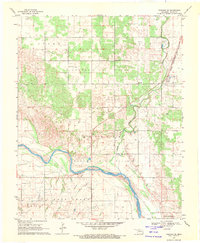 1969 Fairview SE1971 Print · USGSMajor County was defined by its energy and rail economy in the late 1960s. Genealogists and historians can trace family locations near New Hope Ch, the Sorge Cem, and the massive network of wells across the Ringwood Oil Field.
 - 1969 Map of Fairview, 1971 Print
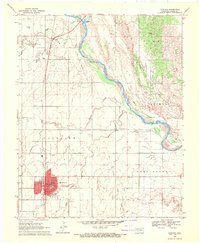 1969 Fairview1971 Print · USGSMajor County at the end of the sixties shows a landscape shaped by the Cimarron River and the railroad. Genealogists can trace family sites at Saron Cem and Rusk Cem or locate the old Chamberlain Sch.2 unique versions available
 - 1969 Map of Cleo Springs, 1971 Print
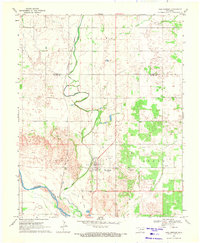 1969 Cleo Springs1971 Print · USGSMajor and Alfalfa counties in the late sixties show a landscape balancing traditional agriculture with a growing petroleum industry. Researchers can trace the Atchison Topeka and Santa Fe rail line, locate Cleo Springs Cemetery, and explore the banks of the Cimarron River.
 - 1969 Map of Waynoka East, 1971 Print
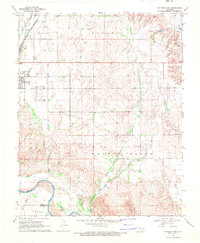 1969 Waynoka East1971 Print · USGSWoods County in the late sixties is revealed here as a landscape of rail transit and river boundaries. Genealogists and local historians can trace family ties to landmarks like Walnut Grove Cem, Rose Valley Sch, and the busy Waynoka rail corridor.
 - 1969 Map of Cedardale, 1971 Print
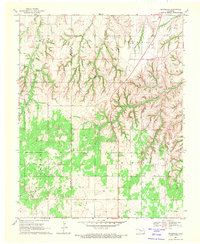 1969 Cedardale1971 Print · USGSMajor and Woodward counties meet in this late 1960s survey of the Oklahoma plains during a period of active petroleum development. Genealogists and local historians can locate Cedardale Cem, Liberty Cem, and the small settlement of Cedardale.
 - 1969 Map of Glass Mountains NE, 1971 Print
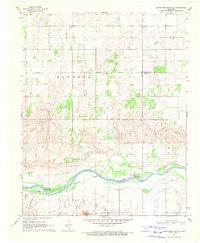 1969 Glass Mountains NE1971 Print · USGSNorthwestern Oklahoma’s prairie and river lowlands are captured here in the late sixties, showing the rural communities of Woods and Major counties. Genealogists and historians can locate Pleasant Ridge Cem, Oakdale Ch, and early energy sites like the Southwest Oakdale Gas Field.
 - 1969 Map of Togo, 1971 Print
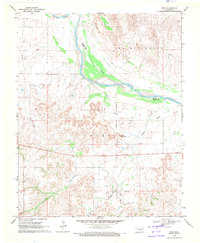 1969 Togo1971 Print · USGSMajor County during the late 1960s shows a landscape defined by the shifting Cimarron River and active energy exploration. Genealogists can locate the settlement of Togo and trace family sites near Lone Star Cem and Connor Cem.
 - 1969 Map of Waynoka West, 1971 Print
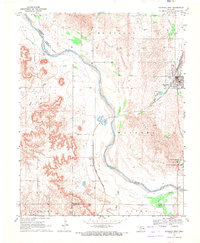 1969 Waynoka West1971 Print · USGSWoods County in the late sixties reveals a landscape defined by the winding Cimarron River and the bustling rail operations in Waynoka. Genealogists and historians can trace the rail corridor through Heman or locate the early layout of the Little Sahara State Recreation Area.2 unique versions available
 - 1969 Map of Glass Mountains SW, 1971 Print
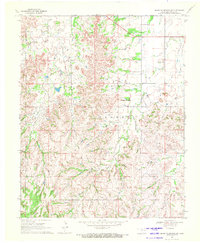 1969 Glass Mountains SW1971 Print · USGSMajor County at the end of the 1960s shows a landscape shaped by the energy industry and rural traditions. Genealogists and researchers can trace the Northeast Cheyenne Valley Field alongside local landmarks like Lone Star Cem and Tepee Mountain.2 unique versions available
End of results
Showing maps 1-14 of 14
Top cities of Major County
- Fairview historical maps
- Ringwood historical maps
- Cleo Springs historical maps
- Ames historical maps
- Meno historical maps
Frequently asked questions
- What are the different types of historical maps available for Major County?
- What is the oldest map of Major County?
- Where can I purchase historical maps of Major County for my home or office?
- Where can I download high-res historical maps of Major County?
- Are there historical topographic maps available for Major County?
- Is there historical aerial imagery available for Major County?
- Where are historical maps of Major County sourced from?