Old Maps of Marshall County, Oklahoma for Metal Detecting
Plan your next treasure hunt with 104 historic maps of Marshall County. Find old homesites, ghost towns, trails, and gathering spots that may be lost to time — perfect for identifying promising metal detecting locations.
- Locate forgotten sites: Uncover places like long-lost settlements, abandoned rail lines, or gathering spots.
- Plan better hunts: Use map overlays combined with LiDAR or satellite views to narrow in on historically rich areas.
- Made for detectorists: Thousands of hobbyists use these maps to discover relics, coins, and hidden history.
Use these historic maps to boost your research and find new opportunities beneath the surface of Marshall County.
Marshall County, OK maps
(104)- 1901 Map of Tishomingo
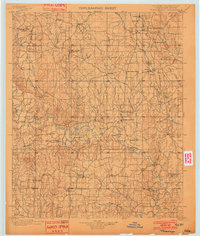 1901 Tishomingo1901 Print · USGSThe Chickasaw Nation comes to life in this late-frontier survey of Johnston County and the surrounding Indian Territory. Genealogists and historians can locate early industrial sites like the Asphalt Mines, the landmark Harley Institute, and the site of Fort Washita.4 unique versions available
 - 1901 Map of Denison
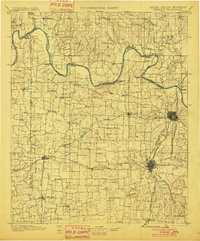 1901 Denison1901 Print · USGSThe Red River valley in the final years of the Indian Territory era was a landscape of river crossings and rail expansion. Genealogists and historians can trace the early transit networks through Willis Ferry, Cedar Mills, and the Colbert Bridge.4 unique versions available
 - 1954 Map of Sherman, 1964 Print
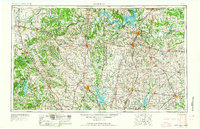 1954 Sherman1964 Print · USGSThe Red River valley and North Texas plains are captured here in the mid-fifties, showing the region as new reservoirs like Lake Texoma and Lavon Reservoir reshaped the land. Genealogists can trace family roots through specific local landmarks like Courtney P O, Pilot Grove Sch, and New Hope Ch.2 unique versions available
 - 1957 Map of Ardmore, 1968 Print
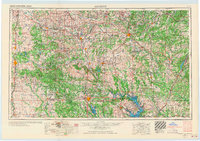 1957 Ardmore1968 Print · USGSSouth-central Oklahoma in the late fifties was a landscape of rising reservoir waters and expanding rail lines. Genealogists and historians can trace the foundations of Ardmore and Duncan or locate early recreation sites at Platt National Park and Lake Murray State Park.3 unique versions available
 - 1958 Map of Gordonville, 1959 Print
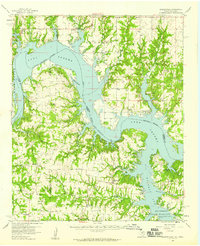 1958 Gordonville1959 Print · USGSGrayson County and the Red River valley are shown here just after the mid-century, as the region adjusted to the presence of the reservoir. Genealogists can locate family sites like Mt Tabor Cem, Johnson Cem, and the rural community of Gordonville.2 unique versions available
 - 1958 Map of Denison Dam, 1959 Print
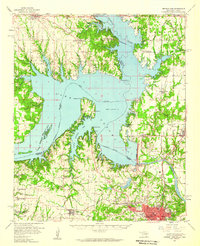 1958 Denison Dam1959 Print · USGSThe Red River valley was transformed by the late fifties, as the sprawling waters of Lake Texoma redefined the Oklahoma-Texas border. Genealogists and historians can trace the foundations of this lakeside region through sites like Willow Springs Ch, the Old Colbert Bridge, and numerous family cemeteries.2 unique versions available
 - 1958 Map of Sherman, 1959 Print
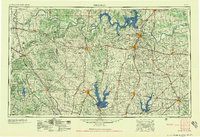 1958 Sherman1959 Print · USGSNorth Texas and Southern Oklahoma were undergoing significant development in the late fifties as the Red River Valley transit networks matured. Researchers can trace historic family-named locations such as Saddler Bend, the grounds of Perrin AFB, and early shoreline developments at Lake Texoma.
 - 1963 Map of Ardmore
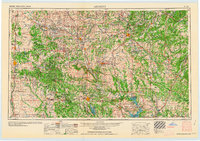 1963 Ardmore1963 Print · USGSSouthern Oklahoma during the early sixties shows a landscape defined by the Arbuckle Mountains and a booming energy economy. Genealogists and historians can trace family-named sites across the Ardmore Oil Field, find old schools like Southeastern State College, or locate historic markers such as Boggy Depot State Park.2 unique versions available
 - 1963 Map of Madill, 1964 Print
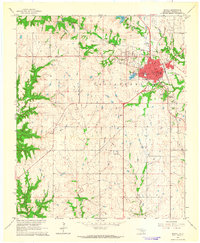 1963 Madill1964 Print · USGSMadill and Oakland are captured in the early sixties as they expanded along the St Louis - San Francisco line and the shores of City Lake. Genealogists can locate family sites at Oakland-Madill Cem and trace the street-level detail of Will Rogers Sch.2 unique versions available
 - 1963 Map of Mannsville, 1964 Print
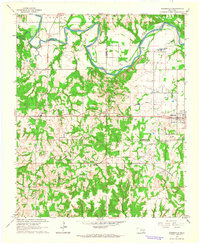 1963 Mannsville1964 Print · USGSSouthern Oklahoma's river valleys and rail corridors are documented here in the early sixties, centered on the community of Mannsville. Researchers can trace old family sites and rural landmarks like Durwood Sch, Nelda Cem, and the St Louis - San Francisco line.2 unique versions available
 - 1963 Map of Ravia, 1964 Print
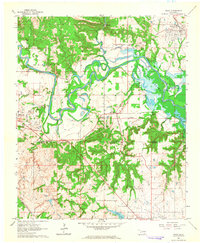 1963 Ravia1964 Print · USGSJohnston County at the start of the 1960s shows a landscape of river meanders and growing infrastructure along the Washita River. Researchers can locate family landmarks like Cedar Hill Cem, trace the St Louis-San Francisco line, or explore the small settlement of Russett.2 unique versions available
 - 1963 Map of Mc Millan, 1964 Print
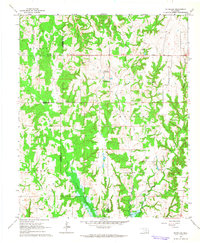 1963 Mc Millan1964 Print · USGSThe rural landscape of Marshall County is shown in the early sixties as Lake Texoma reached into the surrounding creek valleys. Researchers can trace family roots through sites like McMillan Cem, Pickens Ch, and the settlement of Enyille.2 unique versions available
 - 1967 Map of Tishomingo SW, 1968 Print
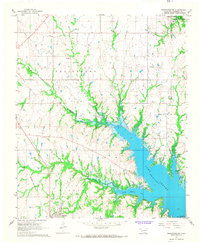 1967 Tishomingo SW1968 Print · USGSThe Marshall County shoreline of Lake Texoma comes alive in this late 1960s survey of the Kingston and Aylesworth area. Genealogists and historians can trace local landmarks like Grantham Ch, Cliff Cem, and the path of the St Louis - San Francisco railroad.2 unique versions available
 - 1967 Map of Tishomingo, 1968 Print
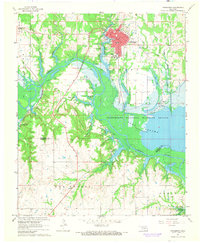 1967 Tishomingo1968 Print · USGSTishomingo and the Washita River valley are captured in the late sixties as the local landscape transitioned toward recreation and conservation. Genealogists and researchers can locate Teller Cem, Murray State College, and traces of the St Louis-San Francisco Railroad.
 - 1967 Map of Little City, 1968 Print
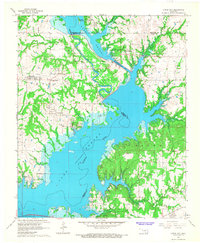 1967 Little City1968 Print · USGSThe northern reaches of Lake Texoma are captured here in the late sixties, where the Washita River was engineered to protect local industry. Researchers can find Fort Washita, the Confederate Cem, and the rerouted Old Channel near Cumberland.
 - 1967 Map of Milburn, 1968 Print
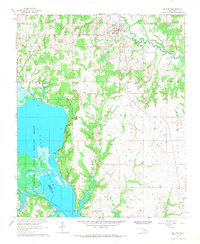 1967 Milburn1968 Print · USGSThe Oklahoma heartland meets the northern reaches of the reservoir during the late sixties. Genealogists and local historians can trace rural burial sites like Condon Grove Cem and follow the Old Railroad Grade near Milburn.
 - 1976 Map of Gordonville NE, 1978 Print
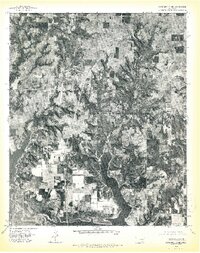 1976 Gordonville NE1978 Print · USGSMarshall County shoreline and rural farmland are captured here in the mid-seventies, showing the region's development around the reservoir. Researchers can trace the layout of small communities like Powell, Fobb, and Shay against the timbered draws of Lake Texoma.2 unique versions available
 - 1976 Map of Gordonville SE, 1979 Print
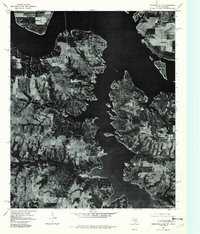 1976 Gordonville SE1979 Print · USGSGrayson County shoreline and rural settlements are captured in high detail in the mid-1970s as the reservoir shaped the local landscape. Genealogists and researchers can trace the roads and properties surrounding Gordonville, Locust, and the Cedar Mills area.
 - 1976 Map of Gordonville SW, 1979 Print
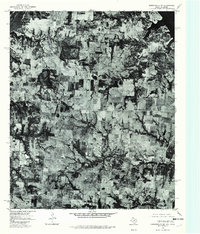 1976 Gordonville SW1979 Print · USGSGrayson County, Texas, and the Oklahoma borderlands are revealed in this mid-seventies aerial survey. Genealogists and local historians can trace the exact locations of rural homesteads near Dexter, Sandusky, and Red Branch.
 - 1976 Map of Gordonville NW, 1979 Print
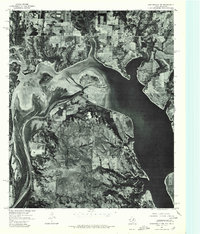 1976 Gordonville NW1979 Print · USGSThe Red River borderlands and the western reaches of Lake Texoma are captured in this late-1970s aerial survey. Trace the rural settlements of Lebanon and Enville or study the intricate sandbars where the Red River enters Lake Texoma.
 - 1982 Map of Dexter, 1983 Print
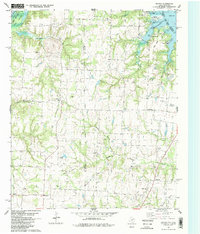 1982 Dexter1983 Print · USGSThe Red River borderlands of North Texas show a landscape of rural communities and active oil fields in the early eighties. Genealogists and local historians can locate several historic burial sites like Shiloh Cem and Allison Cem alongside the settlement at Dexter.2 unique versions available
 - 1982 Map of Platter, 1983 Print
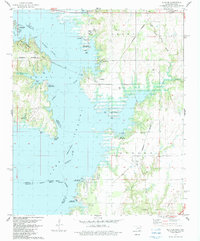 1982 Platter1983 Print · USGSLake Texoma's eastern shore in the early eighties reveals a landscape transformed by water and recreation at the Oklahoma-Texas border. Trace the rail history of the Burlington Northern or locate family burial sites at Old Woodville Cem and Platter Cem.
 - 1982 Map of Gordonville, 1983 Print
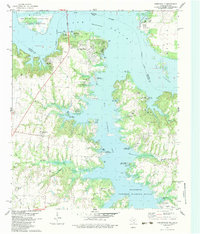 1982 Gordonville1983 Print · USGSThe Texas-Oklahoma borderlands around Lake Texoma are captured here in the early eighties, showing a landscape defined by the massive reservoir and the Red River. Researchers can locate old family cemeteries such as Mt Tabor Cem and Locust Cem alongside the early energy infrastructure of the Sandusky Oil Field.
 - 1982 Map of Pottsboro, 1983 Print
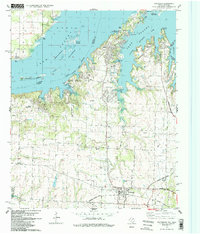 1982 Pottsboro1983 Print · USGSThe Texas-Oklahoma borderlands around Pottsboro are shown in the early 1980s as the shoreline of Lake Texoma grew into a major recreational hub. Genealogists and local historians can trace the Old Iron Ore Grade and locate family sites near Georgetown and Willow Springs Ch.2 unique versions available
 - 1982 Map of Lebanon, 1983 Print
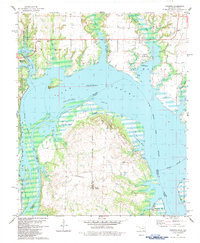 1982 Lebanon1983 Print · USGSThe Red River border between Oklahoma and Texas is captured in the early eighties as Lake Texoma winds through the Delaware Bend. Local historians can trace family-named sites like Pleasant Oak Cem and industrial landmarks such as the Handy Oil Field.
Showing maps 1-25 of 104
Top cities of Marshall County
Frequently asked questions
- What are the different types of historical maps available for Marshall County?
- What is the oldest map of Marshall County?
- Where can I purchase historical maps of Marshall County for my home or office?
- Where can I download high-res historical maps of Marshall County?
- Are there historical topographic maps available for Marshall County?
- Is there historical aerial imagery available for Marshall County?
- Where are historical maps of Marshall County sourced from?