Old Maps of McCurtain County, Oklahoma for Hiking & Exploration
Hike through history with 341 historic maps of McCurtain County. Explore old trails, ghost towns, and forgotten backroads — perfect for outdoor adventurers and local explorers.
- Rediscover forgotten places: Map out old mining camps, roads, and footpaths that no longer exist on modern maps.
- Layer with modern tools: Combine with LiDAR or satellite views to plan hikes through historical terrain.
- Made for exploration: Popular among hikers, overlanders, and local history lovers.
Use these maps to find adventure and explore the hidden past of McCurtain County.
McCurtain County, OK maps
(341)- 1890 Map of Poteau Mountain
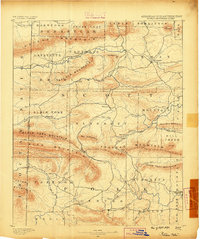 1890 Poteau Mountain1890 Print · USGSWestern Arkansas and the Indian Territory border are mapped in the late 1880s as the frontier gives way to established settlements. Genealogists can trace early homesteads and post offices like Waldron, Dallas, and Cherry Hill, or locate the historic Toll Gate and Talihina Trail.2 unique versions available
 - 1899 Map of Poteau Mountain
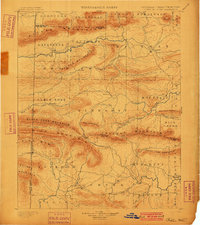 1899 Poteau Mountain1899 Print · USGSThe Arkansas borderlands and the Choctaw Nation frontier are captured here just before the turn of the century. Local historians can trace old homesteads and post offices near Waldron, Dallas, and the remote Cherry Hill (Egger P.O.) along the upper Ouachita.6 unique versions available
 - 1900 Map of Winding Stair
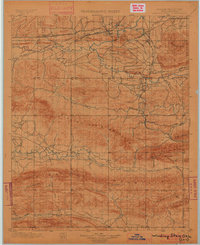 1900 Winding Stair1900 Print · USGSThe Choctaw Nation at the turn of the century shows a frontier landscape shaped by the Ouachita Mountains and new rail lines. Genealogists can locate early settlements like Summerfield and Heavener or trace the Woods Trail across the Kiamichi Mountain range.2 unique versions available
 - 1901 Map of Tuskahoma
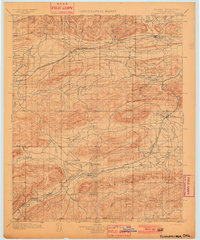 1901 Tuskahoma1901 Print · USGSThe Choctaw Nation in the Indian Territory is captured here during its transition to statehood, showing a landscape of tribal centers and early railroad expansion. Genealogists and historians can locate the Council House and rural outposts like Bengal, Ola, and Damon.
 - 1901 Map of Alikchi
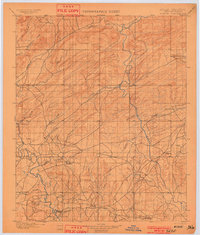 1901 Alikchi1901 Print · USGSChoctaw Nation territory is captured here just before the turn of the century, showing a landscape of river-fed valleys and early educational outposts. Researchers can trace the grounds of Old Spencer Academy, the site of Fort Towson, and the remote Alikchi settlement.5 unique versions available
 - 1902 Map of Lukfata
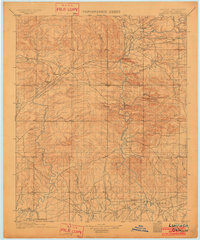 1902 Lukfata1902 Print · USGSChoctaw Nation territory is captured here at the turn of the century, just years before Oklahoma statehood. Genealogists and historians can trace early river-based settlements like Hochatown, Eagletown, and the vital crossing at Kirks Ferry.3 unique versions available
 - 1908 Map of Tuskahoma, 1964 Print
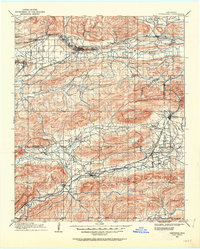 1908 Tuskahoma1964 Print · USGSOklahoma's Choctaw Nation territory at the start of the twentieth century shows a landscape shaped by ridge-top boundaries and the arrival of the steam engine. Researchers can locate early landmarks like the Choctaw Council House, Peachland Chapel, and mining era towns like Wilburton.
 - 1909 Map of Tuskahoma
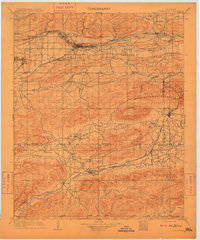 1909 Tuskahoma1909 Print · USGSSoutheastern Oklahoma’s rugged mountain corridors and Choctaw Nation landmarks are documented here at the end of the territorial era. Genealogists and historians can trace rail-town development and find remote sites like the Choctaw Council House, Bunchtown, and Thessalonica Church.3 unique versions available
 - 1909 Map of Winding Stair
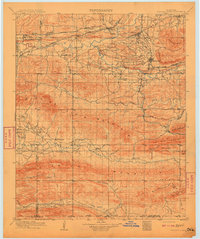 1909 Winding Stair1909 Print · USGSSoutheastern Oklahoma’s early statehood era is defined here by the intersection of major rail corridors and high mountain ridges. Researchers can trace the development of transit hubs like Heavener and Wister, or locate remote valley settlements such as Whitesboro and Muse.4 unique versions available
 - 1913 Map of De Queen
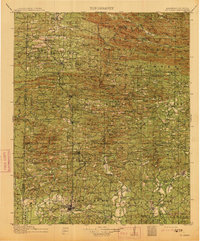 1913 De Queen1913 Print · USGSThe southern Ouachita Mountains and the Arkansas-Oklahoma borderlands appear here in the early twentieth century as the railroad transformed the timber and mining industries. Researchers can trace historic sites like the Welcome Home School, the Kansas City Southern RR corridor, and the early streets of De Queen.4 unique versions available
 - 1950 Map of Mcalester
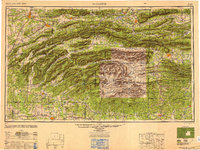 1950 Mcalester1950 Print · USGSThe Ouachita Mountains and the coal country of Southeast Oklahoma are shown here in the late 1940s. Genealogists and historians can trace the rail-driven growth of McAlester, Wilburton, and Antlers alongside the rugged terrain of Kiamichi Mountain.2 unique versions available
 - 1950 Map of Idabel, 1962 Print
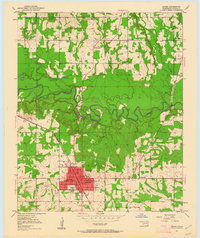 1950 Idabel1962 Print · USGSSoutheastern Oklahoma’s river valleys and rail corridors are captured here just after the war, centered on the growing community of Idabel. Researchers can trace the lineage of local families through landmarks like Gray High Sch, Denison Cem, and rural outposts such as Twin Springs.3 unique versions available
 - 1950 Map of Acworth, 1968 Print
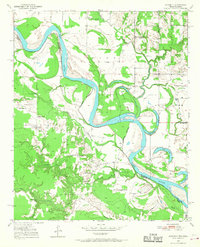 1950 Acworth1968 Print · USGSThe Red River borderlands of Texas and Oklahoma are captured here at mid-century as a landscape of shifting waters and rural communities. Genealogists can trace family roots through landmarks like Greenwood Ch, Bachman Cem, and the old Acworth Sch along the river's winding oxbows.
 - 1950 Map of De Kalb NW, 1969 Print
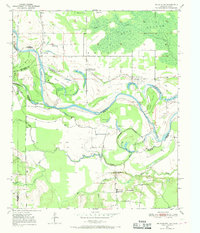 1950 De Kalb NW1969 Print · USGSThe Red River valley at the Texas-Oklahoma border comes alive here during the mid-century, showing a landscape shaped by shifting waters and rural settlement. Researchers can trace family roots through sites like Harris Cem, Antioch Ch, and the many local schoolhouses like Field Ridge Sch.2 unique versions available
 - 1950 Map of Shults, 1975 Print
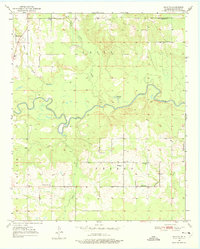 1950 Shults1975 Print · USGSMcCurtain County is documented in the mid-twentieth century as a landscape of river bends and rural settlements. Researchers can trace family history at the Redland Cem or locate community centers like Douglas Chapel and Shults.2 unique versions available
 - 1950 Map of Haworth, 1976 Print
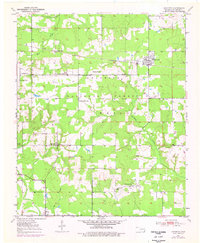 1950 Haworth1976 Print · USGSMid-century McCurtain County is defined here by its rail-side timber towns and rural school districts within the Ouachita National Forest. Researchers can locate several country schools and cemeteries, including Pollard Sch and the Kullituklo Cem.
 - 1950 Map of Tom, 1976 Print
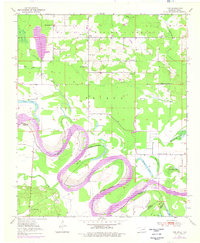 1950 Tom1976 Print · USGSMcCurtain County sits along the winding Red River at the Texas border in the mid-twentieth century. Family historians can trace local roots through numerous country schools like Pecan Grove Sch and Oak Ridge Sch, or explore the river's path around Severn Island.
 - 1950 Map of De Kalb, 1976 Print
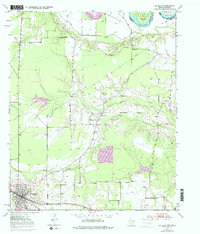 1950 De Kalb1976 Print · USGSBowie County at mid-century shows a landscape of rural schools and family cemeteries clustered around the De Kalb rail corridor. Genealogists can trace local landmarks like Woodman Cem, Bethlehem Sch, and the banks of the Red River.2 unique versions available
 - 1950 Map of Goodwater, 1976 Print
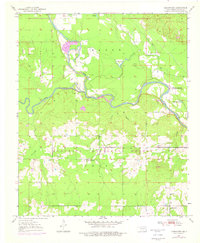 1950 Goodwater1976 Print · USGSMcCurtain County at mid-century shows a landscape of dense timber and winding river bottoms where the Little River meets the Mountain Fork. Genealogists and local historians can locate the old Highland Lake Sch, Ponka Bok Ch, and the rail-stop settlement at Goodwater.
 - 1950 Map of Bokhoma, 1976 Print
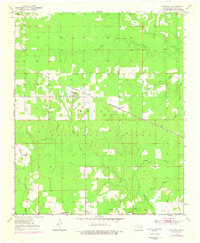 1950 Bokhoma1976 Print · USGSSoutheastern Oklahoma’s timber country and small rural settlements are documented here during the mid-century. Genealogists and local historians can locate the Bokhoma Cem, Choctaw Ch, and the Oak Ridge Sch along the St Louis San Francisco rail line.
 - 1951 Map of Idabel
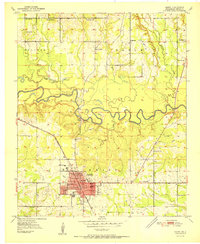 1951 Idabel1951 Print · USGSMcCurtain County enters the 1950s with its seat of Idabel as a bustling rail and civic hub. Genealogists and local historians can trace the foundations of the community through its many local schools and churches like Gray High Sch and Livingland Ch.2 unique versions available
 - 1951 Map of Garvin
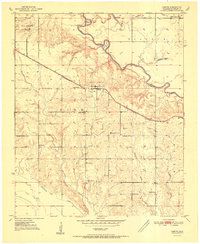 1951 Garvin1951 Print · USGSMcCurtain County's rural landscape at mid-century is captured here, centered on the settlement of Garvin and the winding Little River. Genealogists and historians can trace numerous country schools and churches, such as Wheelock Academy, Honey Grove Sch, and Waterhole Ch.2 unique versions available
 - 1951 Map of Idabel SE
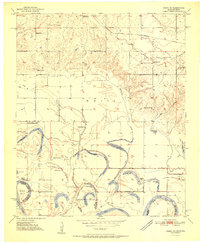 1951 Idabel SE1951 Print · USGSThe Oklahoma-Texas border along the Red River is captured here in the early fifties, showing a landscape of shifting oxbows and rural social hubs. Researchers can trace local history through the St Louis San Francisco rail line and sites like Kullituklo Ch and Richland Sch.2 unique versions available
 - 1951 Map of De Kalb
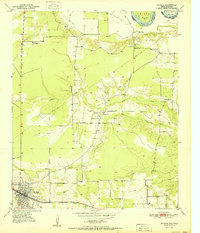 1951 De Kalb1951 Print · USGSBowie County, Texas, was a landscape of small schools and rural churches in the years following the war. Researchers can trace the Texas and Pacific rail line through De Kalb or locate family markers at Woodman Cem and Harrell Cem.
 - 1951 Map of English
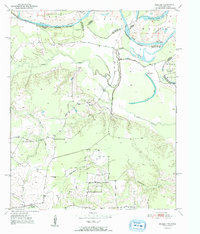 1951 English1951 Print · USGSRed River County during the early 1950s shows a landscape shaped by the shifting channel of the Red River. Genealogists and local historians can trace family roots through the sites of Martin-Shiloh Ch, the Hale Sch, and the settlement of English.2 unique versions available
Showing maps 1-25 of 341
Top cities of McCurtain County
- Idabel historical maps
- Broken Bow historical maps
- Wright City historical maps
- Valliant historical maps
- Millerton historical maps
- Haworth historical maps
See more
Frequently asked questions
- What are the different types of historical maps available for McCurtain County?
- What is the oldest map of McCurtain County?
- Where can I purchase historical maps of McCurtain County for my home or office?
- Where can I download high-res historical maps of McCurtain County?
- Are there historical topographic maps available for McCurtain County?
- Is there historical aerial imagery available for McCurtain County?
- Where are historical maps of McCurtain County sourced from?