1940s Maps of Linn County, Oregon
Explore 11 historic maps of Linn County from the 1940s. These maps offer a rare glimpse into what life looked like during the 1940s — showing old roads, neighborhoods, homes, and landmarks that have changed or disappeared over time.
Whether you're researching your family's past, planning a metal detecting trip, or studying how Linn County's landscape evolved across the 1940s, these high-resolution maps are a powerful tool for exploring the history of this region.
- Focus on a specific era: All maps on this page are from the 1940s, giving you a focused view of this time period.
- See what’s changed: Compare century-old streets, trails, and buildings to today's modern landscape using overlays and satellite layers.
- Research with precision: Use these maps for genealogy, historical research, land use analysis, or educational projects.
- View, download, or print: Maps are fully viewable online in high resolution, and can be downloaded or printed for your own records.
Start exploring Linn County's history through authentic maps from the 1940s. This is your window into the past.
Linn County, OR maps
(11)- 1940 Map of Lebanon
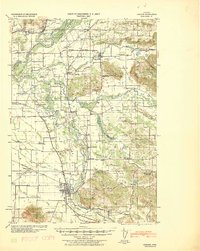 1940 Lebanon1940 Print · USGSLinn County agriculture and timber transit thrived on the eve of the 1940s, centered on the growing hub of Lebanon. Genealogists and historians can trace dozens of rural school districts and old burial grounds, including Jefferson Cemetery, Rollins Mill, and the Southern Pacific rail stops.
 - 1940 Map of Salem
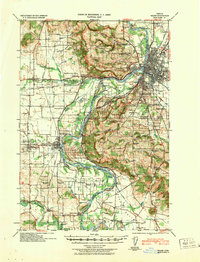 1940 Salem1940 Print · USGSThe Willamette Valley thrives in the early days of the war, as Salem expands around its rail hubs and state institutions. Researchers can trace the legacy of the Southern Pacific line and find vanished local landmarks like the Poor Farm School for the Deaf or Oak Grove Church.
 - 1940 Map of Mc Kenzie Bridge
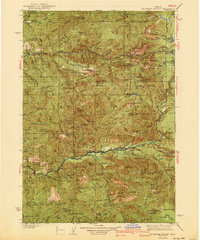 1940 Mc Kenzie Bridge1940 Print · USGSThe Oregon Cascades during the late 1930s reveal a landscape of mining claims and early forest service outposts. Trace the locations of historic mineral sites like the Lucky Boy Mine, family homesteads at Cooks Ranch, and mountain retreats at Belknap Springs.3 unique versions available
 - 1940 Map of Eugene
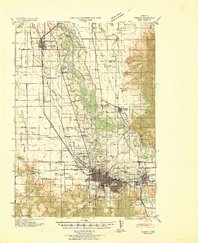 1940 Eugene1940 Print · USGSThe Willamette Valley at the end of the Great Depression shows a landscape of growing towns and busy rail corridors. Genealogists can locate family-named landmarks like Gillespie Butte School and the I O O F Cemetery.2 unique versions available
 - 1941 Map of Stayton
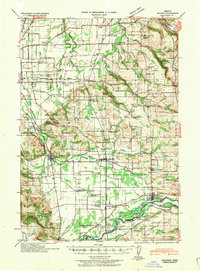 1941 Stayton1941 Print · USGSMarion County agriculture and industry are in full swing just before the war as rail lines connect the Waldo Hills to the river. Trace the locations of dozens of vanished rural schoolhouses like Rocky Point School and rail stops at Durbin or Gesner.
 - 1941 Map of Halsey
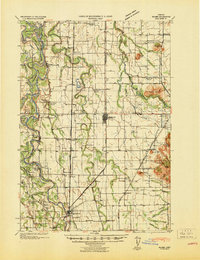 1941 Halsey1941 Print · USGSLinn County agriculture and river commerce are on full display during the early 1940s as rail and ferry networks connected the Willamette valley. Genealogists can locate family landmarks like Bell Plain School, the Irish Bend Ferry, and the Pine Grove Church.
 - 1942 Map of Corvallis
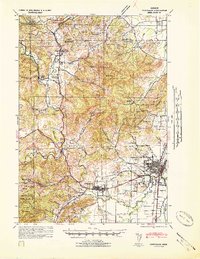 1942 Corvallis1942 Print · USGSCorvallis and the Willamette Valley are captured in detail during the early war years, showing a landscape of college grounds and timbered hills. Researchers can locate family landmarks like Hoskins (Fort School), trace the Southern Pacific rail line, or find rural cemeteries such as IOOF Cem.3 unique versions available
 - 1944 Map of Albany
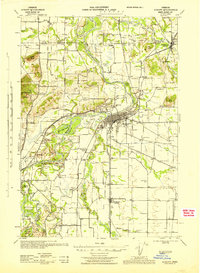 1944 Albany1944 Print · USGSThe Willamette Valley during the Second World War era shows a landscape of river-fed agriculture and growing rail hubs. Genealogists can locate family landmarks like Oakville Ch, Dover Cem, and dozens of district schools such as Fir Grove Sch.
 - 1944 Map of Lebanon
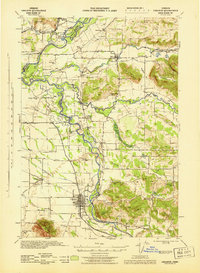 1944 Lebanon1944 Print · USGSMid-valley Oregon life comes into focus in the 1940s, as rail lines and river forks connect the growing mills and rural schoolhouses of Linn County. Researchers can trace the early layouts of Lebanon and Scio, or locate ancestral sites at Jefferson Cem and Gore Sch.
 - 1946 Map of Eugene, 1957 Print
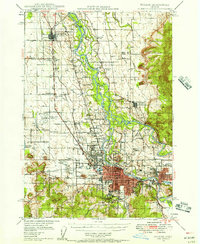 1946 Eugene1957 Print · USGSThe Willamette Valley was a bustling corridor of rail and river commerce just after the war. Researchers can trace the development of Eugene and Springfield, locate family landmarks like the I O O F Cemetery, and follow the path of the Oregon Electric Railroad.2 unique versions available
 - 1949 Map of Eugene
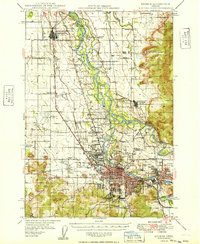 1949 Eugene1949 Print · USGSThe southern Willamette Valley thrived at mid-century as a rail and aviation hub connecting Junction City and Springfield. Researchers can trace old property lines through local landmarks like Lone Pine Sch and the I O O F Cemetery.
End of results
Showing maps 1-11 of 11
Top cities of Linn County
- Lebanon historical maps
- Sweet Home historical maps
- Harrisburg historical maps
- Brownsville historical maps
- Lyons historical maps
- Tangent historical maps
See more
Frequently asked questions
- What are the different types of historical maps available for Linn County?
- What is the oldest map of Linn County?
- Where can I purchase historical maps of Linn County for my home or office?
- Where can I download high-res historical maps of Linn County?
- Are there historical topographic maps available for Linn County?
- Is there historical aerial imagery available for Linn County?
- Where are historical maps of Linn County sourced from?