Old Maps of West Greenwich, Rhode Island for Academic Research
Study the evolution of West Greenwich with 62 high-resolution historic maps. Whether you're teaching, researching, or modeling changes in land use, these maps provide essential visual documentation of urban, environmental, and geographic change.
- Analyze long-term change: Track patterns in development, transportation, and natural features.
- Ideal for environmental or urban studies: Support academic projects with primary historical map data.
- Use in the classroom or lab: Educators and researchers rely on these maps to bring historical context to life.
These maps are a powerful tool for teaching, research, and visualizing how West Greenwich has changed over the decades.
West Greenwich, RI maps
(62)- 1889 Map of Moosup
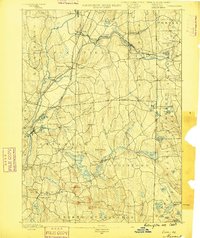 1889 Moosup1889 Print · USGSThe Connecticut-Rhode Island borderlands were a hive of rail activity and river power in the late nineteenth century. You can trace early transit routes through Plainfield Junction or locate rural landmarks like Moosup Valley P.O. and Sterling Station.
 - 1890 Map of Kent
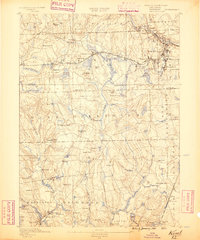 1890 Kent1890 Print · USGSRhode Island's industrial heartland is in full swing during the late nineteenth century, dominated by mill towns and busy rail lines. Trace the development of Phenix, Coventry Center, and Arctic along the Pawtuxet River and the expanding New York and New England Railroad.
 - 1893 Map of Moosup
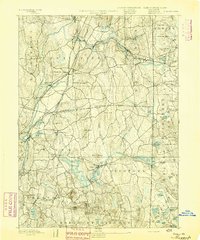 1893 Moosup1893 Print · USGSEastern Connecticut and western Rhode Island meet here in the late nineteenth century at a peak of rail-driven industry. Genealogists can trace family footprints through historic hubs like Jewett City, Hopkins Hollow, and the mills surrounding Pachaug Pond.7 unique versions available
 - 1894 Map of Kent
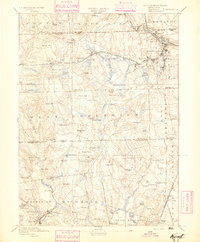 1894 Kent1894 Print · USGSCentral Rhode Island’s mill towns and rural uplands are shown here at the height of the Victorian era. Researchers can trace the path of the Valley Railroad through industrial hubs like Phenix or locate small settlements like Noose Neck and Usquepaug.7 unique versions available
 - 1920 Map of Moosup
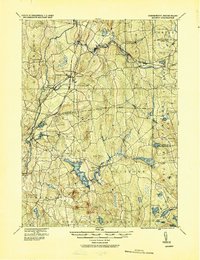 1920 Moosup1920 Print · USGSEastern Connecticut and the Rhode Island border were thriving hubs of textile milling and rail transit just after the Great War. Genealogists and local historians can trace family-named locations such as Hopkins Hollow, industrial sites like Sterling Station, and the intricate rail network at Plainfield Junction.
 - 1943 Map of Voluntown
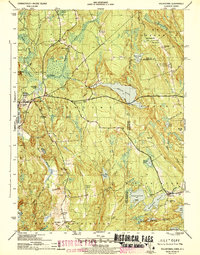 1943 Voluntown1943 Print · USGSThe Connecticut and Rhode Island borderlands are shown here during the early 1940s, capturing the rural character of New London and Washington Counties. Researchers can trace ancestral locations at Rockville and Voluntown, or locate historic sites like Wylie Sch and the Rockville Cem.4 unique versions available
 - 1943 Map of Crompton
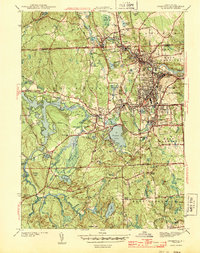 1943 Crompton1943 Print · USGSCentral Rhode Island during the early 1940s reveals a dense landscape of river-powered industrial villages and expanding reservoirs. Trace the rail-and-river network through Phenix, locate local family sites near Mishnock Swamp, or find old schools like Read Sch.4 unique versions available
 - 1943 Map of Slocum
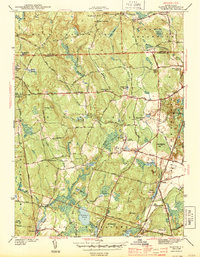 1943 Slocum1943 Print · USGSRhode Island's rural interior comes into focus during the early 1940s, showing a landscape of upland farms, mill ponds, and dispersed hamlets. Researchers can locate vanished schoolhouses and local landmarks like Hitty Corner Sch, Yorker Mill Pond, and the State Hospital.2 unique versions available
 - 1943 Map of Hope Valley
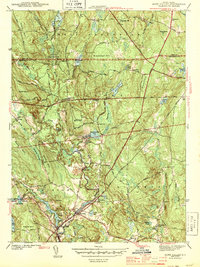 1943 Hope Valley1943 Print · USGSSouthern Rhode Island’s rural mill villages and inland waterways are preserved here in the early nineteen-forties. Genealogists and historians can trace the foundations of local life through the Barber Cem, the Old Bates Sch, and the industrial cluster at Hope Valley.2 unique versions available
 - 1943 Map of Coventry
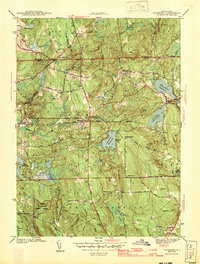 1943 Coventry1943 Print · USGSKent County at the height of the war years reveals a landscape of upland forests and tightly-knit crossroads settlements. Genealogists and historians can trace family-named sites like Bowen Hill, rural schools such as Louttit Sch, and early infrastructure including the Airway Beacon.3 unique versions available
 - 1943 Map of Putnam, 1944 Print
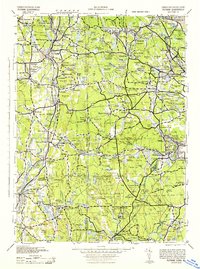 1943 Putnam1944 Print · USGSThe Connecticut and Rhode Island borderlands are captured here during the wartime era, showing a landscape defined by textile river towns and sprawling state forests. Trace the industrial rail corridor of the New York New Haven and Hartford through Putnam, Danielson, and Moosup.
 - 1944 Map of Oneco
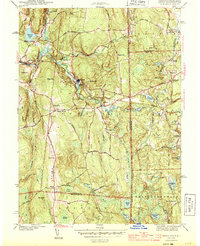 1944 Oneco1944 Print · USGSThe Connecticut and Rhode Island borderlands are captured here during the mid-1940s, showing the rural communities of Windham and Kent counties. Genealogists and local historians can trace family roots at Gallup Cem or locate old schoolhouses and parishes like Sterling Hill Sch and Ekonk Ch.2 unique versions available
 - 1947 Map of Providence, 1948 Print
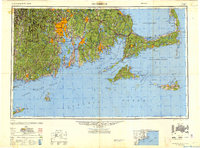 1947 Providence1948 Print · USGSSouthern New England is captured in the mid-1940s, showing a landscape defined by busy industrial ports and expanding military installations. Researchers can trace the rail lines of the N.Y. N.H. & H. RR or locate coastal defenses like Fort Adams and Quonset Point.5 unique versions available
 - 1948 Map of Providence, 1951 Print
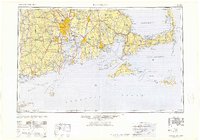 1948 Providence1951 Print · USGSSouthern New England’s coastal reaches are captured here in the late 1940s, from the industrial heart of Providence to the tip of Provincetown. Genealogists and historians can trace rail lines like the Central Vermont Railway and locate active military sites such as Otis Air Force Base and Fort Rodman.
 - 1950 Map of Slocum
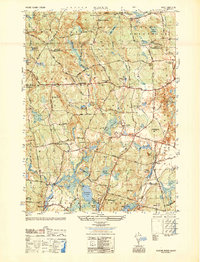 1950 Slocum1950 Print · USGSSouthern Rhode Island's rural and institutional heartland comes to life in this mid-century survey of the Slocum and Exeter areas. Researchers can trace historic local sites like Liberty Ch, Hitty Corner Sch, and the grounds of the State Hospital.
 - 1950 Map of Coventry
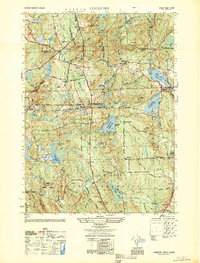 1950 Coventry1950 Print · USGSWestern Rhode Island at mid-century reveals a landscape of isolated farmsteads and vital rail connections centered on the town of Coventry. Genealogists and local historians can trace family-named landmarks like Bowen Hill or locate rural landmarks such as Mt Vernon Ch and Summit Sch.
 - 1953 Map of Oneco, 1954 Print
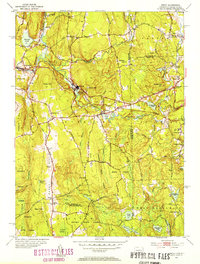 1953 Oneco1954 Print · USGSThe borderlands of Connecticut and Rhode Island are shown in the early fifties as the railroad still connected industrial hamlets. Genealogists can locate Ekonk Ch, Moosup Valley Cem, and the small airfield at Ricinn Airport.6 unique versions available
 - 1953 Map of Voluntown, 1954 Print
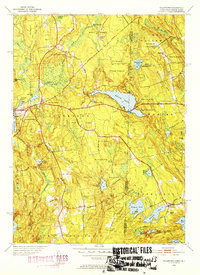 1953 Voluntown1954 Print · USGSThe Connecticut and Rhode Island borderlands come alive in the 1950s, showing a landscape defined by timber, state forests, and glacial ponds. Researchers can trace family names and landmarks from Voluntown to Rockville, or find sites like Sawmill Pond and Stepstone Falls.5 unique versions available
 - 1953 Map of Hope Valley, 1955 Print
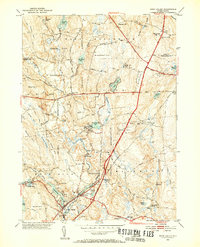 1953 Hope Valley1955 Print · USGSThe rural valleys of western Rhode Island are captured here in the early 1950s, centered on the thriving mill villages of Hope Valley and Wyoming. Genealogists can trace family landmarks and rural institutions from the West Exeter Ch to the Barber Cem and the West Greenwich Sch.8 unique versions available
 - 1955 Map of Crompton, 1957 Print
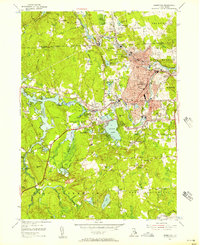 1955 Crompton1957 Print · USGSMid-century Rhode Island mill towns and evolving rural landscapes define this survey of the Kent County corridor. Researchers can trace the industrial footprint of West Warwick villages or locate family sites near Mishnock Swamp and Greenwood Cem.3 unique versions available
 - 1955 Map of Slocum, 1957 Print
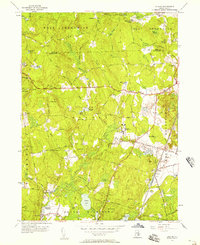 1955 Slocum1957 Print · USGSCentral Rhode Island in the mid-fifties is defined by its rural crossroads and woodland preserves. Genealogists and historians can trace the footprint of Slocum, find the Exeter State Sch, and follow the New York New Haven and Hartford Railroad as it passes Yawgoo Pond.5 unique versions available
 - 1955 Map of Coventry Center, 1957 Print
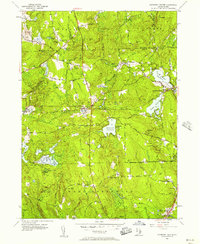 1955 Coventry Center1957 Print · USGSWestern Rhode Island's rural landscape is captured here in the mid-1950s, showing a region defined by river reservoirs and small rail-stop villages. Researchers can trace family-named hills and old landmarks like Mt Vernon Ch, Kitts Corner, and the Jackson Quarry.5 unique versions available
 - 1957 Map of Providence
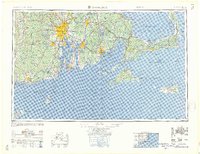 1957 Providence1957 Print · USGSCoastal New England at the height of the mid-century era shows a landscape shaped by maritime industry and Cold War defense. Genealogists and historians can trace the reach of the New York, New Haven & Hartford RR and locate legacy sites like Fort Adams and Quonset Point Naval Air Station.
 - 1958 Map of Providence
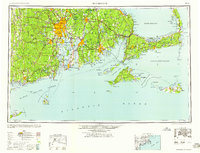 1958 Providence1958 Print · USGSThe Rhode Island and Massachusetts coastlines are shown in detail during the late 1950s, from the urban cores to the tips of the islands. Researchers can trace the mid-century footprint of Quonset Point Naval Air Station, the defense works at Fort Adams, and the rail network of the New York, New Haven and Hartford RR.
 - 1963 Map of Providence
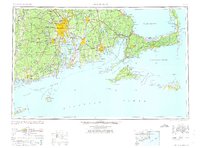 1963 Providence1963 Print · USGSSouthern New England's coastal and industrial heartland is captured here in the early sixties, from the Rhode Island mainland to the far reaches of the Cape. Researchers can trace mid-century growth in Providence or locate landmarks on Marthas Vineyard and Nantucket Island.
Showing maps 1-25 of 62
Top cities near West Greenwich
- Providence historical maps
- Warwick historical maps
- Cranston historical maps
- Coventry historical maps
- North Providence historical maps
- West Warwick historical maps
See more
Top neighborhoods of West Greenwich
- Hell's Half Acre historical maps
- Kitts Corner historical maps
- Tarbox Corner historical maps
- Escoheag historical maps
- Nooseneck historical maps
Frequently asked questions
- What are the different types of historical maps available for West Greenwich?
- What is the oldest map of West Greenwich?
- Where can I purchase historical maps of West Greenwich for my home or office?
- Where can I download high-res historical maps of West Greenwich?
- Are there historical topographic maps available for West Greenwich?
- Is there historical aerial imagery available for West Greenwich?
- Where are historical maps of West Greenwich sourced from?