Old Maps of Todd County, South Dakota for Academic Research
Study the evolution of Todd County with 240 high-resolution historic maps. Whether you're teaching, researching, or modeling changes in land use, these maps provide essential visual documentation of urban, environmental, and geographic change.
- Analyze long-term change: Track patterns in development, transportation, and natural features.
- Ideal for environmental or urban studies: Support academic projects with primary historical map data.
- Use in the classroom or lab: Educators and researchers rely on these maps to bring historical context to life.
These maps are a powerful tool for teaching, research, and visualizing how Todd County has changed over the decades.
Todd County, SD maps
(240)- 1950 Map of Norden
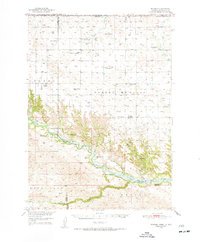 1950 Norden1950 Print · USGSThe Niobrara River valley in the early fifties shows a rugged landscape of family-run cattle operations and scattered rural school districts. Genealogists can locate family holdings like Worth Ranch or McMara Ranch and burial sites at Sparks Cem.2 unique versions available
 - 1950 Map of Sparks, 1952 Print
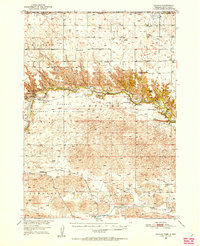 1950 Sparks1952 Print · USGSThe Niobrara River canyon cuts through Cherry County during the mid-twentieth century, revealing a landscape of remote ranches and conservation lands. Researchers can trace the Chicago and North Western rail line and locate rural landmarks like Smith Falls, Bryant Ranch, and several numbered schoolhouses.3 unique versions available
 - 1950 Map of Kilgore, 1952 Print
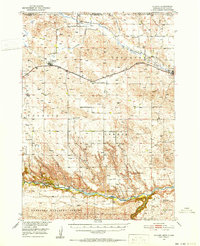 1950 Kilgore1952 Print · USGSSettled along the tracks of the Chicago and North Western, this northern Nebraska landscape is shown at the mid-century point. Genealogists can trace rural family life through scattered schools like School No 10 and prominent sites like Dittmer Ranch.2 unique versions available
 - 1950 Map of Valentine, 1952 Print
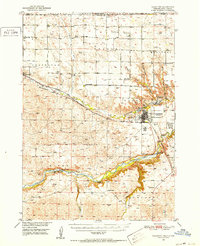 1950 Valentine1952 Print · USGSThe ranching and rail country of Cherry County comes alive in this 1950s record of Valentine and its surrounding prairie. Researchers can locate early one-room schoolhouses like Ward School, family landmarks like Heth Ranch, and the path of the Chicago and North Western railroad.2 unique versions available
 - 1950 Map of Cody, 1952 Print
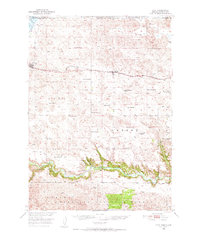 1950 Cody1952 Print · USGSCherry County ranching and rail life are at the forefront here in the early fifties as the railroad connects isolated outposts. Researchers can trace historic family lands like the Goodwin Ranch or locate vanished rural schoolhouses such as Crackerbox Sch and School No 60.2 unique versions available
 - 1952 Map of Norden
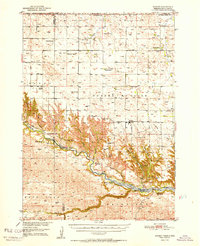 1952 Norden1952 Print · USGSKeya Paha and Brown counties meet along the winding Niobrara River in the early fifties, capturing a period of transition for Nebraska's ranching country. Genealogists can trace family footprints at Norden, Sparks Cem, and numerous schoolhouses from Rockford Sch to School No 74.
 - 1955 Map of Martin, 1968 Print
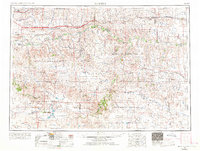 1955 Martin1968 Print · USGSTribal lands and rail corridors define the South Dakota plains in the mid-fifties, from the sand hills to the badlands. Genealogists and historians can trace the early layout of Pine Ridge Indian Reservation settlements and find small rail towns like Stamford and Witten.2 unique versions available
 - 1957 Map of Valentine, 1960 Print
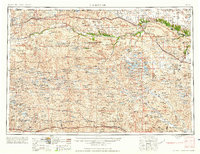 1957 Valentine1960 Print · USGSNorthern Nebraska's ranching country and the vast Sand Hills are detailed here in the late fifties. Genealogists and historians can locate numerous family-named landmarks like the Dahlgren Ranch and trace the path of the Chicago and North Western railroad through Valentine.3 unique versions available
 - 1958 Map of Martin
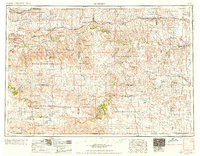 1958 Martin1958 Print · USGSSouth Dakota's southern plains are documented here in the late fifties, showing the expansive Pine Ridge and Rosebud Indian Reservations. Genealogists and historians can locate early settlements along the Chicago Milwaukee St Paul and Pacific line or find family roots near Martin and the Indian Cemetery.
 - 1959 Map of Valentine
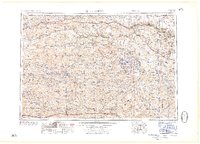 1959 Valentine1959 Print · USGSThe northern Nebraska Sand Hills are captured here in the late fifties, showcasing a vast ranching landscape shaped by the Niobrara and Loup rivers. Genealogists and historians can trace rail-town development along the Chicago and North Western and locate remote outposts like Brownlee or Kennedy.
 - 1969 Map of Norris, 1971 Print
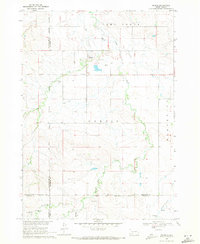 1969 Norris1971 Print · USGSMellette County and the Rosebud Indian Reservation come into focus during the late sixties as the community of Norris anchors this prairie landscape. Genealogists and local historians can trace family ties at Poor Thunder Cem, St Stephens Ch, and Red Leaf Cem along the Black Pipe Creek valley.
 - 1969 Map of Soldier Creek NE, 1971 Print
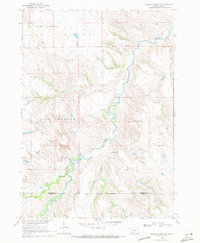 1969 Soldier Creek NE1971 Print · USGSThe South Dakota prairie meets the winding Little White River in the late sixties along the Rosebud Indian Reservation. Genealogists and researchers can trace local family landmarks like Ring Thunder Sacred Heart Cem and St John Cem across the northern plains.
 - 1969 Map of Eagle Mans Butte, 1971 Print
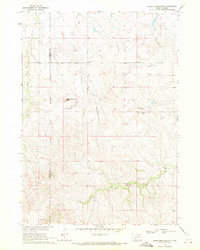 1969 Eagle Mans Butte1971 Print · USGSTodd County during the late sixties reveals a landscape of high plains and scattered reservation communities. Genealogists and historians can locate the He Dog Village (Historic Site) and several parish landmarks like St Patrick Ch and St Stephen Cem.
 - 1969 Map of Parmelee NE, 1971 Print
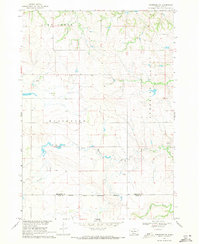 1969 Parmelee NE1971 Print · USGSThe northern reaches of the Rosebud Reservation are captured here in the late sixties, showing a landscape defined by prairie drainage and ranching life. Genealogists and historians can trace local landmarks such as St Johns Ch, the Cem, and the small settlement of Gray.
 - 1969 Map of Soldier Creek, 1971 Print
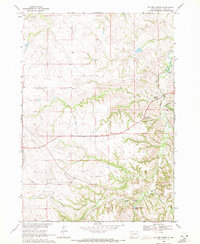 1969 Soldier Creek1971 Print · USGSThe Rosebud Indian Reservation in the late 1960s reveals a landscape of isolated homesteads and deep river canyons. Researchers can trace tribal heritage and family locations through sites like Salt Camp Cem, St Marys Ch, and the settlement at Soldier Creek.
 - 1969 Map of Mission NW, 1971 Print
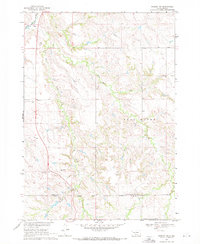 1969 Mission NW1971 Print · USGSThe rural prairie landscape of Mellette County was surveyed in the late 1960s as it appeared before many modern shifts. Genealogists and researchers can trace community landmarks like St James Chapel, Body of Christ Cem, and the Neville Sch near the Horse Creek drainage.
 - 1969 Map of Mission, 1971 Print
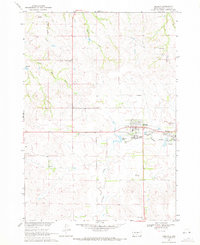 1969 Mission1971 Print · USGSTodd County and the Rosebud Indian Reservation are shown during a period of steady prairie development in the late sixties. Researchers can trace family sites at the Indian Mission Cem or Trinity Cem, and locate landmarks like Mission Sioux Airport and Table Butte.
 - 1969 Map of Parmelee, 1971 Print
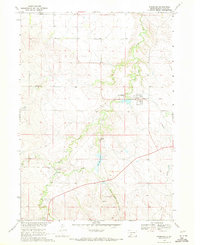 1969 Parmelee1971 Print · USGSThe Rosebud Indian Reservation is documented here in the late sixties, centering on the community of Parmelee. Genealogists and historians can trace ancestral locations like High Hawks Village (Historic Site) and the He Dog Day Sch.
 - 1969 Map of Soldier Creek NW, 1971 Print
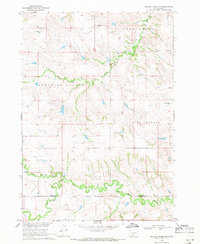 1969 Soldier Creek NW1971 Print · USGSThe Rosebud Indian Reservation landscape in the late sixties reveals a network of rural schools and family-centered landmarks across Mellette and Todd Counties. Researchers can locate the Holy Family Cem, Ring Thunder Sch, and the settlement at Graves.
 - 1969 Map of Iron Shell Flat East, 1971 Print
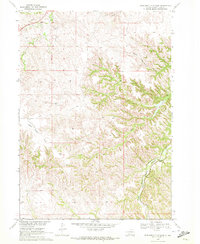 1969 Iron Shell Flat East1971 Print · USGSTodd County's reservation lands are captured here during the late 1960s, showing the high plateau of Iron Shell Flat. Genealogists and researchers can locate the Sacred Heart Ch, Peyote Cem, and the crossing at Valandra Bridge.
 - 1969 Map of Soldier Creek SE, 1972 Print
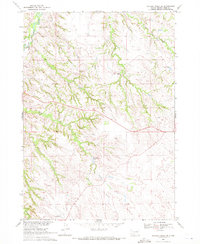 1969 Soldier Creek SE1972 Print · USGSThe Rosebud Indian Reservation in the late sixties shows a landscape where spiritual and cultural sites are vital landmarks. Genealogists and historians can trace local heritage through the Native American Cem, Ring Thunder Ch, and the area around Swift Bear Lake.
 - 1969 Map of Olsonville NW, 1972 Print
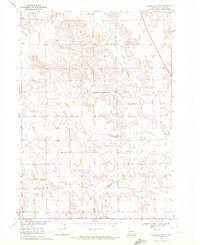 1969 Olsonville NW1972 Print · USGSTodd County, South Dakota is mapped in the late sixties, showing the vital relationship between the land and its water sources within the Rosebud Indian Reservation. Genealogists and historians can trace field boundaries and vital water points like Antelope Creek, Well, and Spring.
 - 1969 Map of Rosebud, 1972 Print
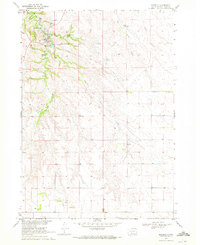 1969 Rosebud1972 Print · USGSThe community of Rosebud is shown in detail during the late 1960s as the heart of the Rosebud Indian Reservation. Researchers can locate significant landmarks including the Spotted Tail Cem, the Paulhamous Landing Area, and Indian Scout Lake.
 - 1969 Map of Spring Creek SW, 1972 Print
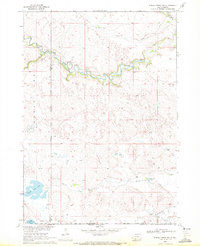 1969 Spring Creek SW1972 Print · USGSThe South Dakota and Nebraska borderlands come into focus in the late 1960s, showing a landscape defined by tribal boundaries and prairie waterways. Trace local history through family outposts like Barnes Ranch and landmarks like Cedar Lake and North Cody Lake.
 - 1969 Map of Iron Shell Flat West, 1972 Print
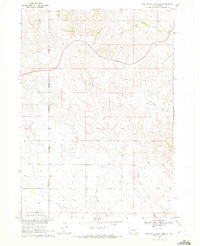 1969 Iron Shell Flat West1972 Print · USGSTodd and Bennett Counties, South Dakota, are captured here in the late sixties at the meeting point of two major tribal lands. Researchers can trace the reservation boundaries while locating St Marys Cem and water features like Meat Creek and Coffee Creek.
Showing maps 1-25 of 240
Top cities of Todd County
Frequently asked questions
- What are the different types of historical maps available for Todd County?
- What is the oldest map of Todd County?
- Where can I purchase historical maps of Todd County for my home or office?
- Where can I download high-res historical maps of Todd County?
- Are there historical topographic maps available for Todd County?
- Is there historical aerial imagery available for Todd County?
- Where are historical maps of Todd County sourced from?