1960s Maps of Shelby County, Tennessee
Explore 23 historic maps of Shelby County from the 1960s. These maps offer a rare glimpse into what life looked like during the 1960s — showing old roads, neighborhoods, homes, and landmarks that have changed or disappeared over time.
Whether you're researching your family's past, planning a metal detecting trip, or studying how Shelby County's landscape evolved across the 1960s, these high-resolution maps are a powerful tool for exploring the history of this region.
- Focus on a specific era: All maps on this page are from the 1960s, giving you a focused view of this time period.
- See what’s changed: Compare century-old streets, trails, and buildings to today's modern landscape using overlays and satellite layers.
- Research with precision: Use these maps for genealogy, historical research, land use analysis, or educational projects.
- View, download, or print: Maps are fully viewable online in high resolution, and can be downloaded or printed for your own records.
Start exploring Shelby County's history through authentic maps from the 1960s. This is your window into the past.
Shelby County, TN maps
(23)- 1960 Map of Helena
 1960 Helena1960 Print · USGSThe Arkansas and Mississippi Delta regions meet along the great river bends during a period of significant agricultural and rail expansion. Genealogists and historians can trace the paths of the Missouri Pacific railroad through Clarendon or locate landings along the Mississippi River and White River.
 - 1960 Map of Bartlett, 1963 Print
 1960 Bartlett1963 Print · USGSShelby County enters a period of intense suburban growth during the early sixties as development pushes east toward Bartlett and Germantown. Genealogists and local historians can locate dozens of country landmarks, from the National Cem and National Cem to the Capleville Ch & Sch.
 - 1960 Map of Memphis, 1963 Print
 1960 Memphis1963 Print · USGSGreater Memphis and its Arkansas neighbors are shown at a peak of industrial and suburban growth. Trace family history through old landmarks like Locella Ch, the Marion Flying Service, and established cemeteries such as Forest Hill Cem.2 unique versions available
 - 1960 Map of Millington, 1963 Print
 1960 Millington1963 Print · USGSMillington and its surrounding farm country are shown here in the early sixties, highlighting a landscape defined by mid-century aviation and deep-rooted rural communities. Researchers can trace the sprawling U S Naval Air Technical Training Center or locate ancestral sites like Helen Crigger Cem and Temple Ch.
 - 1960 Map of Horseshoe Lake, 1963 Print
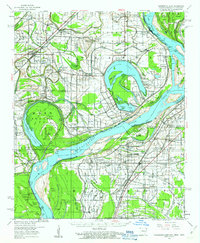 1960 Horseshoe Lake1963 Print · USGSCrittenden and Tunica counties are shown in the early sixties as a patchwork of Delta plantations and river landings. Genealogists can trace family footprints at Joe Beck Plantation, Happy Ch & Cem, and local schoolhouses like Snowden Sch.2 unique versions available
 - 1961 Map of Bartlett
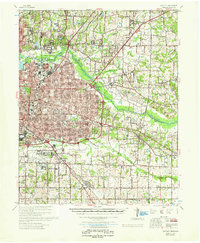 1961 Bartlett1961 Print · USGSShelby County transitions from rural farmland to suburban expansion as Memphis grows eastward in the early sixties. Researchers can trace family sites at Spring Hill Ch & Sch, the historic National Cem, and the old rail stop at Mullins Station Ch.
 - 1961 Map of Jericho, 1963 Print
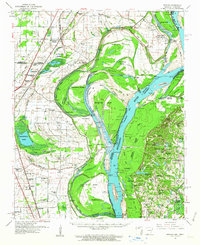 1961 Jericho1963 Print · USGSThe Mississippi River delta at the start of the 1960s reveals a world of island farming and rail-side settlements along the Arkansas-Tennessee border. Genealogists can trace family roots through numerous local landmarks, including Jericho, Clarkedale, and the St Paul School and Church.
 - 1961 Map of Horn Lake, 1978 Print
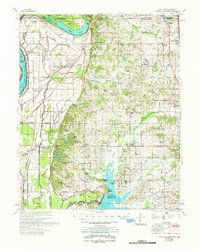 1961 Horn Lake1978 Print · USGSDeSoto County and the Mississippi River bottoms are captured here in the early sixties as rural life centered on the river and rail lines. Genealogists can locate family landmarks like Howard Plantation, Lakeside Cem, and numerous country churches like New Hope Ch.
 - 1962 Map of Jericho
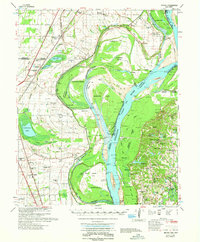 1962 Jericho1962 Print · USGSThe riverfront border of Arkansas and Tennessee is captured here in the early sixties, showing a landscape shaped by the Mississippi River. Genealogists and local historians can trace family roots through sites like Jericho, James Mill, and Lambethville, or locate rural landmarks such as Pecan Point Cem and the Shawnee Sch.
 - 1965 Map of Collierville, 1966 Print
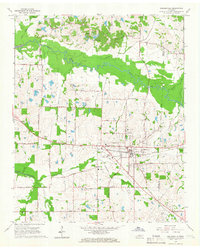 1965 Collierville1966 Print · USGSCollierville and the surrounding Shelby County countryside are captured here in the mid-1960s as the town grew along the SOUTHERN railroad. Genealogists can locate family landmarks like Abington Cem, St Pauls Ch, and the rural community of Bailey.4 unique versions available
 - 1965 Map of Brighton, 1966 Print
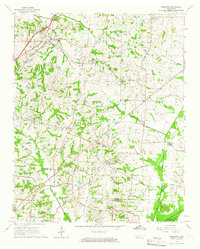 1965 Brighton1966 Print · USGSWest Tennessee rural life is captured here in the mid-sixties as the Illinois Central railroad connects small communities across the Tipton and Shelby county line. Genealogists and local historians can locate many family landmarks, from the Dunlap Orphanage to the Morrison Cem and Shiloh Ch.3 unique versions available
 - 1965 Map of Arlington, 1966 Print
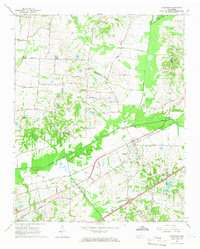 1965 Arlington1966 Print · USGSIn the mid-sixties, this section of West Tennessee centers on Arlington and its vital Louisville and Nashville Railroad corridor. Genealogists can locate family landmarks like Robinson Cem, Bethel Ch, and Barret Chapel High Sch.3 unique versions available
 - 1965 Map of Eads, 1966 Print
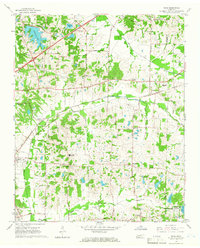 1965 Eads1966 Print · USGSShelby and Fayette counties appear here in the mid-sixties, showing a landscape of rural crossroads and growing recreation lakes. Local historians can trace old family sites like Lea Union Cem or the rural commerce at Fisherville and Lenow.3 unique versions available
 - 1965 Map of Southeast Memphis, 1967 Print
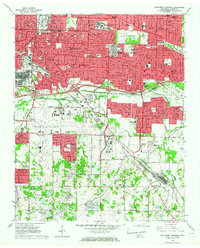 1965 Southeast Memphis1967 Print · USGSMemphis and its southeastern suburbs were undergoing a period of rapid mid-century expansion when this survey was conducted. Local historians can trace the growth of Parkway Village, the operations of the Tennessee Yards, and find family landmarks like Bethlehem Cem.4 unique versions available
 - 1965 Map of Southwest Memphis, 1967 Print
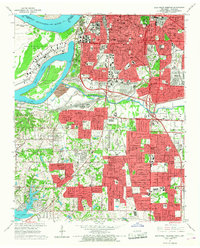 1965 Southwest Memphis1967 Print · USGSMid-century South Memphis and Whitehaven are shown here during a period of significant urban growth and industrial activity. Researchers can trace the footprints of Defense Depot Memphis, the historic grounds of Elmwood Cemetery, and local landmarks like LeMoyne College.5 unique versions available
 - 1965 Map of Northwest Memphis, 1967 Print
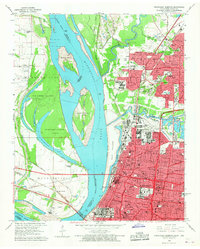 1965 Northwest Memphis1967 Print · USGSThe riverfront and industrial core of Memphis are documented here in the mid-sixties as urban neighborhoods and rail yards met the river. Genealogists and historians can trace local landmarks like Frayser, St Peters Orphanage, and Bridge Junction.3 unique versions available
 - 1965 Map of Germantown, 1967 Print
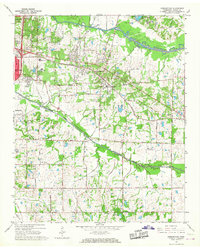 1965 Germantown1967 Print · USGSShelby County transitions from suburban Memphis to rural countryside in the mid-sixties, centered on the Southern Railway corridor. Genealogists and historians can trace family-named routes and local landmarks like Polk Chapel, White Station, and the Memphis Memorial Park.4 unique versions available
 - 1965 Map of Northeast Memphis, 1967 Print
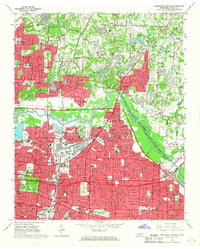 1965 Northeast Memphis1967 Print · USGSMemphis and its northern suburbs show rapid mid-century expansion along the Wolf River and major rail lines. Researchers can trace the development of local neighborhoods through landmarks like Memphis National Cemetery, Trezevant High Sch, and Davy Crockett Park.4 unique versions available
 - 1965 Map of Ellendale, 1967 Print
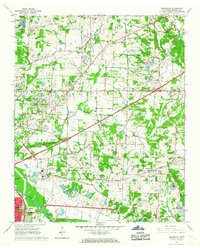 1965 Ellendale1967 Print · USGSShelby County in the mid-sixties shows a landscape of growing communities and institutional land use at the edge of the Memphis metropolitan area. Researchers can trace the grounds of the County Penal Farm, find early schools like Blackwell High School, and locate rural landmarks such as Ellendale and Cordova.5 unique versions available
 - 1966 Map of West Memphis, 1967 Print
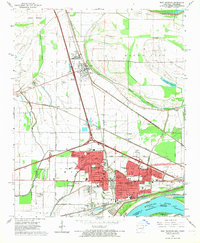 1966 West Memphis1967 Print · USGSMid-century West Memphis and the neighboring seat of Marion are shown during a period of rapid expansion near the Mississippi. Researchers can trace the mid-century rail networks and find local landmarks like the Southland Park Racetrack, Mound City, and the West Memphis Airport.3 unique versions available
 - 1966 Map of Fletcher Lake, 1967 Print
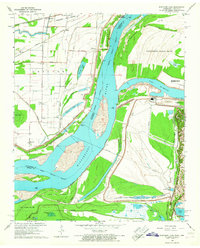 1966 Fletcher Lake1967 Print · USGSThe riverfront south of Memphis in the mid-sixties reveals a landscape of industrial power and rural resilience. Genealogists and historians can trace the early footprints of Waverly, Riceville, and Millers alongside the Chucalissa Archaeological Park.4 unique versions available
 - 1968 Map of Collierville
 1968 Collierville1968 Print · USGSThe Shelby and Fayette county line comes alive in the late sixties, showing the rail-centered growth of Collierville and Piperton. Genealogists can locate family landmarks like Brooks Chapel, Mebane Cem, and the Morris Lookout Tower near the river.
 - 1969 Map of Mason
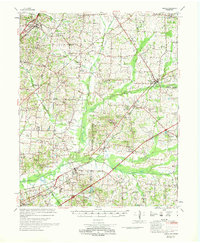 1969 Mason1969 Print · USGSWest Tennessee in the late sixties reveals a landscape of rural junctions and evolving infrastructure across Tipton, Shelby, and Fayette counties. Genealogists can trace family names at Dunlap Orphanage or local schools like Bloomington Sch and St Mathews Sch.
End of results
Showing maps 1-23 of 23
Top cities of Shelby County
- Memphis historical maps
- Bartlett historical maps
- Collierville historical maps
- Germantown historical maps
- Lakeland historical maps
- Millington historical maps
See more
Frequently asked questions
- What are the different types of historical maps available for Shelby County?
- What is the oldest map of Shelby County?
- Where can I purchase historical maps of Shelby County for my home or office?
- Where can I download high-res historical maps of Shelby County?
- Are there historical topographic maps available for Shelby County?
- Is there historical aerial imagery available for Shelby County?
- Where are historical maps of Shelby County sourced from?