1960s Maps of Bell County, Texas
Explore 18 historic maps of Bell County from the 1960s. These maps offer a rare glimpse into what life looked like during the 1960s — showing old roads, neighborhoods, homes, and landmarks that have changed or disappeared over time.
Whether you're researching your family's past, planning a metal detecting trip, or studying how Bell County's landscape evolved across the 1960s, these high-resolution maps are a powerful tool for exploring the history of this region.
- Focus on a specific era: All maps on this page are from the 1960s, giving you a focused view of this time period.
- See what’s changed: Compare century-old streets, trails, and buildings to today's modern landscape using overlays and satellite layers.
- Research with precision: Use these maps for genealogy, historical research, land use analysis, or educational projects.
- View, download, or print: Maps are fully viewable online in high resolution, and can be downloaded or printed for your own records.
Start exploring Bell County's history through authentic maps from the 1960s. This is your window into the past.
Bell County, TX maps
(18)- 1963 Map of Yarrelton, 1965 Print
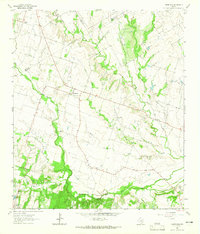 1963 Yarrelton1965 Print · USGSCentral Texas farmland near the Milam and Bell county lines is captured here in the early sixties. Genealogists and local historians can trace family homesteads near Yarrelton, Marak, and the Cem at North Elm.2 unique versions available
 - 1963 Map of Westphalia, 1965 Print
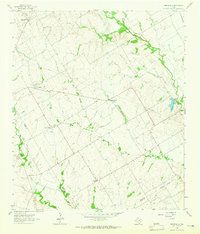 1963 Westphalia1965 Print · USGSTexas farming communities at the Falls and Bell County line come to life in this mid-century portrait of a rural landscape. Genealogists and researchers can trace local roots at St Marys Cem, the settlement of Zipperlandville, and St Joseph Cem.2 unique versions available
 - 1963 Map of Seaton, 1965 Print
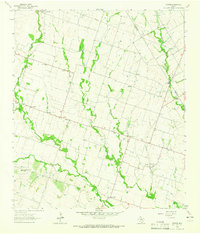 1963 Seaton1965 Print · USGSBell County farmland in the early sixties was a landscape of close-knit communities connected by winding creek beds and narrow prairie roads. Genealogists and historians can trace the foundations of Seaton and Zabcikville, locating the National Cem and the Lost Prairie Sch.3 unique versions available
 - 1963 Map of Davilla, 1965 Print
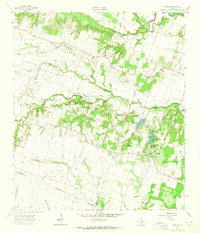 1963 Davilla1965 Print · USGSBell and Milam counties in the early sixties remained a landscape of quiet rural settlements and family-named landmarks. Genealogists can trace family footprints at Davilla Cem, locate the former Donahoe Sch, or find the springs that fed Stigall Lake No 1.2 unique versions available
 - 1963 Map of Belfalls, 1993 Print
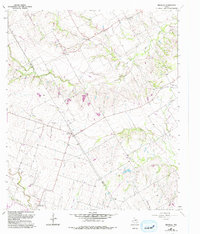 1963 Belfalls1993 Print · USGSThe rural borders of Falls and Bell Counties come alive in this mid-century survey of the Texas countryside. Genealogists and local historians can trace the foundations of Belfalls, locate family plots at Lena Cem, and follow the path of Old Blevins Road.
 - 1964 Map of Rogers, 1965 Print
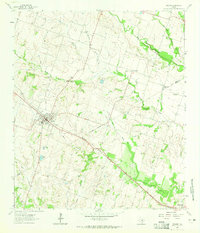 1964 Rogers1965 Print · USGSThe rural landscape near the Bell and Milam county line is shown in the mid-1960s, centered on the railroad town of Rogers. Researchers can locate several family-named landmarks and resting places, including McCann Cem, Lonsdale, and the Hope Cem near Buckholts.2 unique versions available
 - 1964 Map of Holland, 1966 Print
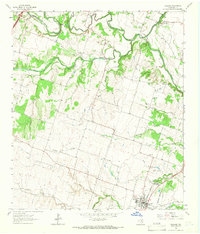 1964 Holland1966 Print · USGSCentral Texas blackland and river bottoms are captured here in the mid-1960s. Genealogists and historians can trace the MISSOURI KANSAS TEXAS rail line, locate Holland Cemetery, or find the historic Sommers Mill.2 unique versions available
 - 1964 Map of Bartlett, 1966 Print
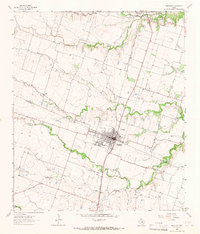 1964 Bartlett1966 Print · USGSCentral Texas prairie life in the 1960s centers on Bartlett at the county line. Genealogists can trace family names at Stockton and Roocker cemeteries or follow the Missouri Kansas Texas rail line.2 unique versions available
 - 1964 Map of Cobbs Cavern, 1966 Print
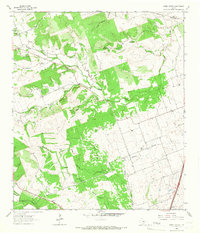 1964 Cobbs Cavern1966 Print · USGSThe ranching country of Williamson County is captured here in the mid-1960s, showing a landscape defined by limestone springs and family-named creeks. Researchers can locate burial sites like Farmer Cem and geological landmarks like Cobbs Cavern.
 - 1964 Map of Salado, 1966 Print
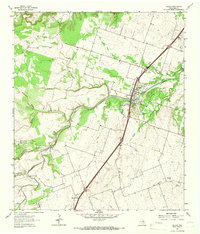 1964 Salado1966 Print · USGSCentral Texas ranching and valley life come into focus in the mid-1960s as the Interstate corridor begins to shape the region. Genealogists can trace family landmarks near Salado, the Willingham Springs Ch, and the rural community of Prairie Dell.3 unique versions available
 - 1964 Map of Jarrell, 1966 Print
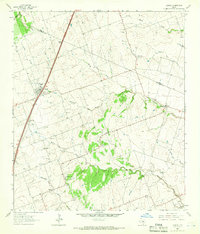 1964 Jarrell1966 Print · USGSJarrell and the surrounding Williamson County farmland are captured here in the mid-1960s as Interstate 35 began to shape the corridor. Genealogists can locate family landmarks like Corn Hill Cem, Holy Trinity Sch, and the small settlement of Theon.
 - 1964 Map of Little River, 1966 Print
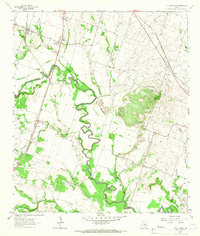 1964 Little River1966 Print · USGSThis central Texas landscape in the mid-1960s shows a region shaped by the winding Little River and two major rail lines. Researchers can locate community anchors like Joe Lee Ch, Little River Cem, and the high-speed Temple Drag Strip near Academy.3 unique versions available
 - 1965 Map of Troy, 1967 Print
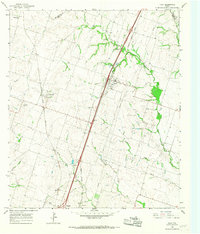 1965 Troy1967 Print · USGSBell County's agricultural heartland in the mid-sixties reveals a landscape shaped by competing rail lines and rural community centers. Genealogists can locate family names at Old Troy Cem, Pleasant View Cem, and the Willow Grove Ch.3 unique versions available
 - 1965 Map of Moody, 1967 Print
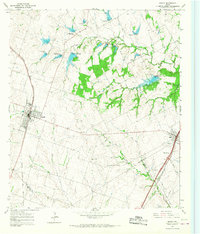 1965 Moody1967 Print · USGSCentral Texas prairie life in the mid-sixties is captured here along the busy rail lines of the Santa Fe and M-K-T railroads. Genealogists can locate family landmarks like Perry Cem, Naler Cem, and the rural Liberty Hill Ch.3 unique versions available
 - 1965 Map of Belton, 1968 Print
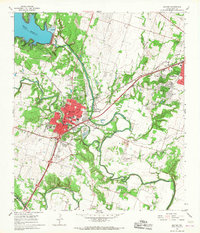 1965 Belton1968 Print · USGSThe Bell County river valleys were transforming in the mid-sixties as the Belton Reservoir stabilized the local waters. Genealogists and researchers can trace the old road to Sparta, find the North Belton Cem, or locate landmarks like the Belton Airfield.3 unique versions available
 - 1965 Map of Eagle Springs, 1968 Print
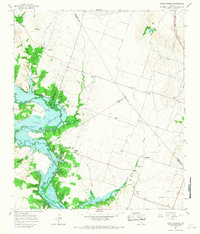 1965 Eagle Springs1968 Print · USGSThe Leon River valley and the expanding Belton Reservoir define this mid-sixties survey of the Texas interior. Local researchers can locate rural landmarks like Stockton Chapel, the Atchison Topeka and Santa Fe rail line, and family cemeteries including Alexander Cemetery.2 unique versions available
 - 1965 Map of Moffat, 1968 Print
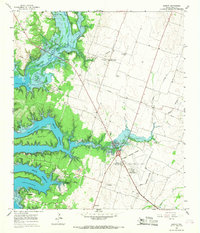 1965 Moffat1968 Print · USGSBell County was undergoing a major transformation in the mid-sixties as the Leon River valley was reshaped by reservoir waters. Genealogists and local historians can trace the rural landscape through Moffat Sch, White Hall, and several local burial grounds like Moffat Cem.3 unique versions available
 - 1965 Map of Temple, 1968 Print
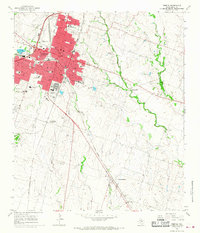 1965 Temple1968 Print · USGSTemple was a thriving rail and medical center during the mid-sixties, serving as the crossroads for the Atchison Topeka and Santa Fe. Genealogists and local historians can trace rural family sites at Heidenheimer or find old landmarks like Antioch Ch and the Blackland Experimental Farm.3 unique versions available
End of results
Showing maps 1-18 of 18
Top cities of Bell County
- Killeen historical maps
- Temple historical maps
- Harker Heights historical maps
- Belton historical maps
- Nolanville historical maps
- Troy historical maps
See more
Frequently asked questions
- What are the different types of historical maps available for Bell County?
- What is the oldest map of Bell County?
- Where can I purchase historical maps of Bell County for my home or office?
- Where can I download high-res historical maps of Bell County?
- Are there historical topographic maps available for Bell County?
- Is there historical aerial imagery available for Bell County?
- Where are historical maps of Bell County sourced from?